Finding the right microcontroller kit can make the difference between a smooth first project and a box of confusing parts. The best options include a compatible board, useful components, clear documentation, and enough flexibility to support more than one experiment.
We compared 10 microcontroller starter kits under $100 across Arduino, Raspberry Pi Pico, and ESP32 platforms to help beginners, students, and hobbyists choose a practical starting point for coding, electronics, robotics, and connected projects.
Best 10 Microcontroller Starter Kits Under 100 Picks for 2026
Most Complete Arduino Pick

- 30+ guided Arduino projects
- 200+ components across 63 types
- Solderless setup with organized storage
Best For: Beginners and STEM learners wanting a broad Arduino project bundle
Compact RP2040 Learning Pick
KEYESTUDIO Raspberry Pi Pico Kit

- Dual-core RP2040 processor up to 133 MHz
- 26 multifunction GPIO pins
- Programs in C/C++ or MicroPython
Best For: Pico learners focused on flexible software and GPIO development
Deepest Tutorial Pick
Freenove Ultimate Starter Kit V4

- 51 projects with verified code
- 274-page downloadable tutorial
- 217 common components included
Best For: Structured Arduino-compatible learning and classroom projects
Flexible Pico STEM Pick

- Supports MicroPython, C/C++, and Piper Make
- Includes LCD, servo, RGB LED, and sensors
- Tutorials and sample code included
Best For: Pico-based STEM learning across multiple programming levels
Best for Project Variety

- 343 components and 90 guided projects
- Arm Cortex-M4 board with ESP32-S3 wireless
- 474-page digital tutorial included
Best For: Learners and makers wanting extensive projects and wireless connectivity
Best Budget Learning Kit

- Arduino IDE-compatible R3 board
- Includes breadboard, sensors, LEDs, and buzzers
- Plastic storage box included
Best For: Beginners learning programming and basic electronics
Best Value Arduino Bundle
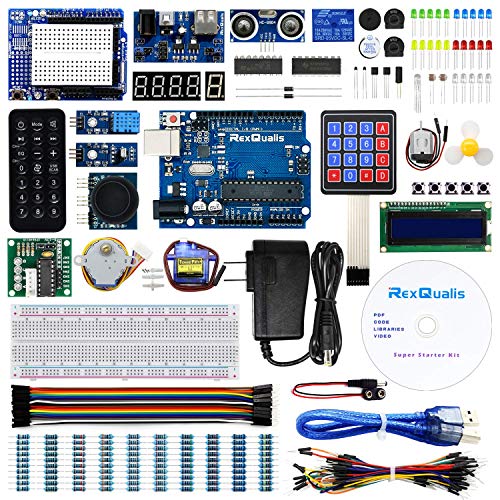
- Arduino UNO R3-compatible base board
- 120 items for sensors, motors, displays, and robotics
- 9V 1A adapter and labeled storage box included
Best For: STEM learners building Arduino and robotics projects
Best Beginner Arduino Bundle
LAFVIN R3 Mega2560 Nano Starter Kit
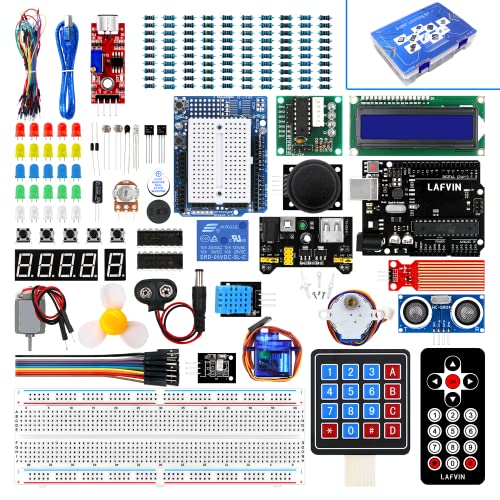
- 20+ guided lessons with code and reference materials
- Includes LCDs, displays, sensors, and three motor types
- USB support for Windows, macOS, and Linux
Best For: Beginners learning Arduino electronics and programming
Best Supported ESP32 Learning Kit
Yakomon ESP-32 USB-C Starter Kit

- Dual-core ESP32 with Wi-Fi and Bluetooth 4.2
- 35+ modules and 25+ guided projects
- Includes one-year warranty and support resources
Best For: IoT, connected-device, and Arduino IDE projects
Best ESP32 Project Variety
ELEGOO ESP-32 Super Starter Kit

- Dual-core ESP32 with Wi-Fi and Bluetooth 4.2
- 35+ modules and 200+ parts included
- 30+ guided projects with code and diagrams
Best For: Makers exploring IoT and advanced Arduino IDE projects
Most Complete Arduino Pick – ELEGOO UNO R3 Project Kit
If you want one of the more comprehensive microcontroller starter kits under 100, this ELEGOO UNO R3 bundle emphasizes project variety and beginner-friendly setup. It combines more than 200 components with over 30 guided projects, a solderless breadboard, pre-soldered modules, an organized case, and a PDF tutorial.
Best For: Beginners, STEM classrooms, coding clubs, and hobbyists who want a broad Arduino-compatible project path.
Pros:
- Includes 30+ guided projects covering displays, RFID, motion, distance sensing, motors, and environmental monitoring.
- Provides 200+ components across 63 types, including sensors, motors, displays, and input modules.
- Solderless setup, organized storage, example code, and included power accessories reduce startup friction.
Cons:
- The large component assortment may feel overwhelming to absolute beginners.
- The included power supply should not be used above 9V.
This is a strong choice when project breadth matters most. Its mix of guided lessons and reusable components gives learners room to move from basic circuits to more involved Arduino experiments.
Compact RP2040 Learning Pick – KEYESTUDIO Raspberry Pi Pico Kit
For buyers comparing microcontroller starter kits under 100 around modern programming options, this KEYESTUDIO kit centers on the Raspberry Pi Pico and RP2040. Its appeal is the board’s flexible GPIO, dual-core processor, USB programming, and support for both C/C++ and MicroPython.
Best For: Learners and makers who want to explore Raspberry Pi Pico development, MicroPython, C/C++, and flexible GPIO projects.
Pros:
- RP2040 offers a dual-core Arm Cortex-M0+ processor running up to 133 MHz with 264 KB internal RAM.
- Provides 26 multifunction GPIO pins, analog inputs, PWM channels, UART, SPI, I2C, and programmable I/O.
- Supports USB drag-and-drop programming plus C/C++ and MicroPython workflows.
Cons:
- The supplied notes describe a basic board-focused kit rather than a large assortment of project components.
- It requires more familiarity with GPIO-based development than a heavily guided project bundle may.
This is best viewed as a compact development platform rather than an expansive parts collection. Choose it when software flexibility and Pico experimentation are more important than having dozens of included modules.
Deepest Tutorial Pick – Freenove Ultimate Starter Kit V4
This Freenove bundle stands out among microcontroller starter kits under 100 for its extensive learning material. It includes 217 common items, no-solder project work, and 51 projects supported by a 274-page downloadable tutorial with circuit diagrams, verified code, and explanations.
Best For: Structured self-study, classrooms, and Arduino-compatible learners who want a large project curriculum.
Pros:
- Offers 51 projects with circuit diagrams, verified code, and detailed explanations.
- Includes 217 items such as LEDs, resistors, breadboards, jumper wires, sensors, and other project parts.
- Extends from basic electronics into advanced projects such as virtual instruments and game consoles.
Cons:
- The 274-page tutorial is downloadable rather than printed.
- The broad curriculum may require a significant time commitment to work through fully.
If detailed instruction is your priority, this is one of the most curriculum-focused options in the group. The combination of verified examples and a large parts assortment supports gradual progression from fundamentals to more advanced builds.
Flexible Pico STEM Pick – LAFVIN Raspberry Pi Pico Kit
This LAFVIN bundle is a practical choice among microcontroller starter kits under 100 for learners who want a Raspberry Pi Pico project base with several programming paths. It combines the RP2040 board with an LCD1602, servo, WS2812 RGB LED strip, buzzer, buttons, and human-body sensing module.
Best For: Beginners, school labs, and STEM learners practicing displays, sensing, inputs, and actuator control with Pico hardware.
Pros:
- Supports MicroPython, C/C++, and Piper Make graphical programming for different learning stages.
- Includes useful modules for display, sensing, input, lighting, sound, and servo control.
- Provides tutorials and sample code for circuit connections, programming, and project verification.
Cons:
- The supplied notes do not specify the total component count or number of projects.
- It is designed around the Raspberry Pi Pico, so it is less suitable for learners seeking an Arduino-focused platform.
This kit offers a balanced entry point for Pico-based STEM work. Its multiple programming methods make it approachable for beginners while leaving room to progress from graphical activities to text-based development.
Best for Project Variety – Freenove Complete Starter Kit
For shoppers comparing microcontroller starter kits under 100, the Freenove Complete Starter Kit stands out as a highly comprehensive option. It combines an Arm Cortex-M4 board, onboard ESP32-S3 Wi-Fi and Bluetooth, 343 components, and 90 guided projects.
Best For: Learners and makers who want a broad project library, wireless connectivity, and a detailed learning path.
Pros:
- Includes 343 components, modules, and sensors.
- Offers 90 projects ranging from basic to advanced, with schematics, wiring diagrams, code, and explanations.
- Includes a 474-page tutorial and advanced project ideas such as virtual instruments and game consoles.
- Provides onboard ESP32-S3 Wi-Fi and Bluetooth connectivity.
Cons:
- The tutorial is provided digitally rather than as a paper manual.
- Some code and libraries may not be compatible with the Blue Rev3 board.
This is the strongest choice here for structured experimentation and project variety, especially if wireless features and extensive documentation matter more than simplicity.
Best Budget Learning Kit – LAFVIN R3 Basic Starter Kit
LAFVIN Basic Starter Kit with R3 CH340,Breadboard + Retail Box Compatible with Arduino IDE
Check Price On AmazonIf you want one of the more straightforward microcontroller starter kits under 100, the LAFVIN Basic Starter Kit focuses on essential Arduino-compatible learning components. It includes an R3 CH340 controller board, a 400-point breadboard, common sensors, LEDs, switches, buzzers, and a storage box.
Best For: Beginners who want an inexpensive introduction to programming, breadboarding, and basic sensors.
Pros:
- Includes an R3 controller board compatible with the Arduino IDE.
- Provides useful beginner parts such as a DHT11, soil humidity sensor, photoresistors, displays, buzzers, and switches.
- Includes a 400-point breadboard and USB cable for starting projects.
- Plastic packaging helps keep the components organized.
Cons:
- The kit is described as a basic learning set, so it may offer less project depth than larger kits.
- The supplied details do not specify a large guided project library.
The LAFVIN kit is a practical entry point for learning core Arduino-style concepts without paying for a more advanced or extensive collection of components.
Best Value Arduino Bundle – REXQualis Super Starter Kit
The REXQualis Super Starter Kit is a practical contender among microcontroller starter kits under 100, pairing an Arduino UNO R3-compatible base board with a broad collection of beginner electronics parts. It also includes a 9V 1A power adapter, labeled components, and downloadable tutorial and datasheet resources.
Best For: STEM learners and beginners building Arduino-based sensor, display, motor, and robotics projects.
Pros:
- Includes 120 items covering sensors, a servo, motor-control hardware, LCD modules, and other components.
- Comes with a 9V 1A power adapter instead of requiring a 9V battery.
- The LCD1602 module includes a pin header, so it does not require soldering before use.
- Components are individually packaged and labeled in a plastic storage box.
Cons:
- The tutorial and datasheet are provided as downloadable resources rather than a stated printed manual.
- The supplied notes do not specify the exact number of guided projects.
With its power adapter and robotics-oriented parts, this kit offers a well-rounded starting point for hands-on Arduino learning and basic automation projects.
Best Beginner Arduino Bundle – LAFVIN R3 Mega2560 Nano Starter Kit
For shoppers comparing microcontroller starter kits under 100, this LAFVIN bundle is a practical choice for learning basic electronics and programming. It includes an Arduino-compatible board selection, more than 20 guided lessons, and a broad mix of displays, motors, sensors, and controls.
Best For: Beginners who want structured Arduino IDE projects and hands-on practice with common electronic components.
Pros:
- Includes a tutorial with more than 20 lessons, code, libraries, and datasheets.
- Supports Arduino-compatible sensors, actuators, displays, LEDs, buttons, and motors.
- Provides LCD 1602, seven-segment display, servo, stepper, and DC motor components.
- Works with Windows, macOS, and Linux through USB connectivity.
Cons:
- The supplied notes do not specify wireless connectivity beyond an infrared-compatible component.
- The range of included boards and components may be more than a first-time learner needs for a single project.
This is a well-rounded learning bundle for traditional Arduino-style projects, especially if you value printed or organized reference material and want to experiment with motors and displays without buying separate parts immediately.
Best Supported ESP32 Learning Kit – Yakomon ESP-32 USB-C Starter Kit
Among microcontroller starter kits under 100, this Yakomon ESP-32 bundle stands out for connected-project potential. Its dual-core board includes Wi-Fi and Bluetooth 4.2, while the kit combines more than 35 modules with tutorials covering over 25 projects.
Best For: Beginners, students, and hobbyists building Arduino IDE projects that connect to phones, networks, or cloud services.
Pros:
- Uses a dual-core ESP-32 microcontroller with built-in Wi-Fi and Bluetooth 4.2.
- Includes more than 35 modules and components, including sensors, displays, motors, an OLED, servo, and keypad.
- Online tutorial provides 25+ projects with sample code, circuit diagrams, and instructions.
- Offers one-year warranty coverage and described support resources.
Cons:
- The printed manual has an incorrect QR code, so buyers must contact the seller for the learning materials.
- The supplied notes do not identify the exact quantity of every included component.
The ESP-32 platform makes this a stronger fit than a basic Arduino kit for IoT-oriented experimentation. The incorrect QR code is an inconvenience, but the seller states that tutorials and sample code can be provided through buyer-seller messaging.
Best ESP32 Project Variety – ELEGOO ESP-32 Super Starter Kit
This ELEGOO option gives shoppers considering microcontroller starter kits under 100 a broad ESP32-based project platform. It combines more than 35 modules and over 200 parts with Wi-Fi, Bluetooth 4.2, USB-C, Arduino IDE compatibility, and a tutorial covering 30+ projects.
Best For: Makers, students, engineers, and hobbyists progressing from simple circuits to intermediate IoT and smart-device builds.
Pros:
- Features a dual-core ESP32 with integrated Wi-Fi and Bluetooth 4.2.
- Includes more than 35 modules and 200+ parts, including sensors, displays, motors, an OLED, servo, and keypad.
- Step-by-step online tutorial offers 30+ projects with code and circuit diagrams.
- Supports Arduino IDE and provides GPIO, I2C, USB, Wi-Fi, and Bluetooth connectivity.
Cons:
- The large component assortment may feel overwhelming for someone seeking only a basic introduction.
- The supplied notes do not list the individual quantities of all 200+ parts.
ELEGOO’s combination of extensive components, ESP32 connectivity, and structured project guidance makes this one of the more expandable choices in the group. It is particularly appealing if you expect to move beyond LEDs and buttons into practical IoT experiments.
How We Picked the Best Microcontroller Starter Kits Under 100
We focused on kits that offer meaningful value for beginners without limiting them to a single demonstration. Our comparison considered the included development board, component variety, documentation, programming support, connectivity options, expansion potential, and overall suitability for hands-on learning.
Compatibility also matters. Arduino-based kits are often the easiest entry point because of their large library and tutorial ecosystem, while Raspberry Pi Pico kits are attractive for MicroPython and compact embedded projects. ESP32 kits add built-in wireless capabilities for internet-connected devices and automation.
Quick Comparison
- Best for broad Arduino learning: ELEGOO, Freenove, and REXQualis kits with extensive parts and project guides.
- Best for Raspberry Pi Pico beginners: KEYESTUDIO and LAFVIN Pico kits with displays, LEDs, servos, and GPIO accessories.
- Best for connected projects: ESP32 kits and the Freenove WiFi board with wireless features.
- Best for larger project variety: Kits with hundreds of components and detailed tutorials.
- Best for simpler first projects: Basic R3 or Pico kits with a breadboard, jumper wires, and core sensors.
Key Buying Factors for Microcontroller Starter Kits Under $100
Board and Programming Support
Choose a board that matches the software you expect to use. Arduino-compatible boards are beginner-friendly and widely documented. Pico kits are useful if you want MicroPython or C/C++, while ESP32 boards are better suited to Bluetooth, Wi-Fi, and IoT experiments. Check whether the kit includes the required USB cable and whether the board uses a common driver.
Component Selection
A high item count is not automatically better. Look for practical parts such as a breadboard, LEDs, resistors, buttons, sensors, displays, motors, servos, and jumper wires. A balanced kit supports progressively harder projects instead of supplying many duplicate or rarely used pieces.
Documentation and Project Guidance
Clear tutorials can shorten the learning curve considerably. Detailed diagrams, example code, wiring instructions, and troubleshooting notes are especially valuable for first-time builders. If documentation quality is a priority, favor kits that specify a substantial project guide or provide organized online resources.
Expansion and Long-Term Value
Consider how easily you can add sensors, motor drivers, wireless modules, or custom circuits later. A kit with standard headers and accessible GPIO pins will usually remain useful longer than a highly specialized bundle.
Who Should Buy Which Microcontroller Starter Kits Under 100?
New electronics learners should start with a well-documented Arduino R3 kit containing a breadboard and basic components. Students and STEM educators may prefer a larger bundle with many guided projects and enough parts for repeated practice. Python-focused learners should consider a Raspberry Pi Pico kit, particularly one that includes a display, servo, and addressable RGB lighting. IoT and smart-device builders will get more value from an ESP32 kit with Wi-Fi, Bluetooth, USB-C, or a reliable USB-to-serial chip.
Before buying, verify the board version, included accessories, operating-system compatibility, and current contents list. The best Microcontroller Starter Kits Under 100 are not necessarily the largest; they are the ones that match your preferred programming environment and provide the components and guidance needed for your next several projects.