The best beginner chemistry sets turn abstract science concepts into hands-on discoveries. These kits vary widely in experiment count, age range, equipment, and adult support, so choosing the right one matters.
We compared 10 popular options to help families, educators, and gift buyers find a chemistry set that matches a child’s interests, experience level, and learning style.
Best 10 Beginner Chemistry Sets Picks for 2026
Most Versatile
National Geographic 100+ Experiment Chemistry Set

- Includes 15 supplied-material experiments
- Adds 85 household-item activities
- Uses beakers, test tubes, and pipettes
Best For: Kids ages 8+ seeking lots of repeat STEM activities
Best Lab-Station Design

- Includes 57 lab-style pieces
- Features clip-on experiment cards
- Uses non-hazardous, borax-free chemicals
Best For: Kids who enjoy an organized, immersive lab setup
Best for Big Reactions
National Geographic 45-Experiment Chemistry Set

- Includes 45 guided experiments
- Features volcano, geyser, and rocket activities
- Provides illustrated instructions
Best For: Kids ages 8+ who enjoy visual chemical reactions
Best Household-Ingredient Starter
Nancy B's Stir-It-Up Chemistry Lab
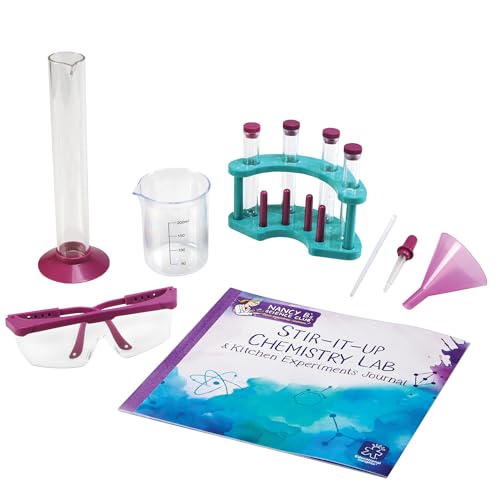
- Uses common household ingredients
- Includes core lab tools and glasses
- Adds a 22-page activity journal
Best For: Ages 8–12 learning chemistry at home
Best for Young Explorers
National Geographic Junior Chemistry Set

- 50 hands-on experiments
- 20+ kid-friendly lab tools
- Illustrated instructions for ages 4+
Best For: Early STEM learners beginning chemistry at home
Best Guided Chemistry Lab
Thames & Kosmos Chem C1000 V2.1

- 125 hands-on experiments
- 30 tools plus safety gear
- 80-page illustrated manual
Best For: Ages 10+ seeking structured chemistry practice
Best Variety-Focused Set
UNGLINGA 272 Experiments Science Kit

- 272 STEM experiments
- Includes child-sized plastic lab tools
- Covers chemistry, physics, and visual projects
Best For: Ages 8+ wanting a large activity selection
Classic Experiment Starter

- 28 guided chemistry experiments
- Covers acids, bases, gases, and invisible ink
- 48-page illustrated explanation guide
Best For: Ages 10–15 seeking a broad chemistry introduction
Young Learner Pick

- Designed for young beginners
- Full-color 48-page manual
- Explores chemical identification and carbon dioxide
Best For: Children ages 8+ starting chemistry
Equipment Skills Builder

- 27 experiments with a 48-page guide
- Teaches basic chemistry equipment use
- Covers acids, bases, evaporation, and crystallization
Best For: Ages 8–12 building hands-on chemistry skills
Most Versatile – National Geographic 100+ Experiment Chemistry Set
For families comparing beginner chemistry sets, this National Geographic kit stands out for its broad activity range. It includes materials for 15 featured experiments, plus a guide with 85 additional activities using common household items.
Best For: Kids ages 8 and up who want a large variety of hands-on chemistry and STEM activities.
Pros:
- Offers more than 100 total experiment ideas.
- Includes real-style tools such as test tubes, beakers, and pipettes.
- Features engaging projects including crystal growing, color-changing solutions, and glowing experiments.
Cons:
- Only 15 experiments include all the required materials; the bonus activities use household items.
- The broad activity count may require additional adult preparation for some projects.
Choose this set if variety and repeat play matter most. Its combination of supplied materials and household-item experiments gives young learners plenty of ways to continue exploring chemistry.
Best Lab-Station Design – Ooze Labs Chemistry Station
This Ooze Labs Chemistry Station is a strong option among beginner chemistry sets for children who enjoy an immersive setup. The colorful lab station holds a 57-piece collection of tools and supports experiments such as glowing slime, fizzing reactions, bubbles, and chromatography.
Best For: Young learners who want a dedicated, colorful chemistry-station experience with laboratory-style equipment.
Pros:
- Includes 57 pieces, including beakers, test tubes, flasks, and pipettes.
- Printed experiment cards clip onto the station for convenient reference.
- Includes a 16-page illustrated manual with experiments and scientific explanations.
- Uses non-hazardous chemicals and does not contain borax.
Cons:
- The supplied notes do not specify an age range.
- The kit’s chemistry activities may still require adult supervision and setup.
Its standout feature is the organized lab-station format, which can make experimentation feel more structured and engaging. Consider it when presentation and accessible equipment are priorities.
Best for Big Reactions – National Geographic 45-Experiment Chemistry Set
Families looking for beginner chemistry sets with highly visual activities may appreciate this National Geographic option. It provides 45 experiments with illustrated, kid-friendly instructions, including volcanoes, geysers, rockets, and other fizzy or bubbly reactions.
Best For: Kids ages 8 and up who are motivated by exciting demonstrations and straightforward instructions.
Pros:
- Includes 45 experiments covering chemical reactions and STEM fundamentals.
- Features attention-grabbing volcano, geyser, and rocket activities.
- Uses illustrated, easy-to-follow instructions.
- Introduces the scientific process and safe experiment practices.
Cons:
- The supplied notes do not clarify how many experiments include all required materials.
- Its activity count is lower than the brand’s 100-plus-experiment set.
This is a practical choice for beginners who respond well to visible results and guided steps. Its 45-project format offers variety without the larger scope of a 100-plus-activity kit.
Best Household-Ingredient Starter – Nancy B's Stir-It-Up Chemistry Lab
This Nancy B’s Science Club kit is a practical pick among beginner chemistry sets for at-home learning. Its 22-page activity journal pairs experiments using common household ingredients with writing prompts and a useful selection of basic laboratory tools.
Best For: Children ages 8 to 12 who want guided kitchen-based chemistry activities and an activity journal.
Pros:
- Uses common household ingredients for the journal’s experiments.
- Includes a beaker, four test tubes, rack, graduated cylinder, glasses, dropper, funnel, and stirring rod.
- Combines hands-on experiments with writing prompts.
- Includes activities involving bubbling lava, color changes, and invisible gas.
Cons:
- It includes fewer specialized components than larger chemistry stations.
- Experiments rely on household ingredients in addition to the included tools.
Choose this lab when you want a compact, educational introduction rather than the biggest experiment count. The journal and familiar ingredients make it especially suitable for structured learning at home.
Best for Young Explorers – National Geographic Junior Chemistry Set
For families seeking beginner chemistry sets for younger children, this National Geographic kit offers a gentle introduction through 50 hands-on activities. It combines illustrated directions with more than 20 child-safe lab tools, while many experiments use familiar household materials such as baking soda and vinegar.
Best For: Children ages 4 and up who are beginning to explore STEM and chemistry concepts with adult support.
Pros:
- Includes 50 interactive experiments.
- Comes with more than 20 kid-friendly lab tools, including test tubes and goggles.
- Illustrated, step-by-step instructions support independent participation.
- Does not require batteries.
Cons:
- Its introductory design may be too simple for older children seeking more advanced chemistry.
- Many activities rely on common household items in addition to the included tools.
This is a practical starting point for early learners: it prioritizes accessible activities, clear visuals, and playful lab equipment over detailed theory or advanced chemical work.
Best Guided Chemistry Lab – Thames & Kosmos Chem C1000 V2.1
Among beginner chemistry sets, the Thames & Kosmos Chem C1000 V2.1 is designed for older children and teens who want a more structured introduction. It includes 125 experiments, 30 lab tools, selected safe chemicals, safety gear, and an 80-page manual explaining both procedures and the underlying science.
Best For: Learners ages 10 and up who want extensive, step-by-step chemistry practice with a substantial reference manual.
Pros:
- Offers 125 experiments covering topics such as indicators, air pressure, surface tension, and water.
- Includes 30 durable tools, safety goggles, pipettes, test tubes, and selected safe chemicals.
- The 80-page full-color manual explains equipment handling and experiment procedures.
- Supports hands-on STEM learning and critical thinking.
Cons:
- Recommended for ages 10 and up, so it is not suited to preschool learners.
- The larger number of experiments and chemicals may require closer adult oversight.
- Some activities may require materials beyond the included components.
This is the strongest choice here for buyers who value breadth and guided instruction. Its extensive experiment count and detailed manual make it better suited to sustained learning than a short activity set.
Best Variety-Focused Set – UNGLINGA 272 Experiments Science Kit
For shoppers comparing beginner chemistry sets with a wide range of activities, the UNGLINGA kit stands out with 272 experiments. Children can explore volcanoes, crystal growing, holographic projection, rainbow walking water, and other chemistry and physics projects using child-sized plastic lab equipment and an illustrated guide.
Best For: Children ages 8 and up who want a large selection of shareable STEM activities for home, school breaks, or group play.
Pros:
- Provides 272 experiments for extended activity variety.
- Includes plastic test tubes, a measuring spoon, beaker, and conical flask.
- Activities include volcanoes, crystals, rainbow walking water, and holographic projection.
- Illustrated instructions are designed to be easy to follow.
Cons:
- Recommended for ages 8 and up, limiting its suitability for younger beginners.
- The notes do not specify included safety goggles or chemicals.
- The broad mix includes physics and visual projects, so it is not exclusively chemistry-focused.
This kit favors quantity and variety over a tightly sequenced chemistry curriculum. It is a good fit when keeping children engaged across many projects matters more than progressing through detailed chemical theory.
Classic Experiment Starter – Chemistry C500
For shoppers comparing beginner chemistry sets, the Thames & Kosmos Chemistry C500 offers a structured introduction through 28 guided experiments. It covers acids and bases, gas-producing reactions, invisible ink, and the interactions of solids, liquids, and gases, with a 48-page illustrated guide explaining both procedures and results.
Best For: Kids ages 10–15 who want a broad, step-by-step introduction to chemistry.
Pros:
- Includes 28 classic chemistry experiments.
- Explores colorful acid-and-base reactions, fizzy mixtures, and invisible ink.
- Full-color manual provides simple setup instructions and explanations.
- Includes useful equipment such as beakers, test tubes, pipettes, and stoppers.
Cons:
- The manufacturer recommends it for ages 10–15, so it may be advanced for younger children.
- Experiments require manual setup and supervision appropriate to the child’s age.
Choose this kit if you want one of the more comprehensive beginner chemistry sets in this group, particularly for learners who benefit from many classic experiments and clear explanations.
Young Learner Pick – Kids First Chemistry Set
Among beginner chemistry sets, the Thames & Kosmos Kids First Chemistry Set is designed specifically for younger children. Its 48-page, full-color manual introduces basic chemistry through experiments that identify chemicals and demonstrate carbon dioxide and its visible effects.
Best For: Children ages 8 and up taking their first guided steps into chemistry.
Pros:
- Designed specifically as an introductory set for young kids.
- Includes a full-color, 48-page instruction manual.
- Introduces chemical identification through hands-on experiments.
- Demonstrates carbon dioxide and its visible effects.
Cons:
- The experiment range appears more introductory than the 27- or 28-experiment kits in this roundup.
- The supplied notes do not specify the complete included equipment list.
- The listed warranty is 30 days against manufacturer defects.
This is a sensible choice when age-appropriate presentation matters most and the child needs a gentle, experiment-led introduction rather than an extensive chemistry curriculum.
Equipment Skills Builder – Intro to Chemistry
This Intro to Chemistry kit is a practical option among beginner chemistry sets for children ages 8–12. It combines 27 experiments with instruction in using filters, test tubes, pipettes, measuring spoons, and beakers, while also covering acids, bases, heat, evaporation, crystallization, and chemical identification.
Best For: Ages 8–12 who want to learn basic chemistry equipment and processes through hands-on activities.
Pros:
- Includes 27 experiments and a full-color, 48-page guidebook.
- Teaches the use of several basic chemistry tools.
- Covers reactions involving acids and bases, heat, evaporation, and crystallization.
- Includes a plaster test-tube-rack project that illustrates a chemical reaction.
Cons:
- Some activities use common household substances, so additional materials may be needed.
- The listed manufacturer-recommended age range is 8–10, while the product description presents it for ages 8–12.
- The supplied notes do not list every individual experiment component.
Consider this kit if learning how chemistry equipment works is as important as completing the experiments. Its combination of tools, processes, and 27 activities gives beginners a hands-on foundation.
How We Picked These Beginner Chemistry Sets
We focused on kits that introduce core chemistry ideas through guided, age-appropriate experiments rather than relying on demonstrations alone. Our comparison considered the number and variety of activities, clarity of instructions, included tools and materials, recommended ages, educational depth, and how easily a child can use the kit with adult supervision.
Experiment count is only one part of the equation. A kit with fewer, better-explained activities may be more useful for a first-time learner than a large collection with limited guidance or supplies. We also looked for options spanning introductory play, structured STEM learning, and more advanced topics such as acids, electrochemical reactions, and laboratory technique.
Quick Comparison
| What to Compare | Why It Matters |
|---|---|
| Age range | Indicates the complexity of instructions, activities, and required supervision. |
| Experiment count | Shows potential variety, but not necessarily the quality or completeness of each activity. |
| Learning support | Guides, explanations, and experiment notes help children understand results instead of simply following steps. |
| Included equipment | More complete kits reduce the need to purchase extra tools before getting started. |
| Subject depth | Some sets emphasize basic observations, while others explore reactions, acids, molecules, or electrochemistry. |
Key Buying Factors for Beginner Chemistry Sets
Age and Supervision
Choose a set that fits the child’s reading ability, patience, and comfort with multi-step instructions. Younger children generally benefit from short, visual activities, while older learners may be ready for more detailed procedures. Adult supervision is essential whenever a kit uses powders, liquids, heat, glass-like equipment, or experiments that can create spills.
Experiment Variety and Educational Value
Look for a balanced mix of reactions, separation techniques, crystal growth, pH concepts, and observation-based activities. A high experiment count is appealing, but check whether the set includes enough consumable materials and whether the experiments build skills progressively.
Instructions, Equipment, and Refills
Clear safety notes and explanations are especially important for first-time users. Check what is included, what household items are required, and whether replacement chemicals or refill packs are available. Reusable tools can make a smaller kit a better long-term value.
Safety and Cleanup
Review the manufacturer’s safety guidance before buying. Use protective eyewear when recommended, work on a washable surface, label materials, and dispose of mixtures as directed. Avoid kits that encourage unsupervised experimentation or provide unclear handling instructions.
Who Should Buy Which Beginner Chemistry Sets?
For a younger child or a first introduction, choose a junior-focused kit with simple activities and strong visual guidance. Families wanting the broadest activity selection should consider a larger set, provided an adult is available to organize materials and supervise sessions.
Older children who want more serious science practice may prefer a structured kit with laboratory-style equipment, a detailed guide, and concepts such as acids or electrochemical reactions. Educators and homeschoolers should prioritize experiment progression, reusable tools, and reliable explanations over the headline activity count. For gift buyers, a compact, clearly guided set is usually the safest choice when the recipient’s experience level is unknown.