The best advanced chemistry sets make complex ideas easier to understand through experiments, models, and guided observation. This roundup compares options for beginners, older students, classrooms, and aspiring chemists.
We considered experiment variety, instructional support, included equipment, age range, and whether each kit supports meaningful chemistry practice beyond simple demonstrations.
Best 10 Advanced Chemistry Sets Picks for 2026
Top Advanced Chemistry Set

- 333+ experiments across inorganic, organic, and electrochemistry
- Real lab equipment, chemicals, and safety goggles included
- 192-page manual for ages 12+ with adult supervision
Best For: Serious young scientists and high school chemistry preparation
Best Variety Pick
National Geographic Mega Science Lab
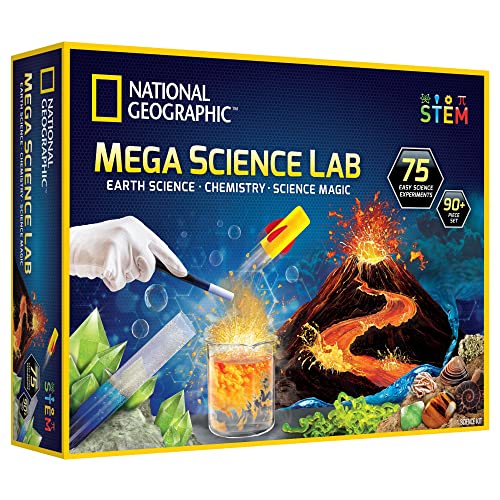
- Three-in-one chemistry, Earth science, and science magic kit
- 75 total experiments, including household-item activities
- Ages 8+ with specimens and hands-on STEM projects
Best For: Young learners who want broad science variety
Best Molecular Modeling Kit
425-Piece Organic Chemistry Model Kit

- 425 pieces for organic and inorganic molecule models
- Color-coded atoms and flexible bonds show structures clearly
- Bond remover and case support repeated classroom or study use
Best For: Students and teachers studying molecular structure
Best Intermediate Chemistry Set

- 250 real experiments for ages 11 and up
- Includes alcohol burner, glassware, chemicals, and goggles
- 128-page manual builds a foundation for high school chemistry
Best For: Middle school learners moving beyond beginner kits
Best 3D Modeling Set
LINKTOR 444-Piece Chemistry Model Kit

- 444 pieces for organic and inorganic models
- Includes ball-and-stick and space-filling formats
- Supports molecular geometry and stereochemistry
Best For: Students and teachers learning 3D molecular structure
Best Experiment-Focused Set
National Geographic Amazing Chemistry Set

- Includes materials for 15 featured experiments
- Adds 85 household-item experiment ideas
- Designed for children ages 8 and up
Best For: Young learners exploring reactions and STEM activities
Best Compact Organic Chemistry Set
Swpeet 240-Piece Molecular Model Kit

- 86 atoms cover 12 different elements
- 153 links include double- and triple-bond options
- Compact box and removal tool included
Best For: Students modeling organic and inorganic structures
Best Overall for Experiment Variety
Chem C1000 V2.1 Beginner Chemistry Set

- 125 guided chemistry experiments
- 30 lab tools with safety goggles
- 80-page illustrated learning manual
Best For: Kids and teens seeking a broad, hands-on chemistry introduction
Best Compact Introduction

- 28 guided chemistry experiments
- Includes core lab tools and chemicals
- 48-page full-color science guide
Best For: Young beginners wanting a focused first chemistry kit
Best Award-Winning Starter Lab

- 125 experiments in 10 themed chapters
- Real lab equipment and seven chemicals
- Detailed safety guidance and award recognition
Best For: Aspiring young scientists and homeschool chemistry study
Top Advanced Chemistry Set – Thames & Kosmos CHEM C3000
For shoppers seeking advanced chemistry sets, the Thames & Kosmos CHEM C3000 is the most comprehensive option in this group. It combines more than 333 experiments with real lab equipment, chemicals, and a detailed manual covering inorganic, organic, and electrochemistry for learners ages 12 and up.
Best For: Serious young scientists, homeschoolers, and students preparing for high school chemistry.
Pros:
- Offers more than 333 experiments across 27 chapters.
- Includes authentic equipment such as glassware, an alcohol burner, electrodes, and safety goggles.
- The 192-page manual explains advanced topics, procedures, safety, and waste disposal.
- Designed to EN 71-4 safety standards and includes a one-year manufacturer warranty.
Cons:
- Requires adult supervision throughout.
- Its advanced scope may be more than younger or beginner learners need.
- Some experiments require additional common household materials.
CHEM C3000 is the strongest choice when depth, authentic equipment, and broad subject coverage matter most. Its age requirement and hands-on chemicals make supervision and careful reading of the manual essential.
Best Variety Pick – National Geographic Mega Science Lab
The National Geographic Mega Science Lab is a flexible alternative for families comparing advanced chemistry sets with broader science activities. Along with chemistry experiments, it includes Earth science projects, specimens, science magic, and a bonus guide using household items.
Best For: Kids ages 8 and up who want chemistry alongside Earth science and entertaining STEM activities.
Pros:
- Combines 45 included experiments with 30 additional household-item projects.
- Covers chemistry, Earth science, and science magic in one kit.
- Includes rock, mineral, crystal, and fossil-related activities.
- Requires no batteries and includes U.S.-based product support.
Cons:
- Its chemistry content is less specialized than a dedicated advanced chemistry kit.
- The kit is aimed at younger learners rather than high school-level chemistry.
- Some bonus experiments depend on common household materials.
This is a good choice for variety and accessibility rather than maximum chemistry depth. It works especially well when a child is still exploring different areas of science and may not want a chemistry-only set.
Best Molecular Modeling Kit – 425-Piece Organic Chemistry Model Kit
For buyers looking for advanced chemistry sets focused on molecular structure rather than chemical reactions, this 425-piece model kit offers a hands-on way to study organic and inorganic compounds. Color-coded atoms, flexible bonds, and a bond-removal tool make it useful for building and revising models.
Best For: Chemistry students, teachers, classrooms, study groups, and visual learners working on molecular structures.
Pros:
- Includes 425 pieces for large molecules or several models at once.
- Color-coded atoms help learners identify elements quickly.
- Flexible bonds support double bonds, triple bonds, rings, and cyclic compounds.
- Includes a bond remover and storage case to simplify rebuilding and organization.
Cons:
- It does not provide chemicals or experiments involving live reactions.
- The supplied age range is 6 to 14, so advanced students may need supplemental materials.
- Instructional content is limited to the included guide.
This kit complements, rather than replaces, a reaction-based chemistry set. Its main advantage is making bond angles, chirality, conformations, and molecular geometry tangible for classroom instruction or study review.
Best Intermediate Chemistry Set – Thames & Kosmos CHEM C2000
The Thames & Kosmos CHEM C2000 is a practical middle ground for families comparing advanced chemistry sets with a gentler learning curve. It provides 250 real experiments, professional-style equipment, an alcohol burner, and a 128-page manual for learners ages 11 and up.
Best For: Middle school students, homeschoolers, and aspiring chemists building a foundation for high school chemistry.
Pros:
- Includes 250 experiments organized into 18 themed chapters.
- Introduces heat-based work with an alcohol burner and tripod components.
- Provides glassware, electrodes, tubing, goggles, and selected chemicals.
- Covers acids and bases, electrochemistry, chromatography, gases, and food chemistry.
Cons:
- Requires adult supervision and careful handling of the burner and chemicals.
- It offers fewer experiments and less advanced coverage than the CHEM C3000.
- Some experiments may require additional materials not included in the kit.
CHEM C2000 is a strong stepping-stone for learners who have outgrown beginner activities but are not ready for the broader CHEM C3000. Its award-winning design and structured manual make it a balanced option for guided home study.
Best 3D Modeling Set – LINKTOR 444-Piece Chemistry Model Kit
For advanced chemistry sets focused on molecular structure rather than reaction experiments, the LINKTOR kit offers a large, versatile collection for building organic and inorganic models. Its combination of ball-and-stick, space-filling, and Fullerene components supports visual learning from foundational concepts through graduate-level study.
Best For: Students, teachers, and learners studying molecular geometry, bond angles, stereochemistry, and three-dimensional chemical structures.
Pros:
- 444 pieces include 136 atoms, 158 bonds, and 150 Fullerene components.
- Supports both ball-and-stick and space-filling molecular representations.
- Useful across organic and inorganic chemistry, from Grade 7 through graduate level.
- Color-coded pieces and a disconnecting tool make assembly and disassembly easier.
Cons:
- It is a modeling kit, not a hands-on chemical reaction experiment set.
- The large number of pieces may require organized storage and setup.
Choose this LINKTOR set when spatial understanding is the priority. It is especially well suited to visualizing molecular bonds, geometry, and stereochemistry in three dimensions.
Best Experiment-Focused Set – National Geographic Amazing Chemistry Set
Among advanced chemistry sets for younger learners, the National Geographic Amazing Chemistry Set emphasizes engaging, hands-on experimentation. It includes materials for 15 featured activities plus a guide with 85 additional experiments using common household items.
Best For: Children ages 8 and up who want an accessible introduction to chemical reactions, crystal growing, and STEM activities.
Pros:
- Offers more than 100 experiment ideas in total.
- Includes materials for 15 featured experiments, including crystal growing and color-changing activities.
- Uses familiar scientific tools such as test tubes, beakers, and pipettes.
- Additional experiments use common household items, extending the kit’s activity range.
Cons:
- It is aimed at ages 8 and up, so it may not suit advanced academic chemistry study.
- Only the 15 featured experiments include the supplied kit materials.
This is a strong choice for building enthusiasm through guided activities rather than detailed molecular modeling. The included tools and broad experiment guide give young learners plenty of ways to explore chemistry.
Best Compact Organic Chemistry Set – Swpeet 240-Piece Molecular Model Kit
For advanced chemistry sets centered on organic molecular structures, the Swpeet 240-piece kit provides a practical selection of atoms and bond types in a compact storage box. It is designed for building many high-school and university organic or inorganic models without taking up much space.
Best For: Students and teachers who need a portable molecular modeling kit for studying molecular geometry and chemical structures.
Pros:
- Includes 86 atom pieces representing 12 different elements.
- Provides 153 links, including flexible links for double and triple bonds.
- Supports many high-school and university organic or inorganic structures.
- Includes a link-removal tool and slim plastic storage box.
Cons:
- Has fewer total pieces than the 444-piece LINKTOR set.
- The kit focuses on physical modeling and does not include reaction experiments.
- The product details describe it primarily for learners age 13 and up.
The Swpeet kit is a sensible middle ground for learners who want broad bond compatibility and easy storage. Its 240 pieces should suit routine classroom or study models while remaining manageable to pack away.
Best Overall for Experiment Variety – Chem C1000 V2.1 Beginner Chemistry Set
For shoppers comparing advanced chemistry sets for young learners, the Thames & Kosmos Chem C1000 V2.1 stands out for its unusually broad experiment selection, professional-style tools, and guided instruction. It is designed for ages 10 and up and includes safety gear for hands-on work at home.
Best For: Curious kids and teens who want a substantial introduction to chemistry with 125 guided experiments.
Pros:
- Includes 125 hands-on experiments covering acids, bases, indicators, electrochemical reactions, air pressure, and surface tension.
- Provides 30 lab tools, including test tubes, pipettes, and safety goggles.
- The 80-page, full-color manual explains equipment handling, safety, procedures, and underlying science.
- Offers engaging activities such as invisible ink and investigations of water and its elements.
Cons:
- Its 125-experiment scope may be more kit than a casual beginner needs.
- Recommended for ages 10 and up, so it is not intended for younger children.
Choose this version when experiment count and structured learning matter most. The combination of extensive activities, lab equipment, and safety-focused guidance makes it a strong all-around option for home STEM exploration.
Best Compact Introduction – Chem C500 Science Kit
If you are looking for advanced chemistry sets but want a simpler starting point, the Thames & Kosmos Chem C500 offers 28 classic experiments in a compact package. Its colorful manual keeps setup approachable while introducing acids, bases, reactions, and basic laboratory techniques to children ages 10 to 15.
Best For: Young beginners who want a focused, manageable first chemistry kit.
Pros:
- Includes 28 guided experiments covering acids and bases, invisible ink, and reactions between solids, liquids, and gases.
- Comes with beakers, test tubes, chemicals, stoppers, and pipettes.
- The 48-page, full-color guide combines straightforward instructions with explanations of results.
- Received a Parents’ Choice Silver Award.
Cons:
- Has substantially fewer experiments than the C1000 kits.
- The recommended age range is limited to 10–15 years.
The C500 is a practical pick for families prioritizing clarity and a smaller commitment over maximum experiment variety. It provides a guided tour of core chemistry concepts without the larger scope of a more advanced kit.
Best Award-Winning Starter Lab – Chem C1000 V2.0 Chemistry Set
Among advanced chemistry sets for aspiring young scientists, this Chem C1000 V2.0 model emphasizes authentic lab technique and a wide range of topics. It includes 125 experiments, seven chemicals, real laboratory equipment, and an 80-page manual, with adult supervision required for ages 10 and up.
Best For: Homeschool families and young scientists ready to move beyond basic kitchen-science activities.
Pros:
- Offers 125 experiments across 10 themed chapters, including electrochemistry, chromatography, electrolysis, crystals, and food chemistry.
- Includes professional-style equipment such as glass test tubes, graduated beakers, pipettes, copper wire, and safety goggles.
- Provides seven chemicals and detailed safety, first-aid, hazard-labeling, and waste-disposal guidance.
- Won a Parents’ Choice Gold Award and is manufactured in Germany to the EN 71-4 safety standard.
Cons:
- Adult supervision is required, adding responsibility to setup and use.
- The broad curriculum may be more involved than needed for occasional experimentation.
- It is designed for ages 10 and up rather than younger children.
This version is a strong choice when laboratory realism and safety documentation are priorities. Its diverse experiments and substantial equipment make it especially suitable for sustained STEM study at home.
How We Picked the Best Advanced Chemistry Sets
We focused on kits that offer more than a few novelty reactions. The strongest options combine usable lab equipment, clear instructions, repeatable experiments, and enough subject coverage to support continued learning. We also considered whether a kit is designed for a specific age group, whether it emphasizes hands-on reactions or molecular structure, and how well it can serve students, parents, teachers, or homeschool programs.
Because “advanced” can mean different things, this list includes several levels. Some kits provide a large catalog of guided experiments, while molecular model sets build visualization skills without using chemicals. That makes it easier to choose based on the learner’s goals rather than package size alone.
Quick Comparison
| Best For | What to Look For |
|---|---|
| First serious chemistry kit | Beginner labeling, safety guidance, and manageable experiments |
| Older students | Broader topics, repeatable procedures, and real lab-style tools |
| Classrooms | Durable components, high experiment counts, and clear manuals |
| Molecular structure practice | Many atom pieces, bond connectors, and organic/inorganic coverage |
| Family science activities | Short experiments, visual results, and accessible explanations |
Key Buying Factors for Advanced Chemistry Sets
Experiment Depth and Subject Coverage
Check whether the manual covers acids and bases, reactions, electrochemistry, solutions, gases, indicators, or other areas the learner needs. A high experiment count is useful only when the activities are varied and instructions are understandable.
Equipment and Replacement Needs
Real test tubes, droppers, measuring tools, goggles, and other lab components can improve the learning experience. Review what is included and identify any household supplies, consumables, or replacement parts required before buying.
Age, Supervision, and Safety
Follow the manufacturer’s age recommendation and read the safety instructions before use. Younger children generally need close adult supervision, while older students still need appropriate ventilation, protective eyewear, careful labeling, and responsible chemical disposal.
Models Versus Wet-Lab Experiments
Molecular model kits are often the better choice for learning molecular geometry, bonding, isomers, and structure. They can complement a chemistry experiment set, but they do not replace hands-on reaction equipment.
Who Should Buy Which Advanced Chemistry Sets?
Choose a beginner Thames & Kosmos kit or a National Geographic set for younger learners and families seeking guided, approachable activities. More extensive Chem C2000 or C3000-style kits suit older students who want a larger experiment library and more lab-oriented progression.
Teachers and homeschoolers may prefer the highest experiment count, strongest manual, and most reusable components. For organic chemistry, classroom instruction, or visualizing bonds, choose a molecular model kit with a broad selection of atoms and connectors. If the learner is easily overwhelmed, prioritize clear guidance and safety information over the largest piece or experiment count.