The right viewfinder can make composing images easier in bright light, improve manual-focus accuracy, and give a more deliberate shooting experience. This roundup compares 10 options spanning dedicated EVFs, camera-mounted monitors, magnifying LCD finders, and optical alternatives.
Before choosing, consider your camera or video system, connection type, display needs, diopter adjustment, battery setup, and whether you want an electronic or optical viewing experience.
Best 10 Electronic Camera Viewfinders Picks for 2026
Best Dedicated Camera EVF
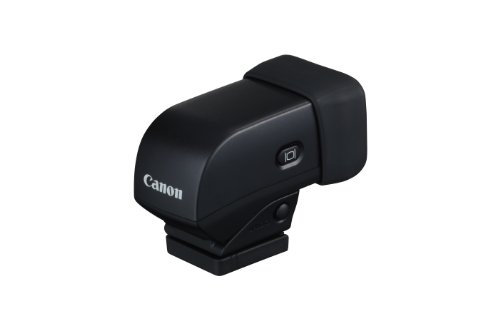
- 2.36MP XGA LCD display
- 90-degree upward tilt
- -3.0 to +1.0 dioptric adjustment
Best For: Compatible Canon camera owners wanting a dedicated electronic viewfinder
Best Screen-Free Lo-Fi Camera

- Transparent optical viewfinder
- Built-in light meter
- 65g pocket-sized design
Best For: Creative beginners and casual street or travel photography
Best Tilting EVF for Sigma fp

- Large, comfortable electronic finder
- 90-degree upward tilt
- Audio monitoring and SSD recording support
Best For: SIGMA fp-series users shooting photos and video
Best Transparent Viewfinder Pocket Camera

- Transparent finder with built-in HUD
- Film light meter and digital camera
- 65g body with USB-C transfer
Best For: Film learners and casual creators seeking a wearable pocket camera
Adjustable HDMI EVF

- +8D to -3D adjustable diopter
- 1440 x 900 LCD with monitoring tools
- Sponge eye mask and metal rear cover
Best For: HDMI camera rigs needing flexible vision correction
Transparent Viewfinder Camera

- See-through viewfinder with live overlays
- Multiple photo and video aspect ratios
- 65 g compact body with USB-C
Best For: Travel and street photography with screenless composition
Bright SDI EVF

- +8D to -3D adjustable diopter
- 450-nit 1440 x 900 LCD
- HDMI and SDI connectivity with pro tools
Best For: Professional camera rigs needing bright SDI monitoring
Compact Optical Framing Pick

- Bright 28/35/50mm framelines
- Glass optics and aluminum body
- 21g design with adjustable mount
Best For: Compatible Leica M, Ricoh GR, and Panasonic S9 cameras
Sunlight LCD Viewing Choice

- 3x focusable LCD magnification
- Blocks excess light outdoors
- Fits many 3.0/3.2-inch 16:9 screens
Best For: Bright-sun shooting with compatible camera LCDs
Vintage Silver Framing Option

- 28/35/50mm bright framelines
- Six-element glass optical design
- Compact 21g aluminum construction
Best For: Compatible rangefinder and mirrorless cameras needing external framing
Best Dedicated Camera EVF – Canon EVF-DC1
The Canon EVF-DC1 is a dedicated electronic camera viewfinder for compatible cameras that need a clearer eye-level shooting option. Its 2.36MP XGA display shows shooting information, while the tilting design and dioptric adjustment support more comfortable composition.
Best For: Canon camera users who want a high-resolution accessory viewfinder with flexible viewing and eyeglass-friendly adjustment.
Pros:
- 2.36MP XGA LCD displays shooting information.
- Tilts upward 90 degrees for flexible framing.
- Dioptric adjustment ranges from -3.0 to +1.0.
- Mounts in the camera’s accessory shoe.
Cons:
- Designed for compatible Canon cameras rather than universal use.
- Requires a 9V battery.
The EVF-DC1 is a practical choice when you want the handling benefits of an eye-level finder without giving up on-screen shooting information. Confirm camera compatibility before purchasing.
Best Screen-Free Lo-Fi Camera – Godox C100 Lo-Fi Camera
The Godox C100 takes a different approach to electronic camera viewfinders with a transparent optical finder and screen-free shooting experience. Its built-in light meter, compact 65g body, and multiple aspect ratios make it suited to casual creative photography.
Best For: Beginners, students, and street or travel photographers who want a pocketable camera with a light meter and an immersive shooting style.
Pros:
- Transparent optical viewfinder supports natural composition.
- Built-in light meter provides exposure guidance.
- Supports 16:9, 4:3, 3:2, and 1:1 aspect ratios.
- USB-C OTG enables direct transfers to compatible smartphones.
Cons:
- 2MP still-image resolution is limited compared with conventional cameras.
- Manual focus and automatic exposure may not suit every workflow.
- No built-in flash.
The C100 prioritizes creativity and distraction-free shooting over high-resolution output. It is most compelling for casual moments, learning exposure, and film-inspired images rather than demanding professional work.
Best Tilting EVF for Sigma fp – Sigma EVF-11
The Sigma EVF-11 is an electronic camera viewfinder made for the SIGMA fp series. It combines a large, comfortable finder with a 90-degree upward tilt, while also supporting audio monitoring and external recording to a portable SSD during video capture.
Best For: SIGMA fp-series photographers and videographers who want a tilting finder with added video-oriented monitoring features.
Pros:
- Large viewfinder is designed for clarity and comfort.
- Tilts upward 90 degrees.
- Supports audio monitoring during video capture.
- Enables external recording to a portable SSD.
Cons:
- Compatible with SIGMA fp series cameras only.
- Its feature set is less relevant for users who do not record video.
The EVF-11 is a focused accessory for the SIGMA fp system, especially when video monitoring and flexible viewing angles matter. Check that your camera is part of the supported fp series before ordering.
Best Transparent Viewfinder Pocket Camera – Godox C100 Transparent Camera
This Godox C100 combines a transparent optical viewfinder with a built-in HUD that displays framing grids, exposure data, and battery information. The 65g pocket camera also includes a film light meter, four aspect ratios, video recording, and USB-C transfer.
Best For: Film photography learners and casual creators who want a wearable pocket camera that also provides exposure guidance.
Pros:
- Transparent viewfinder offers more than 50% light transmittance.
- Built-in light meter calculates matching aperture and shutter speed for film cameras.
- Supports 1:1, 4:3, 3:2, and 16:9 shooting ratios.
- USB-C OTG supports direct transfers to phones and laptops.
Cons:
- 1MP still-image resolution is modest.
- No built-in flash.
- Not water resistant.
The C100 is better viewed as a creative companion and exposure-learning tool than a high-resolution primary camera. Its transparent finder, lightweight body, and film-meter function give it a distinctive role for everyday shooting.
Adjustable HDMI EVF – Portkeys LEYE III
Portkeys LEYE III 4K HDMI Electronic Viewfinder 2.4 Inch LCD Monitor [Adjustable +8D~-3D]
Check Price On AmazonThe Portkeys LEYE III is a practical choice among electronic camera viewfinders for HDMI-based camera rigs. Its adjustable diopter, high-resolution LCD, eye mask, and monitoring tools support more comfortable viewing and exposure checks during shooting.
Best For: Camera operators who need an HDMI viewfinder with flexible vision correction and on-set monitoring tools.
Pros:
- Adjustable +8D to -3D diopter accommodates different eyesight needs.
- 1440 x 900 LCD resolution with 8-bit color depth and 1100:1 contrast.
- Includes waveform, histogram, peaking, false color, zebra, 3D LUT, and other monitoring tools.
- Round sponge eye mask and CNC-machined metal rear cover add practical durability and viewing comfort.
Cons:
- Designed for HDMI connectivity rather than SDI workflows.
- Uses a Canon E6 battery, which must be available separately if not already owned.
- The listed brightness is 300 nits, which may be less suitable for very bright shooting environments.
With its broad diopter range and extensive image-analysis features, the LEYE III is a well-equipped HDMI option for filmmakers who want an eye-level view and detailed exposure feedback in a compact monitor.
Transparent Viewfinder Camera – Godox C100
The Godox C100 takes a different approach to electronic camera viewfinders with a transparent, screenless display. It overlays exposure data and framing guides on the scene, while its compact body, multiple aspect ratios, and USB-C connectivity suit travel and everyday photography.
Best For: Travelers, street photographers, and users who prefer composing through a transparent viewfinder instead of a conventional rear screen.
Pros:
- Transparent viewfinder offers over 50% light transmittance with live exposure data and framing guides.
- Supports 16:9, 4:3, 3:2, and 1:1 photo and video aspect ratios.
- Compact 104 x 71.7 x 19.1 mm body weighs 65 g.
- Built-in center-weighted light meter, USB-C charging and transfer, and support for microSD cards up to 128GB.
Cons:
- MicroSD card is not included.
- Its screenless transparent-viewfinder design may not suit users who want a conventional display.
- Continuous video recording is listed at up to 1.5 hours.
The C100 is best understood as a pocket-friendly specialty camera rather than a traditional external EVF. Its transparent composition system and analog-inspired controls make it appealing for lightweight, unconventional shooting.
Bright SDI EVF – Portkeys LEYE SDI
The Portkeys LEYE SDI is built for camera setups that need electronic camera viewfinders with SDI and HDMI connectivity. Its adjustable diopter, 450-nit LCD, and extensive exposure and focus aids make it suited to professional monitoring at the camera position.
Best For: SDI or HDMI camera rigs requiring a bright, feature-rich viewfinder with adjustable vision correction.
Pros:
- Adjustable +8D to -3D diopter supports users with different eyesight.
- 1440 x 900 LCD provides 450-nit brightness, 8-bit color depth, and 1100:1 contrast.
- Offers 3D LUT, waveform, histogram, vectorscope, peaking, zebra, false color, and other monitoring aids.
- HDMI and SDI connectivity support a range of camera workflows.
Cons:
- The supplied details identify a 2.9-inch display despite the product title describing a 2.4-inch viewfinder.
- Uses a Canon E6 battery, which may require an additional purchase.
- Its specialized feature set may be more than needed for basic monitoring.
The LEYE SDI stands out for its brighter display and dual connectivity. It is a strong fit for operators who need detailed image tools and a diopter-adjustable eyepiece in a more demanding production setup.
Compact Optical Framing Pick – LightMate OV-X2 Black
For photographers comparing electronic camera viewfinders and external framing aids, the LightMate OV-X2 offers a compact optical alternative with bright 28mm, 35mm, and 50mm framelines. Its metal body, adjustable cold-shoe positions, and lightweight 21g design make it practical for compatible rangefinder and mirrorless cameras.
Best For: Leica M, Ricoh GR, Panasonic S9, and other compatible cameras that need an external optical framing viewfinder.
Pros:
- Bright built-in 28mm, 35mm, and 50mm framing lines.
- Six high-transmittance optical glass lenses provide a clear view without resin yellowing.
- Aluminum-alloy construction is sturdy, scratch-resistant, and lightweight.
- Adjustable cold-shoe positions and a VfPort interface add mounting flexibility.
Cons:
- It is an optical viewfinder rather than an electronic display.
- Compatibility is not universal; special mounts such as the Canon R50V are excluded.
- The compact viewfinder uses approximately 0.5x magnification.
The OV-X2 is a focused choice for users who want quick, bright composition with classic styling and minimal weight. Confirm your camera’s cold-shoe compatibility before buying.
Sunlight LCD Viewing Choice – Kamerar CVF-2 LCD Magnifier
The Kamerar CVF-2 is a useful option for photographers comparing electronic camera viewfinders or LCD viewing accessories for video and live composition. It magnifies compatible 3.0- or 3.2-inch 16:9 screens three times while shielding the display from excess light.
Best For: Camera users who need a clearer, larger LCD view in bright sunlight without permanently modifying the camera.
Pros:
- Provides 3x focusable magnification with edge-to-edge viewing.
- Light-blocking design improves contrast in bright conditions.
- Reversible eyecup accommodates either eye and can be used with eyeglasses.
- Adjustable rubber bands install securely without leaving marks.
Cons:
- Compatibility is limited to most 3.0- and 3.2-inch 16:9 LCD screens.
- It adds 4 ounces to the camera setup.
- It magnifies the LCD rather than providing a separate electronic viewfinder display.
The CVF-2 makes the most sense when glare and small on-camera screens are the main problems. Check your LCD size and aspect ratio before purchasing.
Vintage Silver Framing Option – LightMate OV-X2 Silver
For buyers exploring electronic camera viewfinders alongside classic accessories, the silver LightMate OV-X2 provides an external optical framing solution with bright 28mm, 35mm, and 50mm lines. It combines glass optics, an aluminum-alloy body, and adjustable cold-shoe mounting in a 21g package.
Best For: Compatible Leica M, Ricoh GR, Panasonic S9, film rangefinder, and digital mirrorless camera setups that suit a silver vintage-style accessory.
Pros:
- Thick, bright framelines support quick composition at three focal lengths.
- High-transmittance optical glass delivers a clear view.
- Lightweight aluminum construction is sturdy and scratch-resistant.
- Adjustable mounting positions and VfPort support improve versatility.
Cons:
- This is an optical accessory, not an electronic viewfinder.
- It does not support every camera mount, including special mounts such as the Canon R50V.
- The approximately 0.5x magnification may feel modest to users wanting a close-up view.
The silver OV-X2 suits photographers who value a distinctive vintage appearance as well as straightforward external framing. Verify the camera shoe and supported model before ordering.
How We Picked These Electronic Camera Viewfinders
We selected products across several common use cases rather than treating every viewfinder as interchangeable. The list includes dedicated electronic viewfinders for compatible cameras, HDMI and SDI monitors for video rigs, LCD magnifiers for rear-screen shooting, and optical finders for rangefinder-style composition. We considered compatibility, viewing clarity, focus-assistance potential, adjustment range, portability, power requirements, and the type of shooting each design supports.
Because camera connections and mounting systems vary, confirm your camera model, port standard, accessory shoe or cage requirements, and available power before ordering. A well-reviewed viewfinder is not useful if it cannot communicate with or physically attach to your setup.
Quick Comparison
- Dedicated camera EVFs: Canon EVF-DC1 and Sigma EVF-11 are designed for specific compatible camera systems.
- HDMI or SDI video finders: Portkeys LEYE models suit monitor-based cinema, mirrorless, and production rigs, provided the camera outputs the required signal.
- Compact and creative cameras: The Godox C100 variants combine a built-in or transparent viewing approach with simplified, analog-inspired operation.
- Optical and magnifying options: LightMate OV-X2 models and the Kamerar CVF-2 provide framing assistance without functioning like a conventional electronic EVF.
Key Buying Factors for Electronic Camera Viewfinders
Compatibility and Signal Type
Start with the camera body and connection. Some electronic viewfinders use a proprietary accessory interface, while external monitors typically rely on HDMI or SDI. Check resolution, frame-rate support, cable direction, mounting clearance, and whether camera controls or overlays pass through to the display.
Display, Focus, and Diopter Adjustment
A sharp display helps with framing and manual focus, but useful tools matter just as much. Look for magnification, peaking, exposure aids, false color, zebras, waveform tools, and a practical diopter range if you wear glasses or share the rig with other users. A bright, well-shaded screen is especially valuable outdoors.
Power, Size, and Rig Balance
External viewfinders can add meaningful weight and require a battery plate or separate power source. Check battery compatibility, runtime expectations, cable management, mounting flexibility, and whether the added bulk affects handheld stability or gimbal balance.
Electronic Versus Optical Viewing
Electronic models can show exposure, focus, and video information directly. Optical finders are simpler, consume no display power, and may provide a natural framing experience, but they generally cannot show live exposure previews or electronic overlays.
Who Should Buy Which Electronic Camera Viewfinders?
Choose a dedicated EVF if you own a compatible camera and want the cleanest, most integrated solution. Choose an HDMI or SDI Portkeys-style finder for a cinema or mirrorless video rig that needs a larger viewing interface and monitoring tools. Choose a Godox C100 model if you want a compact camera with a distinctive, simplified shooting experience rather than a universal accessory.
Choose the Kamerar CVF-2 when your main goal is enlarging and shading a rear LCD. Choose a LightMate optical finder if you prefer a low-power, rangefinder-style framing aid and your camera or lens setup matches its supported framelines. In every case, prioritize verified compatibility over resolution claims or accessory features that your camera cannot use.