Noise can be difficult to judge by ear alone. The best sound level meters for home use help you measure traffic, appliances, neighbors, workshops, classrooms, and other everyday sound sources in decibels.
These 10 options range from compact handheld meters to large wall-mounted displays and data loggers. Use the guide below to match features such as weighting, display design, recording capacity, and portability to your needs.
Best 10 Sound Level Meters for Home Use Picks for 2026
Best Portable Pick

- Backlit 2.25-inch LCD
- A/C weighting and 30–130 dB range
- MAX/MIN, data hold, and carry case
Best For: Everyday home noise checks and portable measurements
Best for Trend Tracking

- 30-second sound curve view
- High/low thresholds with 30 alarm records
- Rechargeable 1500mAh battery
Best For: Changing noise levels, home theaters, and threshold monitoring
Best Traditional Meter

- 0.1 dB resolution and 2 dB accuracy
- Fast analog bar graph
- MAX/MIN recording and Max Hold
Best For: Basic digital measurements with a traditional meter layout
Best Wall Display

- Large adjustable LED display
- Color-coded noise level icons
- Temperature, humidity, calibration, and USB charging
Best For: Visible wall or desktop monitoring in shared rooms
Best Everyday Pick
RISEPRO HT-80A Digital Sound Level Meter

- 30–130 dB range with ±1.5 dB stated accuracy
- Backlit display with MAX/MIN and data hold
- Includes carrying pouch and gift box
Best For: General household noise monitoring
Best for Data Logging

- Records up to 43,000 readings
- Exports data to compatible Windows PCs
- Color screen with charts and three-color alarm
Best For: Documenting recurring home noise
Best for Flexible Readings
TopTes TS-569B Sound Level Meter

- A/C weighting plus dB and Sone units
- Fast/slow response with MAX/MIN tracking
- 30–130 dB range and included batteries
Best For: Comparing household, audio, and workshop noise
Portable Basic Pick
LCD Digital Audio Decibel Meter
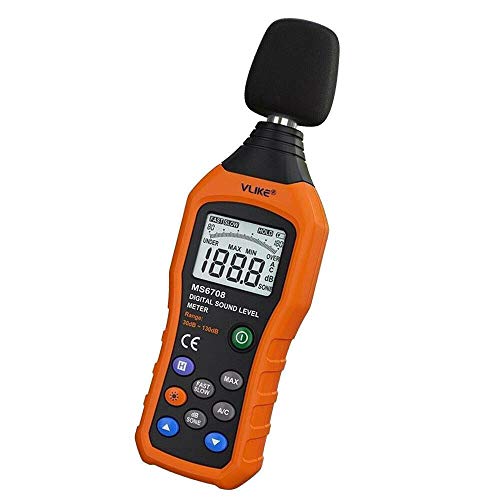
- 30–130 dB range with A/C modes
- Backlit, compact handheld design
- Max lock and auto-ranging functions
Best For: Quick household and ambient-noise checks
Most Versatile Controls
Tadeto Digital Sound Level Meter
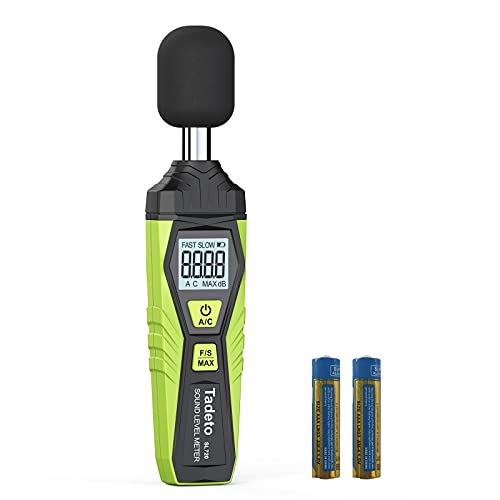
- 30–130 dB range with ±2.0 dB accuracy
- Selectable A/C weighting and fast/slow response
- Backlit LCD with hold and low-battery indicator
Best For: Flexible household and changing-noise measurements
Feature-Rich Value Option

- 30–130 dB range with ±1.5 dB accuracy
- MAX/MIN tracking and result hold
- Backlight and automatic three-minute shutdown
Best For: Comparing noise peaks and minimums at home
Best Portable Pick – TopTes TS-501B
For shoppers comparing sound level meters for home use, the TopTes TS-501B offers a straightforward handheld design with a large backlit display, A/C weighting, and a 30–130 dB measurement range. It is a practical choice for checking rooms, home theaters, appliances, or noisy-neighbor situations.
Best For: Everyday home noise checks and portable sound measurements.
Pros:
- Large 2.25-inch backlit LCD is easy to read in dim light.
- A/C weighting, 30–130 dB range, and stated ±1.5 dB accuracy support versatile measurements.
- MAX/MIN, data hold, low-battery indicator, and automatic shutoff add convenience.
- Includes three AAA batteries and a carry case.
Cons:
- Uses replaceable AAA batteries rather than a rechargeable battery.
- Its handheld display is smaller than dedicated wall-mounted meters.
The TS-501B balances useful features and portability without adding much complexity. Its MAX/MIN readings and data hold are especially helpful when sound levels fluctuate.
Best for Trend Tracking – FNIRSI FDM-02
The FNIRSI FDM-02 stands out among sound level meters for home use because it combines real-time readings with a curve view and stored noise alarms. Its rechargeable battery and light/dark screen themes make it suited to repeated checks around the home or workplace.
Best For: Monitoring changing noise levels, home theaters, and threshold tracking.
Pros:
- 2-inch IPS screen offers light and dark display themes.
- A/C weighting, fast and slow response modes, and ±1.5 dB accuracy support different sound checks.
- Curve mode shows 30 seconds of sound changes.
- Users can set high and low thresholds and review the 30 most recent alarms.
Cons:
- More feature-rich than necessary for shoppers wanting only a basic instant reading.
- Rechargeable operation means the battery is not described as user-replaceable.
Choose the FDM-02 when a single reading is not enough. Its curve display and alarm history provide more context for recurring noise from neighbors, traffic, appliances, or entertainment systems.
Best Traditional Meter – Extech 407730
The Extech 407730 is a conventional digital sound level meter for home users who prefer clear numerical readings and simple measurement controls. It covers 40–130 dB, includes A/C weighting, and adds an analog bar graph for quickly seeing changes in sound intensity.
Best For: Basic digital measurements and users who value a traditional meter layout.
Pros:
- Provides 0.1 dB resolution with stated 2 dB accuracy.
- A fast-response analog bar graph complements the digital display.
- Records MAX/MIN values and includes Max Hold.
- Comes with a microphone windscreen and four AAA batteries.
Cons:
- Its 40–130 dB range starts higher than several home-focused alternatives.
- The supplied notes do not mention a backlit display.
- It is less compact than some portable handheld options.
The 407730 is a sensible pick for straightforward sound checks where resolution, MAX/MIN recording, and a visual bar graph matter more than advanced logging features.
Best Wall Display – DANOPLUS 11-Inch Meter
For rooms where sound should be visible at a glance, this DANOPLUS model is one of the more practical sound level meters for home use. Its 11-inch LED display shows decibels alongside temperature and humidity, while color-coded face icons indicate broad noise levels.
Best For: Wall-mounted or desktop monitoring in shared spaces and rooms.
Pros:
- Large adjustable-brightness 11-inch LED display is easy to see across a room.
- Measures 30–130 dB with stated ±1.5 dB accuracy.
- Color icons indicate ranges below 60 dB, 60–75 dB, 75–85 dB, and above 85 dB.
- Includes calibration, a 2000mAh battery, and a 9.8-foot USB charging cable.
Cons:
- It is much less portable than a handheld meter.
- The face-icon system provides broad alerts rather than an audible alarm or detailed logging.
- Its large display may be excessive for small rooms or occasional checks.
The DANOPLUS works best as an ambient room display rather than a pocket tester. It is especially useful when multiple people need to see current noise conditions without handling the meter.
Best Everyday Pick – RISEPRO HT-80A Digital Sound Level Meter
For straightforward sound level meters for home use, the RISEPRO HT-80A covers everyday noise checks without an overly complicated setup. Its 30–130 dB range, backlit display, and MAX/MIN tracking make it practical for monitoring rooms, appliances, neighbors, or other environments.
Best For: General household noise monitoring and portable everyday checks.
Pros:
- Measures from 30 to 130 dB with stated ±1.5 dB accuracy.
- Offers A-weighting, fast 125 ms response, and MAX/MIN readings.
- Backlight, data hold, auto power-off, carrying pouch, and gift box included.
Cons:
- Frequency range is listed as 31.5 Hz to 4 kHz.
- The notes do not mention computer connectivity or data logging.
The HT-80A is a sensible choice when you want a compact meter with useful core functions rather than advanced reporting features. Its simple controls and included pouch suit occasional home measurements.
Best for Data Logging – DANOPLUS DP-441 Decibel Meter
If you need sound level meters for home use that can document changing noise over time, the DANOPLUS DP-441 adds substantial logging and computer features. It can store up to 43,000 readings, display trends on its color screen, and export data to a Windows PC.
Best For: Home noise investigations that require saved readings, charts, or exports.
Pros:
- Stores up to 43,000 data records for viewing or export.
- Supports A/C frequency weighting and adjustable fast/slow response.
- Color display includes a line chart, analog bars, date, and time.
- Rechargeable battery and Windows 7, 10, and 11 PC connectivity.
Cons:
- Its data-export and analysis features may be more than needed for occasional checks.
- The supplied notes specify PC compatibility with Windows systems, not other platforms.
This is the strongest fit of the three for creating a record of recurring household noise. The configurable alarm lights and export capability are particularly useful when readings need to be reviewed or shared later.
Best for Flexible Readings – TopTes TS-569B Sound Level Meter
The TopTes TS-569B is a versatile option among sound level meters for home use, especially if you want to compare ordinary room noise with louder, bass-heavy, or mechanical sounds. It combines A/C weighting with dB and Sone units, fast/slow response, and MAX/MIN tracking.
Best For: Home users comparing room acoustics, neighbor noise, audio equipment, or workshop sounds.
Pros:
- Measures 30–130 dB with stated ±1.5 dB accuracy and a 31.5 Hz–8 kHz response.
- A-weighting, C-weighting, and Sone mode support different listening and comparison needs.
- Fast and slow response settings help capture changing or steadier sound levels.
- Includes three AAA batteries, a manual, and a portable fabric pouch.
Cons:
- It does not list data logging or PC export in the supplied details.
- Auto power-off activates after 10 minutes of inactivity, which may interrupt extended unattended checks.
With more display and measurement modes than a basic household meter, the TS-569B is a good middle ground for users who want flexibility without a dedicated data logger. Sone mode is also useful for comparing perceived loudness in rooms or entertainment spaces.
Portable Basic Pick – LCD Digital Audio Decibel Meter
If you need straightforward sound level meters for home use, this mini handheld model covers a broad 30–130 dB range and provides real-time readings. Its A/C modes, backlight, and max-locking function make it useful for checking household, office, school, or audio-system noise.
Best For: Home users who want a portable meter for quick ambient-noise checks.
Pros:
- Measures sound from 30 to 130 dB with A/C mode selection.
- Backlit display supports readings in darker conditions.
- Compact casing includes an anti-drop design and power-saving circuitry.
- Includes auto-ranging and maximum-value locking features.
Cons:
- Batteries are not included and require four AAA batteries.
- Cannot store or generate a report directly from the device.
This is a practical choice when portability and basic monitoring matter more than onboard reporting. It is suited to spot checks rather than documenting noise over time.
Most Versatile Controls – Tadeto Digital Sound Level Meter
For sound level meters for home use that offer more control over how noise is captured, the Tadeto combines a 30–130 dB range with A/C weighting and selectable fast or slow response. Its 4-digit backlit display is designed for clear, portable readings around homes, offices, baby rooms, and audio systems.
Best For: Home users who want adjustable response speed and weighting modes for changing noise conditions.
Pros:
- Measures 30–130 dB with stated accuracy of ±2.0 dB.
- A weighting suits ambient noise, while C weighting supports higher-intensity sound analysis.
- Fast and slow response settings accommodate general or fluctuating measurements.
- Includes a backlit 4-digit LCD, data hold, and low-battery indicator.
Cons:
- Its feature set may be more than needed for occasional simple checks.
- Although two AAA batteries are included, replacement batteries will eventually be needed.
The Tadeto stands out for giving home users useful measurement choices without sacrificing portability. Choose it if response speed and A/C weighting are priorities.
Feature-Rich Value Option – Digital Sound Level Meter
This compact meter is a strong option among sound level meters for home use when you want measurement controls beyond a basic live reading. It covers 30–130 dB, offers A weighting, fast/slow response, MAX/MIN tracking, result hold, and automatic shutdown for household, classroom, street, and office checks.
Best For: Users who want MAX/MIN tracking and hold functions in a lightweight meter.
Pros:
- Provides a 30–130 dB range with ±1.5 dB stated accuracy and 0.1 dB resolution.
- Supports fast/slow response selection and A-weighted measurement.
- Offers MAX/MIN measurement and a result-hold function.
- Backlight, low-power indication, and three-minute auto shutdown add convenience.
Cons:
- The supplied notes do not specify included batteries.
- It provides A weighting only, rather than selectable A/C weighting.
With its tracking and hold features, this model is useful for comparing peaks and minimums during a noise check. It is especially appealing if you prefer a small meter with several practical controls.
How We Picked the Best Sound Level Meters for Home Use
We focused on practical features for household noise checks rather than specialized laboratory instrumentation. The selection covers meters with useful 30–130 dB measurement ranges, A/C weighting, backlit screens, maximum and minimum readings, data hold, fast or slow response settings, and portable designs. We also included options for continuous monitoring, wall display use, and long-term recording.
Because specifications and included accessories can vary, check the current product listing for calibration details, battery or charging requirements, warranty coverage, and stated accuracy before buying.
Quick Comparison
| Type | Best for | Features to prioritize |
|---|---|---|
| Basic handheld meter | Quick room and appliance checks | Readable LCD, backlight, A-weighting, data hold |
| Advanced handheld meter | Repeated measurements and comparisons | Fast/slow response, MAX/MIN, dual weighting, sone mode |
| Wall-mounted display | Always-visible room monitoring | Large LED display, alarm indicators, temperature and humidity readings |
| Data logger | Tracking noise over hours or days | Memory capacity, export tools, rechargeable power, timestamps |
Key Buying Factors for Sound Level Meters for Home Use
Measurement Range and Accuracy
A 30–130 dB range handles most household situations, from quiet rooms to loud tools and appliances. Accuracy matters when comparing readings, documenting a recurring problem, or making decisions about sound control. A wider range is useful, but it does not automatically mean better real-world precision.
A-Weighting, C-Weighting, and Response Speed
A-weighting is generally the most useful setting for approximating human hearing and everyday environmental noise. C-weighting gives more emphasis to low-frequency sound, which can help with bass, machinery, and subwoofer noise. Fast response captures quick changes, while slow response produces a steadier reading for fluctuating background noise.
Display and Operating Controls
Choose a backlit LCD for dim rooms or a large wall display when readings need to be visible from across a space. MAX/MIN, data hold, and simple button layouts make repeated checks easier. An alarm indicator can be useful for workshops, classrooms, nurseries, or shared workspaces.
Recording and Power
If you only need occasional readings, a compact battery-powered meter is usually sufficient. For overnight or multi-day monitoring, choose a model with substantial data storage, export capability, rechargeable power, or continuous-display operation.
Who Should Buy Which Sound Level Meters for Home Use?
- For occasional household checks: Choose a compact 30–130 dB handheld meter with A-weighting, a backlight, and data hold.
- For workshops and louder equipment: Look for A/C weighting, fast and slow response modes, MAX/MIN readings, and a durable portable design.
- For visible room monitoring: A wall-hanging meter with a large LED screen and alarm icons is the most convenient choice.
- For noise complaints or trend tracking: Select a data-logging model with extensive memory and computer export features.
- For classrooms, bedrooms, or shared spaces: Prioritize clear readings, simple controls, and an alarm or threshold indicator if you need immediate notice when sound rises.