Finding the right sound level meter can make home projects, workshop testing, audio experiments, and noise checks far easier. The best sound level meters for hobbyists offer readable displays, useful weighting options, and enough measurement range without unnecessary complexity.
We selected 10 practical models spanning affordable handheld meters, Type 2 instruments, calibrated options, and data loggers. Use the guide below to narrow your choice by accuracy, features, portability, and intended use.
Best 10 Sound Level Meters for Hobbyists Picks for 2026
Best Overall Value

- 30–130 dB range with A/C weighting
- Large backlit LCD and data hold
- Includes batteries and carry case
Best For: Home, workshop, and general hobby measurements
Accuracy Pick

- ±1 dB accuracy with Class 2 compliance
- 35–130 dB measurement range
- Fast/slow response and MIN/MAX functions
Best For: Repeatable hobby measurements where accuracy matters
Simple Everyday Choice
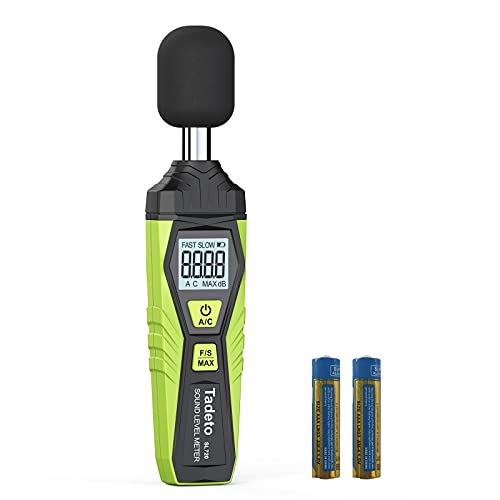
- 30–130 dB range and 0.1 dB display resolution
- A/C weighting with fast/slow response
- Lightweight, backlit, and battery powered
Best For: Casual home and workshop noise checks
Advanced Hobbyist Pick

- Class 2 meter with 29–138 dB range
- A/C/Z weighting and fast/slow modes
- IP54 enclosure with AC/DC power
Best For: Advanced field, machinery, and event measurements
Best All-Around Pick
RISEPRO HT-80A Digital Sound Level Meter

- 30–130 dB range with ±1.5 dB accuracy
- FAST response, A-weighting, and MAX/MIN tracking
- Backlight and carrying pouch included
Best For: General-purpose home, workshop, and hobby noise checks
Most Versatile Controls
Goldeep SL750A Portable Sound Level Meter

- 30–130 dB range and 31.5 Hz–8 kHz response
- A/C weighting with FAST/SLOW response modes
- dB and SONE readings plus included batteries
Best For: Flexible environmental, music, and equipment noise testing
Established Brand Option
Extech 407730 Digital Sound Level Meter

- 40–130 dB measurement with A/C weighting
- 0.1 dB resolution and fast analog bar graph
- MAX/MIN, MAX hold, windscreen, and four batteries
Best For: Traditional digital monitoring with quick visual feedback
Best Data-Logging Pick

- Logs up to 43,000 readings
- Exports data to Excel via Windows PC
- A/C weighting with FAST/SLOW response
Best For: Long-term hobby projects and PC-based analysis
Best Certified Option
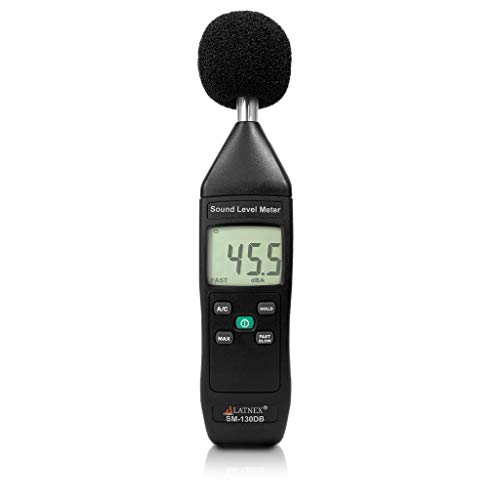
- Meets EN 61672 Type 2 standard
- 35–130 dB range with 0.1 dB resolution
- Includes certificate and two-year warranty
Best For: Documented spot checks and general noise testing
Best Large-Display Pick

- Large red LCD for easy viewing
- 30–130 dB measurement range
- Alarm function and wall-hanging design
Best For: Stationary workshop or room monitoring
Best Overall Value – TopTes TS-501B
For hobbyists comparing sound level meters for hobbyists, the TopTes TS-501B offers a practical balance of range, readability, and everyday features. Its 30–130 dB range, A/C weighting, backlit display, and MAX/MIN readings cover common home, workshop, office, and audio-system checks.
Best For: Home noise checks, workshops, audio systems, and general-purpose hobby use.
Pros:
- Large 2.25-inch backlit LCD is easy to read in dim areas.
- A/C weighting and a 30–130 dB range support varied measurements.
- MAX/MIN, data hold, low-battery indicator, and automatic shutoff add convenience.
- Includes three AAA batteries and a carry case.
Cons:
- Its stated frequency range is 30–8,000 Hz, narrower than the CRY2831’s range.
- It is factory calibrated but not identified as a Class 2 meter in the supplied specifications.
The TS-501B is a sensible starter choice when you want an uncomplicated handheld meter with useful monitoring functions and included accessories.
Accuracy Pick – Extech SL510 Class 2
The Extech SL510 stands out among sound level meters for hobbyists when measurement accuracy and recognized standards matter. It provides a 35–130 dB range, ±1 dB accuracy, Class 2 compliance, and both fast and slow response settings.
Best For: Hobbyists who prioritize Class 2 performance for repeatable sound checks.
Pros:
- ±1 dB accuracy meets Class 2 IEC 61672 standards.
- A and C weighting support environmental and higher-intensity sound measurements.
- Fast/slow response, data hold, and MIN/MAX functions improve flexibility.
- Backlit LCD and included windscreen, wrist strap, and batteries support field use.
Cons:
- Its range begins at 35 dB, higher than the TopTes and Tadeto meters.
- The supplied notes do not mention a carry case.
Choose the SL510 if you want a compact hobby meter with the strongest stated accuracy credentials in this group and a useful two-year manufacturer warranty.
Simple Everyday Choice – Tadeto SL720
The Tadeto SL720 is a straightforward option for shoppers seeking sound level meters for hobbyists without a complicated interface. It measures 30–130 dB, offers A/C weighting, switches between fast and slow response, and displays readings to 0.1 dB on a backlit LCD.
Best For: Casual home, vehicle, baby-room, office, and workshop noise monitoring.
Pros:
- Broad 30–130 dB range covers common household and workshop sounds.
- A/C weighting supports ambient-noise and higher-intensity sound checks.
- Fast and slow response modes handle changing or steadier noise.
- Lightweight design, backlight, and low-battery indicator make it convenient to carry and use.
Cons:
- Stated accuracy is ±2.0 dB, lower than the Extech’s ±1 dB rating.
- The supplied specifications do not identify Class 2 compliance or include a carry case.
The SL720 makes sense for basic sound investigations where easy portability and essential weighting and response controls are more important than professional-grade accuracy.
Advanced Hobbyist Pick – CRYSOUND CRY2831
The CRYSOUND CRY2831 is the most advanced option here for hobbyists who want broader measurement capability. This factory-calibrated Class 2 meter covers 29–138 dB and 20 Hz–12.5 kHz, with A, C, and Z weighting plus fast and slow time weighting.
Best For: Advanced hobbyists, facility checks, machinery noise, live events, and demanding field measurements.
Pros:
- IEC 61672-1:2013 Class 2 design with stated ±1.5 dB accuracy.
- Wide 29–138 dB range captures quieter environments and louder sources.
- Extended 20 Hz–12.5 kHz response can reveal higher-frequency noise.
- Includes A/C/Z weighting, fast/slow modes, IP54 protection, and AC/DC power.
Cons:
- Its broader feature set may be more than casual users need.
- The supplied notes do not mention a carry case or backlit display.
- It is larger and heavier than the TopTes and Extech models listed here.
For serious hobby projects, the CRY2831 provides the broadest stated range and most measurement controls, while its IP54 enclosure and temperature rating add field-use flexibility.
Best All-Around Pick – RISEPRO HT-80A Digital Sound Level Meter
For hobbyists comparing sound level meters for hobbyists, the RISEPRO HT-80A offers a broad 30–130 dB range, ±1.5 dB accuracy, and practical controls for checking noise around the home, workplace, or workshop.
Best For: General-purpose noise checks, monitoring changing sound levels, and hobbyists who want a backlit meter with useful recording functions.
Pros:
- Measures from 30–130 dB with stated ±1.5 dB accuracy.
- Includes FAST response, A-weighting, data hold, and MAX/MIN readings.
- Backlight, auto power-off, carrying pouch, and gift-box packaging add convenience.
Cons:
- Its stated frequency range ends at 4 kHz.
- The supplied notes do not specify included batteries.
The HT-80A is a sensible all-purpose choice when you want straightforward readings and convenient features without a complicated setup. Its backlight and hold functions are especially useful for casual measurements in varied locations.
Most Versatile Controls – Goldeep SL750A Portable Sound Level Meter
The Goldeep SL750A is a flexible option among sound level meters for hobbyists, combining 30–130 dB measurement with A/C weighting, FAST/SLOW response choices, and both dB and SONE readouts.
Best For: Hobbyists who want to compare environmental noise, machinery, music, and perceived loudness with more measurement options.
Pros:
- Measures 30–130 dB with stated ±1.5 dB accuracy and a 31.5 Hz–8 kHz response.
- A- and C-weighting plus FAST and SLOW response settings support different sound conditions.
- Offers dB/SONE units, MAX/MIN tracking, data hold, and an included windbreak ball.
- Includes two AAA batteries and a user manual for immediate use.
Cons:
- The supplied notes do not mention a backlight.
- Its broader feature set may be more than needed for simple one-off checks.
With multiple weighting, response, and display options, the SL750A is a strong fit for hobbyists who want to experiment with different sound-measurement approaches. The included batteries and windbreak make it convenient for indoor or outdoor testing.
Established Brand Option – Extech 407730 Digital Sound Level Meter
The Extech 407730 is a straightforward choice for hobbyists researching sound level meters for hobbyists, with A/C weighting, a 40–130 dB range, 0.1 dB resolution, and a fast analog bar graph for following changing readings.
Best For: Hobbyists who prefer a traditional digital meter with visual level tracking, MAX/MIN recording, and included accessories.
Pros:
- Provides A/C weighting, 0.1 dB resolution, and stated 2 dB accuracy.
- Fast analog bar graph helps show changing sound levels at a glance.
- Includes MAX/MIN recording, MAX hold, auto power-off, and a microphone windscreen.
- Four AAA batteries and a one-year parts-and-labor warranty are listed.
Cons:
- Its 40–130 dB range does not reach as low as the 30 dB range of the other listed meters.
- The stated accuracy is 2 dB, less precise than the ±1.5 dB claims of the other options.
- The supplied notes do not mention a backlight or data-hold function.
The 407730 emphasizes familiar controls and quick visual feedback rather than a large collection of advanced modes. It is worth considering if the analog bar graph, A/C weighting, and included windscreen match your measurement style.
Best Data-Logging Pick – DANOPLUS DP-441
For hobbyists who want more than a one-time reading, the DANOPLUS DP-441 is one of the more versatile sound level meters for hobbyists. It combines live readings with extensive onboard logging, PC export, adjustable weighting, and visual alarms.
Best For: Hobbyists tracking noise over time or analyzing results on a Windows PC.
Pros:
- Stores up to 43,000 readings and supports Excel export.
- Measures from 30–130 dB with stated ±1.5 dB accuracy.
- Offers A/C frequency weighting, FAST/SLOW response, and a colored trend display.
- Rechargeable battery and Windows 7, 10, and 11 connectivity.
Cons:
- Its data-logging and PC features may be more than needed for quick checks.
- The supplied notes specify Windows compatibility, not support for other operating systems.
The DP-441 is a strong choice when measurement history and analysis matter. Its adjustable alarms and multiple display elements also make changing sound levels easier to monitor at a glance.
Best Certified Option – SM-130DB Type 2 Meter
The SM-130DB is a straightforward choice among sound level meters for hobbyists who value a stated standard and included documentation. It covers common environmental and mechanical noise measurements while providing 0.1 dB resolution.
Best For: Hobbyists who want a Type 2 meter with a calibration certificate and warranty support.
Pros:
- Designed to the EN 61672 Type 2 standard.
- Measures 35–130 dB with ±1.8 dB stated accuracy and 0.1 dB resolution.
- Includes a calibration certificate, user manual, technical support, and a two-year warranty.
- Suitable for environmental and machine-noise checks in settings such as workshops, offices, and classrooms.
Cons:
- Uses a replaceable 9V alkaline battery rather than a rechargeable battery.
- Its 35 dB lower range is narrower than meters that begin at 30 dB.
With its Type 2 designation and included support, the SM-130DB emphasizes documented, dependable measurement rather than advanced logging features. It is a practical fit for repeated spot checks around the home or workshop.
Best Large-Display Pick – SW-525A Wall-Mount Meter
The SW-525A takes a simple, easy-to-see approach to sound monitoring. For hobbyists comparing sound level meters for hobbyists, its large red LCD and wall-hanging design make it especially suited to a fixed location where readings need to be visible.
Best For: Workshop, room, or other stationary monitoring where a large display is useful.
Pros:
- Large red LCD display is designed for easy viewing.
- Measures sound levels across a 30–130 dB range.
- Includes an alarm function for noise monitoring.
- Wall-hanging design supports fixed-position use.
Cons:
- The supplied notes do not specify accuracy, resolution, or a calibration certificate.
- Its wall-hanging format is less suited to portable measurements.
- The notes do not provide battery or power details.
The SW-525A is best viewed as a dedicated, at-a-glance monitor rather than a feature-heavy handheld analyzer. Choose it when display size and stationary placement matter more than documented precision or data export.
How We Picked These Sound Level Meters for Hobbyists
We focused on meters with a useful measurement range for everyday noise testing, typically around 30 to 130 dB. We also considered A and C weighting, display readability, data-hold and maximum/minimum functions, portability, power options, and whether a model offers Type 2 classification or factory calibration. Because hobbyists have varied needs, this list includes both simple budget meters and more capable instruments with recording or export features.
Specifications can vary by model and seller, so check the current listing for calibration details, included accessories, battery requirements, and data-logging limitations before buying.
Quick Comparison
| Best For | Look For | Typical Advantage |
|---|---|---|
| Basic home checks | 30–130 dB range, backlit display | Simple operation and low cost |
| More consistent testing | Type 2 classification or factory calibration | Greater confidence in readings |
| Audio and workshop projects | A/C weighting and MAX/MIN readings | More useful comparisons across environments |
| Long-term monitoring | Data logging and computer export | Records trends instead of single readings |
| Fixed-location monitoring | Large display, alarm, or wall-mount design | Easy viewing from a distance |
Key Buying Factors for Sound Level Meters for Hobbyists
Measurement Range and Resolution
A range near 30–130 dB covers quiet rooms, conversations, tools, appliances, and many recreational audio applications. A clear display and sensible resolution are often more valuable than an unusually wide advertised range.
Weighting Options
A-weighting approximates human hearing and is the most useful choice for general environmental noise. C-weighting captures more low-frequency content, making it helpful for speakers, machinery, bass-heavy audio, and impulse comparisons. Having both gives a hobby meter greater flexibility.
Accuracy and Classification
Type 2 meters are generally a sensible choice for practical field measurements, while a factory-calibrated model can provide added confidence. These instruments should not automatically be treated as substitutes for certified professional testing, especially for legal, workplace, or regulatory decisions.
Convenience Features
Backlighting helps in workshops and dim rooms. Data hold freezes a reading, while MAX/MIN functions capture peaks or changes. If you need to compare noise over hours or days, choose a data logger rather than relying on handwritten readings.
Who Should Buy Which Sound Level Meters for Hobbyists?
Choose a basic portable meter such as the TopTes, Tadeto, RISEPRO, or Goldeep style options if you want quick checks around the home, garage, hobby room, or vehicle. Their broad ranges and straightforward controls suit occasional use.
For users who prioritize measurement confidence, consider the Extech, CRY2831, or SM-130DB options with Type 2 positioning, calibration claims, or established instrument features. These are better suited to repeatable comparisons and more demanding projects.
If your goal is tracking noise over time, the data-logging meter with recording and export capability is the logical choice. For a visible reading in a room, studio, or workspace, a large-screen or wall-hanging design may be more convenient than a compact handheld unit.