The right eyepiece can make the difference between a small, soft planet and a crisp view with visible bands, rings, shadows, or lunar detail. This roundup compares 10 options across several focal lengths, designs, and budgets.
Whether you need a dedicated high-power eyepiece, a flexible zoom, or a starter kit, use the guide below to match magnification and viewing comfort to your telescope and observing conditions.
Best 10 Telescope Eyepieces for Planetary Viewing Picks for 2026
Balanced Planetary Pick

- 60° field with six-element fully multi-coated optics
- Pop-up eyeguard and textured grip improve usability
- 1.25-inch filter-threaded barrel; 2-year US warranty
Best For: Comfortable, versatile planetary viewing
Flexible Starter Set
SVBONY 4mm/10mm/23mm Eyepieces

- Three focal lengths cover bright and deep-sky targets
- 62° field supports easier locating and immersive views
- Fully multi-coated aspherical optics with filter threads
Best For: Beginners building an adaptable eyepiece collection
High-Power Planetary Choice
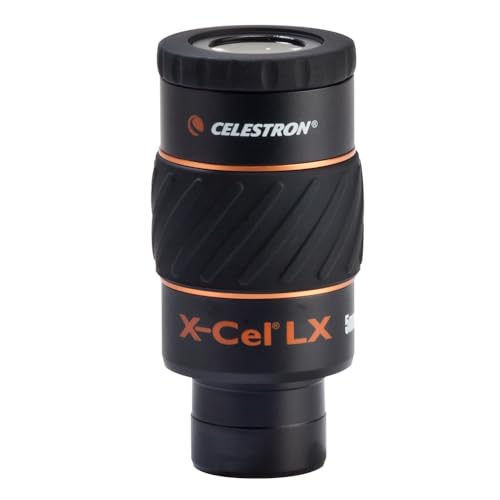
- Short 5mm focal length targets high-power planet views
- 60° field and six-element fully multi-coated optics
- Comfortable eyeguard, grip, and filter-threaded barrel
Best For: Detailed planetary observing with a compatible telescope
Adjustable Viewing Option
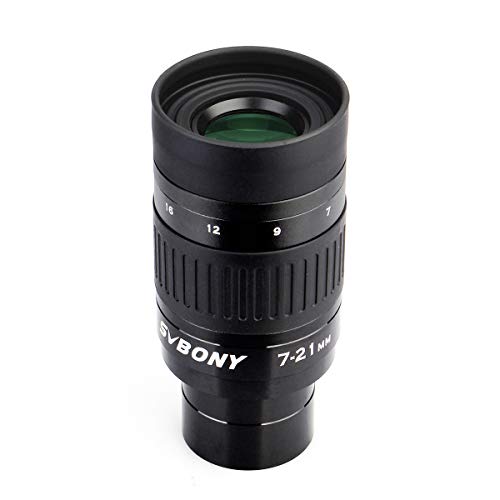
- 7–21mm range provides adjustable planetary magnification
- 18mm–16.3mm eye relief suits comfortable viewing
- Fully multi-coated six-element design in a 1.25-inch barrel
Best For: Observers wanting one eyepiece for varied magnification
High-Power Detail Pick

- Four-element Plossl design at an affordable price
- Rubber eyecup supports comfortable viewing
- Threaded barrel accepts 1.25-inch filters
Best For: High-power planetary observing on a budget
Immersive Wide-Field Option

- Wide 82-degree apparent field
- Waterproof, argon-purged housing
- Works with compatible focal extenders
Best For: Wide-field planetary and deep-sky observing
Balanced Planetary Value

- Affordable four-element Plossl optics
- Comfortable foldable rubber eyecup
- Threaded 1.25-inch barrel for filters
Best For: Moderately high-power Moon and planet views
Compact High-Power Pick
Astromania 4mm Plossl Eyepiece

- 4mm focal length for high-power viewing
- Four-element, fully multi-coated optics
- 1.25-inch barrel with filter threads
Best For: Dedicated lunar and planetary detail viewing
Affordable Planetary Essential

- Four-element Plossl optical design
- Comfortable foldable rubber eyecup
- Threaded 1.25-inch barrel accepts filters
Best For: Budget-friendly lunar and planetary viewing
Complete Magnification Kit
Celestron Eyepiece and Filter Set

- Five Plossl eyepieces from 6mm to 32mm
- Includes 2x Barlow for added magnification
- Moon and colored planetary filters included
Best For: Building a versatile 1.25-inch astronomy kit
Balanced Planetary Pick – Celestron X-Cel LX 9mm
For observers comparing telescope eyepieces for planetary viewing, the Celestron X-Cel LX 9mm offers a practical balance of magnification, viewing comfort, and field of view. Its six-element, fully multi-coated design provides a 60° field, while the 1.25-inch barrel fits compatible focusers and accepts filters.
Best For: Planetary observers who want a comfortable, versatile 9mm eyepiece with a moderately wide field.
Pros:
- 60° field of view with a six-element, fully multi-coated lens system
- Pop-up rubber eyeguard improves comfort and can help increase contrast
- Textured grip supports handling, including when wearing gloves
- Includes a 2-year US warranty and unlimited support from Celestron
Cons:
- Its 1.25-inch barrel requires a compatible focuser
- Fixed 9mm focal length offers less flexibility than a zoom eyepiece
The 9mm focal length is a useful middle ground for planetary sessions, and the adjustable eyeguard and filter threading add everyday convenience. Confirm your telescope’s compatibility before ordering.
Flexible Starter Set – SVBONY 4mm/10mm/23mm Eyepieces
This SVBONY three-piece set is a flexible option for shoppers seeking telescope eyepieces for planetary viewing and general observing. The 4mm and 10mm focal lengths target detailed views of bright objects such as the Moon and Jupiter, while the 23mm eyepiece suits wider views of clusters and nebulae.
Best For: Beginners and observers who want three focal lengths for planetary, deep-sky, and wide-field use.
Pros:
- Includes 4mm, 10mm, and 23mm eyepieces for varied magnification needs
- 62° apparent field makes objects easier to locate and frames more surroundings
- Fully multi-coated aspherical optics are designed to improve brightness and sharpness
- Standard 1.25-inch barrels include filter threading and internal light-blocking matting
Cons:
- Compatibility depends on having a 1.25-inch focuser
- Users must calculate magnification and avoid exceeding twice the objective aperture
- The supplied warranty is shorter than the Celestron alternatives
With three focal lengths, this set can cover more observing situations than a single planetary eyepiece. Check your telescope’s mount size, focal length, and aperture before choosing a combination.
High-Power Planetary Choice – Celestron X-Cel LX 5mm
For telescope eyepieces for planetary viewing at higher power, the Celestron X-Cel LX 5mm is designed for detailed observations through a six-element, fully multi-coated optical system. Its 60° field helps keep the view practical, while the pop-up eyeguard and rubberized grip support comfortable handling.
Best For: Observers with suitable telescopes who want a dedicated short-focal-length eyepiece for high-power planet views.
Pros:
- 5mm focal length is suited to higher-power planetary observation
- 60° field of view provides useful framing for a short focal length
- Fully multi-coated six-element design supports light transmission and contrast
- Pop-up eyeguard, filter threads, and textured grip add practical convenience
Cons:
- High magnification can be unsuitable for some telescope and sky conditions
- Fixed 5mm focal length is less versatile than a zoom
- Requires a compatible 1.25-inch focuser
The 5mm model is the most specialized option in this group, prioritizing planetary magnification over broad versatility. Verify the resulting magnification for your telescope before buying.
Adjustable Viewing Option – SVBONY SV135 7–21mm Zoom
The SVBONY SV135 gives observers adjustable magnification in one 1.25-inch eyepiece, making it a convenient choice among telescope eyepieces for planetary viewing. Its 7–21mm zoom range supports higher power at the short end and broader views at the long end, with a 40°–57° field of view.
Best For: Observers who want to adjust magnification while viewing the Moon, planets, nebulae, and clusters.
Pros:
- 7–21mm zoom range can replace multiple fixed focal lengths
- 18mm–16.3mm eye relief is designed to be comfortable, including for eyeglass wearers
- Six-element, four-group fully multi-coated design supports center and edge sharpness
- Standard 1.25-inch barrel fits compatible telescope focusers
Cons:
- Field of view varies from 40° to 57° rather than remaining constant
- Zoom flexibility comes with a heavier 230g body
- Requires a telescope that accepts 1.25-inch eyepieces
The SV135 is a practical choice when changing eyepieces during a session is inconvenient. Its adjustable focal length makes it easier to fine-tune views, while the rubber eyeguard helps block stray light during observation.
High-Power Detail Pick – Celestron Omni 4mm
For shoppers comparing telescope eyepieces for planetary viewing, the Celestron Omni 4mm is a budget-friendly high-power option. Its four-element Plossl design, rubber eyecup, and blackened lens edges are intended to support comfortable, higher-contrast observing.
Best For: High-power views of planets and other bright targets when your telescope and seeing conditions support a 4mm focal length.
Pros:
- Affordable four-element Plossl optical design.
- Rubber eyecup can improve comfort and accommodate eyeglasses when folded down.
- Blackened lens edges and a matte aluminum barrel help reduce internal reflections.
- Threaded 1.25-inch barrel accepts filters.
Cons:
- The 4mm focal length is high power and may not suit every telescope or observing condition.
- Its 1.25-inch barrel limits compatibility to suitable focusers and diagonals.
The Omni 4mm makes sense if you want an inexpensive route to high magnification and appreciate filter compatibility. Celestron also includes a two-year US warranty and unlimited support from US-based experts.
Immersive Wide-Field Option – Explore Scientific 14mm 82°
The Explore Scientific 14mm 82° is a versatile choice among telescope eyepieces for planetary viewing, especially when you want a broad, immersive view alongside moderate detail. Its generous apparent field, 15.6mm eye relief, and sealed housing also suit wider-ranging astronomical targets.
Best For: First looks at planets, planetary nebulae, globular clusters, and users who prefer an expansive 82-degree field.
Pros:
- Immersive 82-degree apparent field makes tracking and averted vision easier.
- Argon-purged, waterproof housing adds environmental protection.
- EMD coatings, low-dispersion glass, blackened lens edges, and flat-black internals support sharp, contrasty views.
- Compatible with Explore Scientific 2X, 3X, or 5X focal extenders for more power.
Cons:
- At 9 ounces, it is considerably heavier than the compact Celestron Omni models.
- The 14mm focal length provides upper-medium rather than extreme planetary magnification without an extender.
- Its 1.25-inch barrel requires a compatible focuser or diagonal.
This is the most flexible option of the three for observers who value field of view and build protection. Add a compatible focal extender when you need higher power for planetary detail.
Balanced Planetary Value – Celestron Omni 6mm
The Celestron Omni 6mm offers a practical middle ground for telescope eyepieces for planetary viewing. Its four-element Plossl design, comfortable rubber eyecup, and reflection-reducing barrel features make it a straightforward choice for detailed Moon and planet observations.
Best For: Observers seeking a moderately high-power 1.25-inch eyepiece for the Moon and planets.
Pros:
- Quality four-element Plossl optical design at an affordable price.
- Rubber eyecup supports comfortable viewing and can fold down for eyeglasses.
- Blackened lens edges and matte aluminum barrel help prevent internal reflections.
- Threaded 1.25-inch barrel accepts filters.
Cons:
- The 6mm focal length may still be too powerful under poor seeing conditions or with some telescopes.
- Compatibility is limited to telescopes with suitable 1.25-inch focusers or diagonals.
The Omni 6mm is a sensible value pick when 4mm feels too aggressive but you still want increased magnification for lunar and planetary work. It includes Celestron’s two-year US warranty and unlimited US-based expert support.
Compact High-Power Pick – Astromania 4mm Plossl Eyepiece
For shoppers comparing telescope eyepieces for planetary viewing, this 4mm Astromania Plossl is a compact, high-power option for compatible telescopes with a 1.25-inch focuser. Its four-element, fully multi-coated design is intended to provide bright, sharp, color-corrected images, while the 50-degree field of view gives a comfortable viewing window.
Best For: Observers seeking a dedicated high-power eyepiece for lunar and planetary details, especially on Jupiter, Saturn, Mars, and Venus.
Pros:
- 4mm focal length supports high-power planetary and lunar observation.
- Four-element, fully multi-coated optics are designed for sharp, bright images and good color correction.
- 1.25-inch barrel includes filter threading and a fold-down rubber eyeguard.
- Compact aluminum-alloy body includes dust caps for storage and transport.
Cons:
- Its 4mm focal length may be too powerful for some telescope and seeing conditions.
- Compatible only with telescopes using a 1.25-inch focuser.
This is a practical choice when planetary detail is the priority and your telescope can support the magnification. The included filter threading and eyeglass-friendly eyeguard add useful flexibility for longer observing sessions.
Affordable Planetary Essential – Celestron Omni 9mm Eyepiece
The Celestron Omni 9mm is a straightforward choice for shoppers looking at telescope eyepieces for planetary viewing. Its four-element Plossl design is aimed at crisp lunar and planetary views, while the rubber eyecup can improve comfort and contrast during observation.
Best For: Beginners and budget-conscious observers who want a dedicated 9mm eyepiece for lunar and planetary use.
Pros:
- Four-element Plossl optical design at an affordable price point.
- Rubber eyecup can be folded down for eyeglass wearers.
- Blackened lens edges and a matte aluminum barrel help limit internal reflections.
- Threaded 1.25-inch barrel accepts compatible filters.
Cons:
- Provides one fixed 9mm focal length rather than a range of magnifications.
- The supplied notes do not specify included filters or additional accessories.
With its practical focal length, filter compatibility, and comfortable eyecup, the Omni 9mm is an uncomplicated upgrade or replacement eyepiece. Celestron also includes a two-year US warranty and unlimited support from its US-based team.
Complete Magnification Kit – Celestron Eyepiece and Filter Set
For a flexible approach to telescope eyepieces for planetary viewing, this Celestron accessory kit combines five Plossl eyepieces, a 2x Barlow lens, and planetary filters. The range of focal lengths lets you adjust magnification for different targets and conditions, while the included case keeps the accessories organized.
Best For: Beginners and observers building a versatile 1.25-inch eyepiece collection with dedicated planetary and lunar accessories.
Pros:
- Includes 6mm, 8mm, 13mm, 17mm, and 32mm Plossl eyepieces.
- 2x Barlow lens doubles the magnification of the included or other compatible 1.25-inch eyepieces.
- Includes a Moon Filter and colored planetary filters for targets such as Jupiter and Mars.
- Foam-lined metal case provides organized storage and room to expand.
Cons:
- The full kit is less compact than buying a single eyepiece.
- Accessory compatibility depends on a telescope accepting 1.25-inch eyepieces.
- Very high magnification combinations may depend on the telescope and observing conditions.
This is the most versatile option of the three for someone starting or expanding an astronomy setup. Its multiple focal lengths, Barlow, and filters offer more experimentation than a single fixed eyepiece, backed by Celestron’s two-year warranty and unlimited US-based support.
How We Picked the Best Telescope Eyepieces for Planetary Viewing
We focused on eyepieces suited to lunar and planetary observation, prioritizing useful high-power focal lengths, optical versatility, apparent field of view, eye relief, and compatibility with common 1.25-inch focusers. The selection includes fixed focal-length eyepieces for targeted observing, a zoom model for flexible magnification, wider-field designs, and kits for beginners building a basic accessory collection.
Because usable magnification depends on the telescope, atmosphere, and observer, no single eyepiece is ideal for everyone. A 4mm eyepiece may reveal impressive detail in excellent conditions but can be difficult to focus or use with a short-focal-length telescope.
Quick Comparison
| Best For | Recommended Type | Why It Works |
|---|---|---|
| High-power planetary detail | 4mm–6mm fixed eyepiece | Provides strong magnification for the Moon and bright planets |
| Versatile observing | 7mm–10mm eyepiece | Balances magnification, brightness, and easier focusing |
| Flexible magnification | Zoom eyepiece | Lets you adjust power as conditions change |
| Wide-field viewing | Wide-angle eyepiece | Makes manual tracking and target acquisition more comfortable |
| New astronomers | Accessory kit | Combines eyepieces and filters in one purchase |
Key Buying Factors for Telescope Eyepieces for Planetary Viewing
Focal Length and Magnification
Calculate magnification by dividing your telescope’s focal length by the eyepiece focal length. Shorter focal lengths produce higher power, but atmospheric turbulence often limits practical magnification. For many telescopes, a midrange 6mm–10mm eyepiece is a more consistently useful starting point than the shortest option.
Eye Relief and Viewing Comfort
Eye relief determines how far your eye can sit from the eyepiece while seeing the full image. Longer eye relief is especially helpful for eyeglass wearers and extended observing sessions. Very high-power eyepieces can otherwise feel cramped.
Field of View and Tracking
A wider apparent field of view shows more sky and gives a planet more time to remain visible in a manually driven telescope. It can also make locating and recentering targets easier, although field width does not automatically guarantee better sharpness.
Barrel Size and Telescope Compatibility
Confirm whether your focuser accepts a 1.25-inch barrel, which is common among the models here. Also check clearance, focus travel, and whether a Barlow lens would duplicate the magnifications you already own.
Who Should Buy Which Telescope Eyepieces for Planetary Viewing?
Choose a 4mm or 5mm model if your telescope has a longer focal length and you regularly observe under steady skies. A 6mm–10mm eyepiece is the safer all-purpose choice for many beginners because it offers meaningful magnification without being as demanding. Pick a zoom if you want to fine-tune power quickly or share the telescope with multiple observers. A wide-angle model is worthwhile for manual mounts and users who prefer a more spacious view. Finally, choose an accessory kit if you are starting from scratch, but compare its included focal lengths with your telescope’s practical magnification range before buying.