Good weather stations for hobbyists make it easier to track conditions around your home, garden, workshop, or observatory. The best models combine dependable outdoor sensors with clear displays, useful historical data, and connectivity that fits your setup.
We selected 10 options spanning Wi-Fi systems, dual-band models, wireless displays, and straightforward indoor-outdoor stations. Use the guide below to match features, installation needs, and budget with the kind of weather data you actually want to monitor.
Best 10 Weather Stations for Hobbyists Picks for 2026
Best Connected Pick
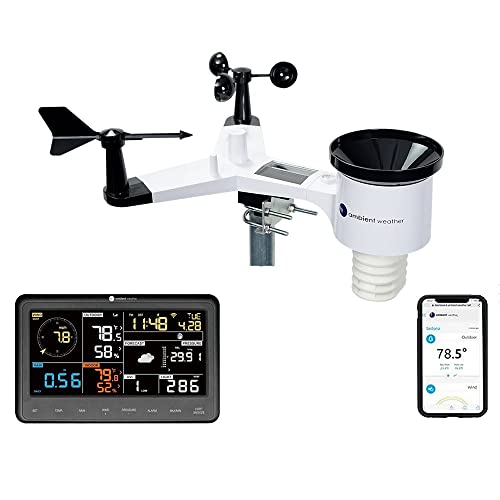
- Tracks wind, rain, temperature, humidity, UV, and solar radiation
- Wi-Fi access with alerts and smart-home integrations
- Solar-powered sensor array with color LCD console
Best For: Connected home and garden weather monitoring
Best DIY Sensor Kit
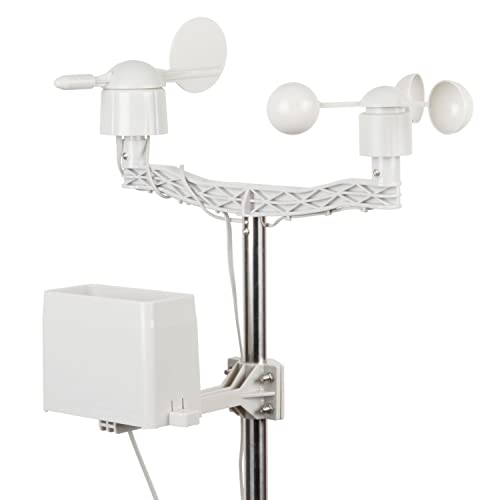
- Measures wind speed, direction, and rainfall
- Passive analog sensors for custom projects
- Includes cables and basic mounting hardware
Best For: DIY, classroom, and laboratory weather projects
Best Expandable Gateway

- 7-in-1 outdoor sensor array with indoor gateway readings
- Wi-Fi and Ethernet connectivity with SD-card support
- Uploads data to multiple weather services
Best For: Data-focused monitoring and expandable smart setups
Best Display and History

- 6.5-inch touchscreen with extensive weather readings
- Dual-band Wi-Fi, app alerts, and Weather Underground support
- Stores and downloads up to two years of data
Best For: At-a-glance monitoring and long-term weather tracking
Connected All-in-One Pick
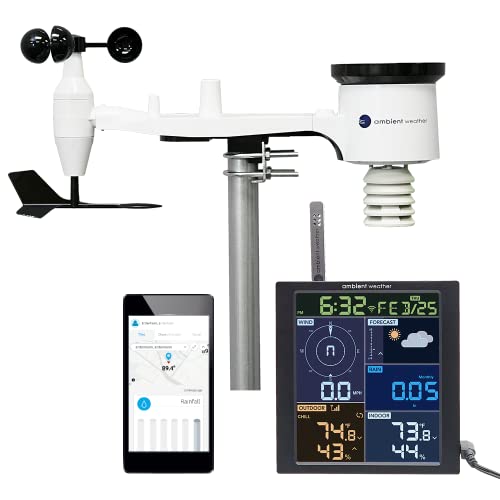
- Tracks temperature, humidity, pressure, wind, and rainfall
- Offers 16-second updates on the color LCD
- Adds Wi-Fi, alerts, and smart-home compatibility
Best For: Gardeners and connected-home hobbyists
Most Detailed Data Logger
Sainlogic 12-in-1 Wi-Fi Station

- Delivers 12 weather and time readings
- Supports 5GHz/2.4GHz Wi-Fi and app alerts
- Stores two years of data with Excel export
Best For: Data-focused gardeners, greenhouse users, and DIY hobbyists
Best Expandable System

- Monitors temperature, humidity, wind, rain, and pressure
- Tracks wind history from one hour to one year
- Supports Wi-Fi, alerts, and additional sensors
Best For: Hobbyists planning a flexible, expandable home setup
Best Full-Feature Pick
Dual-Display Wireless Weather Station
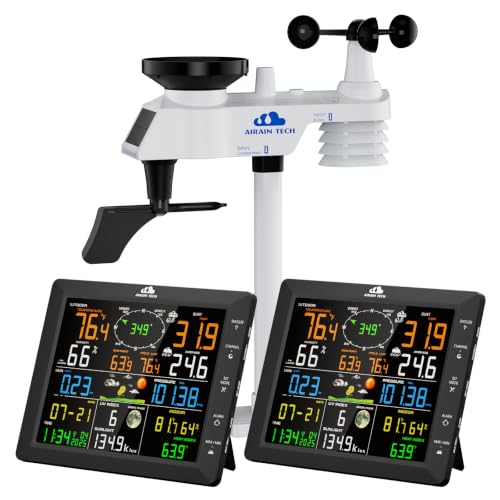
- 8.5-inch color display with broad weather data
- Tracks rain, wind, pressure, UV, dew point, and more
- 328-foot range with mounting kit and two-year warranty
Best For: Detailed home, educational, or environmental monitoring without Wi-Fi
Best for Multi-Zone Monitoring

- Readable 7.6-inch VA display
- Remote sensor includes its own 2-inch screen
- Supports up to three sensors across a 328-foot range
Best For: Readable temperature monitoring across multiple home or property zones
Best Giftable Option
W1 Wireless Home Weather Station

- Tracks temperature, humidity, wind, and rainfall
- 7.5-inch display with three backlight levels
- Includes a weather logbook for recording trends
Best For: Gardeners and hobbyists who enjoy hands-on weather logging
Best Connected Pick – Ambient Weather WS-2902
Ambient Weather WS-2902 Wi-Fi Smart Weather Station | With Wi-Fi Remote Monitoring and Alerts
Check Price On AmazonFor hobbyists who want accessible backyard readings plus remote access, the Ambient Weather WS-2902 combines a solar-powered outdoor sensor array with a color LCD console and Wi-Fi connectivity. It tracks core conditions including temperature, humidity, wind, rain, UV, and solar radiation.
Best For: Home gardeners and hobbyists who want smart-home integration, Wi-Fi monitoring, and a dedicated indoor display.
Pros:
- Measures wind, temperature, humidity, rainfall, UV, and solar radiation.
- Supports remote monitoring, alerts, and integrations with Alexa, Google Home, and IFTT.
- Includes a solar-powered sensor array and easy-to-read color LCD display.
Cons:
- The outdoor sensor is rated from 14°F to 149°F.
- Wi-Fi operates on the 2.4 GHz band.
The WS-2902 is a well-rounded choice among weather stations for hobbyists, especially if connected features and hyper-local backyard data matter as much as the on-site display.
Best DIY Sensor Kit – Weather Meter Kit
This Weather Meter Kit is aimed at hands-on hobbyists who want the core outdoor sensors without a built-in display. Its passive, analog components measure wind speed, wind direction, and rainfall, making it suitable for classroom, laboratory, garden, or custom data-logging projects.
Best For: DIY builders, students, and hobbyists developing their own monitoring or electronics setup.
Pros:
- Includes a wind vane, cup anemometer, and tipping-bucket rain gauge.
- Passive sensors use sealed magnetic reed switches and RJ11-terminated cables.
- Mounting mast, arm, bar, clamps, and zip ties are included.
Cons:
- No display or built-in data logger is included.
- Requires an external voltage source and separate measurement equipment.
- Provides analog rather than Wi-Fi-connected readings.
Unlike all-in-one weather stations for hobbyists, this kit leaves the electronics and data handling to you. That makes it less convenient out of the box but more adaptable for experiments and custom installations.
Best Expandable Gateway – ECOWITT GW3001
The ECOWITT GW3001 pairs a compact WS90 outdoor sensor array with a GW3000 gateway that supports both Wi-Fi and Ethernet. It records temperature, humidity, wind, piezo rainfall, barometric pressure, UV, and solar data, with app access, SD-card support, and uploads to several online weather services.
Best For: Hobbyists who want flexible networking, historical data storage, and room to add compatible sensors or IoT devices.
Pros:
- Combines a 7-in-1 outdoor array with indoor temperature, humidity, and pressure sensing.
- Gateway supports Wi-Fi, Ethernet, a FAT32 SD card up to 32GB, and multiple weather platforms.
- Can work with compatible ECOWITT sensors and selected IoT devices.
Cons:
- No dedicated display is included.
- SD card, Ethernet cable, and outdoor-sensor batteries are not included.
- Some listed connectivity details vary between the supplied specifications and product description.
The GW3001 is a strong data-oriented option for weather stations for hobbyists. Its gateway approach favors app dashboards, online uploads, and expansion over a traditional tabletop console.
Best Display and History – Sainlogic SA68 Plus
The Sainlogic SA68 Plus suits hobbyists who prefer a substantial indoor console alongside app access. Its 6.5-inch touchscreen shows temperature, humidity, wind, rain, pressure, forecast icons, and moon phase, while the system supports dual-band Wi-Fi and up to two years of downloadable historical data.
Best For: Home users who want a large touchscreen, remote alerts, broad weather readings, and long-term data review.
Pros:
- Large HD touchscreen with adjustable backlight and a broad set of displayed readings.
- Supports both 2.4GHz and 5GHz Wi-Fi, plus app alerts and Weather Underground.
- Stores and downloads up to two years of historical weather data.
- Remote sensor transmission range is listed at up to 443 feet.
Cons:
- The listed console power setup is battery-powered, with a stated 24-hour battery life.
- Its sensor transmission range can vary with obstacles and installation conditions.
For weather stations for hobbyists that emphasize at-a-glance usability and record keeping, the SA68 Plus offers a particularly feature-rich console. It is a practical fit for users who want both live readings and longer-term spreadsheet analysis.
Connected All-in-One Pick – Ambient Weather WS-1965
For hobbyists looking for weather stations with straightforward monitoring and smart-home connectivity, the Ambient Weather WS-1965 is a practical all-in-one option. Its sensor array tracks temperature, humidity, barometric pressure, wind, and rainfall, while the color LCD provides updates every 16 seconds.
Best For: Gardeners and hobbyists who want remote monitoring, customizable alerts, and optional Ambient Weather Network access.
Pros:
- Measures the core backyard weather conditions, including rainfall and wind direction.
- Supports Wi-Fi access, remote monitoring, and alerts.
- Works with IFTTT, Google Home, Alexa, and the Ambient Weather Network.
- Includes both an all-in-one outdoor sensor array and color LCD display.
Cons:
- The supplied notes do not specify historical data storage or export features.
- Smart-home and network features require setup through compatible services.
The WS-1965 balances broad measurements with connected features without requiring separate sensors for each reading. It is a strong fit when convenient app-style access and smart-home integration matter as much as the local display.
Most Detailed Data Logger – Sainlogic 12-in-1 Wi-Fi Station
The Sainlogic 12-in-1 is designed for weather stations for hobbyists who want detailed readings, smartphone access, and long-term records. It combines temperature and humidity monitoring with wind, rainfall, pressure, forecasting, moon-phase information, and two-band Wi-Fi connectivity.
Best For: DIY users, gardeners, greenhouse managers, and hobbyists who want accurate environmental readings and up to two years of stored data.
Pros:
- Provides 12 weather and time readings, including average wind speed and rainfall.
- Lists temperature accuracy of ±0.2°C and humidity accuracy of ±1.8% RH.
- Connects through 5GHz or 2.4GHz Wi-Fi for app monitoring and alerts.
- Stores up to two years of data and supports Excel export without subscription costs.
Cons:
- The supplied details do not identify the specific app platform beyond the Inercom App.
- Correct sensor mounting is important for accurate wind-direction and temperature readings.
- The display requires three AAA batteries, according to the listed specifications.
With its combination of precision claims, broad measurement range, app alerts, and historical exports, this station suits hobbyists who want to study patterns rather than only check current conditions. Its installation guidance also makes it approachable for first-time DIY users.
Best Expandable System – La Crosse 328-69357-INT
For hobbyists who want a flexible setup, the La Crosse Technology 328-69357-INT combines a standalone color display with optional Wi-Fi features. It monitors indoor and outdoor temperature and humidity, wind, rainfall, and barometric pressure, while the La Crosse View app adds remote access and alerts.
Best For: Weather enthusiasts who want historical wind and rain information, adjustable display behavior, and the option to add sensors or displays later.
Pros:
- Tracks comprehensive backyard conditions, including wind direction and rainfall.
- Provides wind history from one hour to one year and customizable wind alerts.
- Offers adjustable display intensity and programmable auto-dimming.
- Can operate standalone or connect to Wi-Fi through the free La Crosse View app.
Cons:
- The listed temperature accuracy is ±2°C, less precise than some supplied alternatives.
- Expanded monitoring requires additional compatible sensors or displays.
- Some app and remote features depend on Wi-Fi setup.
This La Crosse model is a sensible choice when display usability and expandability are priorities. Its historical wind and rain tracking gives hobbyists more context than a simple current-conditions monitor, while the standalone mode keeps basic use straightforward.
Best Full-Feature Pick – Dual-Display Wireless Weather Station
For hobbyists who want detailed local readings without Wi-Fi, this wireless weather station combines an 8.5-inch color display with an outdoor sensor for tracking temperature, humidity, rainfall, wind, barometric pressure, UV index, moon phase, dew point, and wind chill. Its long wireless range and included mounting hardware make it practical for home monitoring or educational use.
Best For: Hobbyists seeking broad environmental data, dual displays, and research-oriented monitoring without app connectivity.
Pros:
- Large 8.5-inch color LCD displays numerous weather readings at once.
- Measures rainfall, wind speed and direction, pressure, UV index, dew point, and wind chill.
- Wireless range reaches up to 328 feet, with automatic pairing and included mounting hardware.
- Includes a two-year warranty and Florida-based technical support.
Cons:
- No Wi-Fi connectivity for remote or app-based viewing.
- The extensive feature set may be more than casual users need.
- Outdoor installation requires mounting the sensor and supplying three AA batteries, though batteries are included.
This is a strong choice among weather stations for hobbyists who value a wide range of measurements and a large, information-rich console. Choose it if detailed local monitoring matters more than smartphone access.
Best for Multi-Zone Monitoring – Atomic-Clock Weather Station
This wireless weather station is designed for clear, convenient indoor and outdoor monitoring. Its 7.6-inch VA display emphasizes readability, while the separately readable remote sensor and support for up to three sensors make it useful for comparing conditions in different areas of a home or property.
Best For: Families, greenhouse owners, and hobbyists who want readable displays and multi-zone temperature monitoring.
Pros:
- 7.6-inch VA display provides strong color contrast and easy viewing.
- Remote sensor has its own 2-inch digital screen for checking readings outdoors or in a workspace.
- Supports up to three remote sensors and a wireless range of up to 328 feet.
- Atomic clock supports seven time zones and daily WWVB synchronization.
Cons:
- The supplied notes emphasize temperature-focused monitoring rather than rainfall or wind measurements.
- Correct time-zone and daylight-saving settings are needed before enabling atomic synchronization.
- Additional sensors for the three-zone capability may not be included.
Among weather stations for hobbyists, this model stands out for display readability and flexible sensor coverage. It is a practical fit when tracking separate rooms, a patio, basement, or garden is more important than a full suite of precipitation and wind data.
Best Giftable Option – W1 Wireless Home Weather Station
The W1 is a straightforward choice for weather stations for hobbyists who want local readings plus a way to record them. Its 7.5-inch color display tracks temperature, humidity, wind, and rainfall, while the included weather logbook adds a hands-on record-keeping element for gardeners, families, and backyard observers.
Best For: Gardeners and weather enthusiasts who enjoy reviewing and recording daily backyard conditions.
Pros:
- Tracks indoor and outdoor temperature, humidity, wind speed, wind direction, and rainfall.
- 7.5-inch HD color display has three adjustable backlight levels.
- IPX4 outdoor sensor offers up to 328 feet of wireless range in open areas.
- Includes a custom weather logbook and supports trend review from stored readings.
Cons:
- No Wi-Fi connectivity for cloud or smartphone access.
- The console’s backup AAA batteries and the sensor’s AA batteries are not included.
- The one-year warranty is shorter than some competing options.
This model balances core weather measurements with an appealing analog logging experience. It is especially suitable as a gift or for hobbyists who want to connect digital readings with gardening and backyard observations.
How We Picked These Weather Stations for Hobbyists
We focused on the features that matter most for practical home weather monitoring: sensor coverage, wireless reliability, display readability, data access, installation flexibility, and overall ease of use. The selection includes systems with temperature, humidity, wind, and rainfall measurements, plus models that add Wi-Fi, app access, Weather Underground support, or local data storage.
Because hobbyists have different priorities, we included both connected weather stations and simpler wireless units. A feature-rich Wi-Fi system may suit someone building a long-term weather log, while a basic display station can be the better choice for quick readings without account setup or networking.
Quick Comparison
- Best for connected monitoring: Choose a Wi-Fi station with app access, online dashboards, or Weather Underground compatibility.
- Best for detailed outdoor data: Look for an integrated sensor array that measures wind, rain, temperature, humidity, and related conditions.
- Best for simple household use: A wireless display with an atomic clock and clear indoor-outdoor readings is usually easier to operate.
- Best for flexible networking: Dual-band 2.4GHz/5GHz Wi-Fi can simplify setup on newer home networks, but confirm compatibility with the manufacturer’s app.
- Best for offline records: A station with an SD card port or local storage is useful when you want data without relying entirely on cloud services.
Key Buying Factors for Weather Stations for Hobbyists
Sensor Coverage and Accuracy
Decide which measurements you need before comparing specifications. Temperature and humidity are standard, but wind speed, wind direction, rainfall, pressure, UV, and solar readings can add value for gardening, storm watching, or microclimate tracking. Sensor placement affects results, so favor systems with clear mounting guidance and suitable cable or wireless range.
Connectivity and Data Access
Wi-Fi stations provide remote viewing, historical graphs, alerts, and sharing options, but they may require an account, app, and dependable network coverage. Non-connected models are simpler and often faster to read at a glance. If your router uses separate bands, check whether the station supports 2.4GHz, 5GHz, or both.
Display, Power, and Installation
Consider whether you prefer a dedicated console, phone access, or both. Review screen size, backlighting, viewing angles, battery requirements, and whether the outdoor sensor uses replaceable batteries or solar assistance. Also measure the distance and line of sight between the sensor and indoor receiver before buying.
Who Should Buy Which Weather Stations for Hobbyists?
Choose a connected Ambient Weather, ECOWITT, Sainlogic, or La Crosse system if you want remote access, online history, alerts, or integration with a broader home-monitoring routine. These are the strongest choices for enthusiasts who plan to compare weather patterns over time.
Choose a multi-sensor station with local storage if detailed records matter more than minimal setup. An SD card port or similar offline option can be valuable for exporting data and maintaining control of your archive.
Choose a dual-display or atomic-clock wireless station if your priority is convenient household visibility. These models work well for kitchens, offices, bedrooms, and workshops where quick readings matter more than advanced analytics.
Choose the W1 or another no-Wi-Fi model if you want dependable basic monitoring without app permissions, cloud accounts, or network troubleshooting. Before ordering, verify the sensor range, included measurements, mounting hardware, and display layout against your intended location.