Weather stations with data logging make it easier to track temperature, humidity, wind, rainfall, and changing conditions over time. The best models combine dependable sensors with clear displays, useful apps, and convenient data access.
We selected 10 options for different needs, from straightforward home monitoring to advanced Wi-Fi systems with remote access, expanded sensor support, and long-term weather records.
Best 10 Weather Stations with Data Logging Picks for 2026
Best Smart-Home Pick
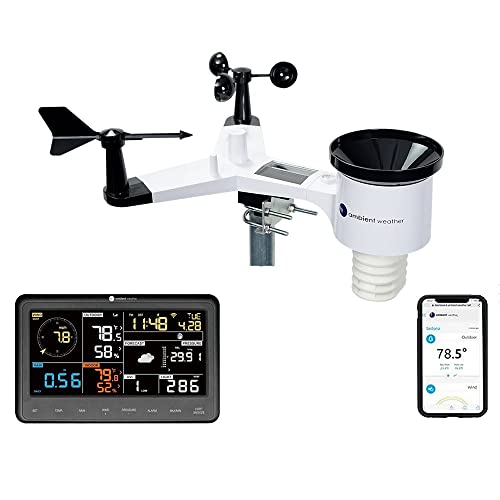
- Wi-Fi monitoring and alerts
- Tracks rain, wind, UV, and solar radiation
- Works with Alexa, Google Home, and IFTTT
Best For: Connected home weather monitoring
Best for Long-Term Logging
Sainlogic Wi-Fi Weather Station

- Stores up to two years of history
- Exports data to Excel
- Supports dual-band Wi-Fi and alerts
Best For: Gardens, farms, and historical weather tracking
Best Multi-Sensor Logger
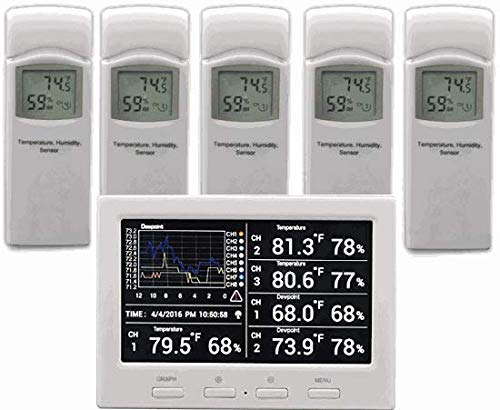
- Graphs up to eight remote sensors
- Five sensors included
- PC software and optional micro-SD extraction
Best For: Multi-location temperature and humidity tracking
Best Maintenance-Free Design
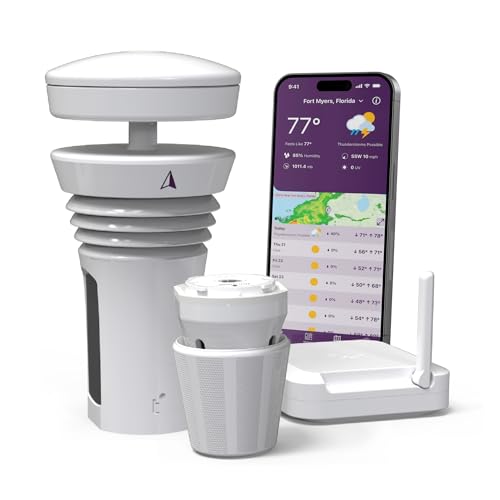
- Tracks wind, rain, lightning, UV, and more
- Updates readings every three seconds
- Solar-powered with no moving parts
Best For: Low-maintenance app and smart-home monitoring
Best Expandable System

- Seven-in-one outdoor sensing
- Website history and email alerts
- Expandable with many Ecowitt sensors
Best For: Connected monitoring and future sensor expansion
Best Straightforward Wi-Fi Setup
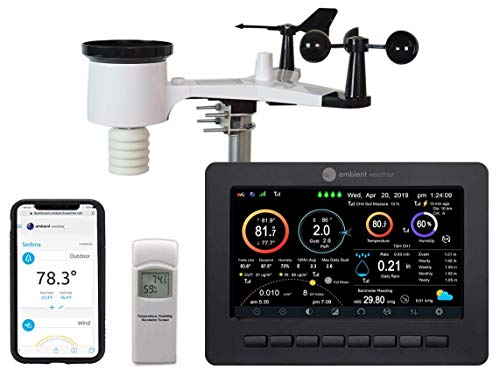
- Color TFT display
- Measures seven key conditions
- Wi-Fi monitoring and alerts
Best For: Backyard weather tracking with remote access
Best Built-In Data Storage
Sainlogic 12-in-1 Wi-Fi Station

- Stores two years of readings
- Exports history to Excel
- Works on 5GHz and 2.4GHz Wi-Fi
Best For: Long-term weather analysis without subscription costs
Best Low-Maintenance Pick

- Solar-powered, Wi-Fi-connected design
- No-moving-parts wind and rain gauges
- Remote monitoring, analysis, and alerts
Best For: Gardeners and homeowners wanting durable remote weather monitoring
Best Large-Display Value
Sainlogic 12-in-1 Weather Station

- Monitors 12 weather parameters
- 6.5-inch high-contrast display
- Solar operation with battery backup support
Best For: Homes, farms, and ranches needing broad local weather readings
Best Smart Monitoring System
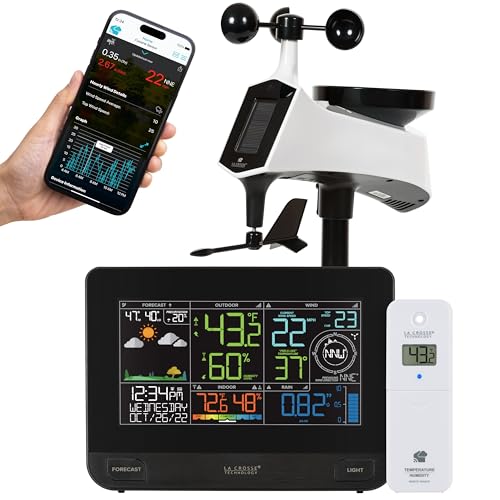
- Time- and date-stamped high/low records
- Rain graphs and historical weather data
- Wi-Fi app monitoring with alerts
Best For: Homeowners wanting connected records and mobile weather monitoring
Best Smart-Home Pick – Ambient Weather WS-2902
Ambient Weather WS-2902 Wi-Fi Smart Weather Station | With Wi-Fi Remote Monitoring and Alerts
Check Price On AmazonThe Ambient Weather WS-2902 is a practical choice for shoppers seeking weather stations with data logging and remote access. Its wireless sensor array tracks temperature, humidity, wind, rainfall, UV intensity, and solar radiation, while Wi-Fi connectivity supports remote monitoring and alerts.
Best For: Home users who want hyper-local readings, Wi-Fi access, and smart-home integrations.
Pros:
- Measures a broad range of outdoor weather conditions.
- Supports Wi-Fi remote monitoring, alerts, and optional network sharing.
- Works with IFTTT, Google Home, Alexa, and other smart-home platforms.
Cons:
- The display and sensor array require separate placement and setup.
- Temperature accuracy is listed at ±1°C.
The WS-2902 stands out when connectivity matters as much as measurement. It is especially useful for homeowners who want to check backyard conditions remotely or trigger connected devices based on weather data.
Best for Long-Term Logging – Sainlogic Wi-Fi Weather Station
The Sainlogic Wi-Fi weather station is a strong fit for weather stations with data logging, offering app-based history, charts, and Excel export. It refreshes environmental readings every five minutes and records data for up to two years through the inercom app.
Best For: Gardeners, growers, and property owners who need historical weather records and flexible Wi-Fi connectivity.
Pros:
- Stores and visualizes up to two years of historical data.
- Supports Excel exports of up to 30 days per export.
- Offers 2.4GHz and 5GHz Wi-Fi compatibility with app or email alerts.
- Includes a claimed transmission range of up to 443 feet.
Cons:
- Data export is limited to 30 days per individual export.
- The extensive app and forecasting features may require more setup than a basic station.
With organized rainfall records, app charts, and long-term history, this model is geared toward users who want to review patterns rather than simply glance at current conditions. Its large display also presents key readings indoors.
Best Multi-Sensor Logger – Ambient Weather WS-3000-X3
The Ambient Weather WS-3000-X3 is designed for users who want weather stations with data logging across several locations. It graphs readings from up to eight wireless remote sensors, includes five sensors, and supports PC software plus optional micro-SD data extraction.
Best For: Homes, offices, or storage areas that need temperature and humidity monitoring in multiple indoor and outdoor locations.
Pros:
- Graphs data from up to eight wireless remote sensors simultaneously.
- Includes five remote thermo-hygrometer sensors.
- PC software supports data analysis, console programming, and extraction.
- Provides logging, graphing, alarms, and a radio-controlled clock.
Cons:
- It focuses on temperature and humidity rather than wind or rainfall.
- Remote sensors require two AA batteries each, which are not included.
- Micro-SD storage is optional.
This station is less suited to full outdoor weather observation but highly useful for comparing conditions across rooms, sheds, greenhouses, or other locations. Its multi-sensor design and computer-oriented tools make it a practical data-monitoring system.
Best Maintenance-Free Design – Tempest Weather Station
The Tempest Weather Station combines app-based monitoring with a broad range of measurements, making it a compelling option among weather stations with data logging. Its single solar-powered sensor tracks temperature, humidity, pressure, wind, rainfall, UV, solar radiation, and lightning without mechanical moving parts.
Best For: Homeowners who want app-connected, low-maintenance weather monitoring and smart-home automation.
Pros:
- Measures precipitation, wind, lightning, UV, solar radiation, and more.
- Provides real-time updates every three seconds.
- Solar-powered design has no moving parts for near-zero maintenance.
- Integrates with Alexa, Rachio, IFTTT, and other smart-home platforms.
Cons:
- There is no included physical display.
- Data access and controls rely on the app or connected platforms.
- Its advanced feature set may be more than needed for simple temperature readings.
Tempest is a strong choice when convenience and automation take priority. The app-connected, display-free design keeps the hardware simple while delivering frequent updates and a wide range of backyard weather data.
Best Expandable System – Ecowitt Wittboy Pro HP2564
The Ecowitt Wittboy Pro HP2564 is a flexible choice for shoppers seeking weather stations with data logging and broad sensor support. Its WS90 outdoor sensor tracks temperature, humidity, wind, UV, light, and rainfall, while the HP2560 console can send readings to supported online weather services after Wi-Fi setup.
Best For: Users who want a weather station that can grow with additional Ecowitt sensors and support online monitoring.
Pros:
- Measures seven outdoor conditions with an integrated WS90 sensor.
- Supports graph and history records on the website, plus email alerts.
- Can pair with a wide range of additional Ecowitt sensors.
- Offers solar power with backup batteries and long wireless transmission range.
Cons:
- The WS90 rainfall readings can vary with raindrop size and wind speed.
- Wi-Fi configuration is required for app access and internet uploads.
This is the strongest fit for a connected, expandable monitoring setup. If highly precise individual rainfall measurements are essential, the supplied notes recommend adding the WH40 rain gauge.
Best Straightforward Wi-Fi Setup – Ambient Weather WS-2000
Ambient Weather WS-2000 Smart Weather Station | With Wi-Fi Remote Monitoring and Alerts
Check Price On AmazonThe Ambient Weather WS-2000 combines a color TFT display with an all-in-one outdoor sensor array, making it a practical option among weather stations with data logging for backyard monitoring. It measures wind, temperature, humidity, rainfall, UV, and solar radiation, with Wi-Fi transmission available for remote monitoring and alerts.
Best For: Home and garden users who want a clear console, core weather measurements, and Wi-Fi-based remote access.
Pros:
- Tracks wind speed and direction, temperature, humidity, rainfall, UV, and solar radiation.
- Includes a high-definition TFT color display.
- Supports imperial and metric units with calibration available.
- Offers Wi-Fi connectivity for remote monitoring, alerts, and weather-network uploads.
Cons:
- The sensor array requires three AAA batteries, which are not included.
- The supplied notes provide less detail about local historical data export than some competing models.
The WS-2000 is a sensible choice when you prioritize an accessible display and essential measurements over a highly expandable sensor ecosystem. Its Wi-Fi features add useful convenience for checking conditions away from home.
Best Built-In Data Storage – Sainlogic 12-in-1 Wi-Fi Station
The Sainlogic 12-in-1 is particularly compelling for shoppers comparing weather stations with data logging because it stores up to two years of readings on the device and supports Excel export. It also combines detailed environmental measurements, dual-band Wi-Fi, smartphone alerts, and a large display.
Best For: Gardeners, growers, and home users who want long-term records without a subscription.
Pros:
- Stores up to two years of weather data and exports it to Excel.
- Measures temperature, humidity, wind, rainfall, pressure, moon phase, and forecast information.
- Supports both 5GHz and 2.4GHz Wi-Fi through the Inercom app.
- Provides customizable alerts and temperature accuracy listed at ±0.2°C.
Cons:
- The outdoor sensor must be mounted carefully for accurate wind-direction and temperature readings.
- The display requires three AAA batteries according to the supplied details.
For buyers focused on usable historical records, this model stands out from the group. Two-year onboard storage and spreadsheet export make it easier to study seasonal patterns, plan planting, or review major weather events without recurring data-storage costs.
Best Low-Maintenance Pick – Ambient Weather WS-4000
For shoppers seeking weather stations with data logging, the Ambient Weather WS-4000 combines solar power, Wi-Fi connectivity, and remote monitoring through the Ambient Weather Network. Its ultrasonic wind and haptic rain gauges avoid moving parts, while the included color console keeps readings easy to review at home.
Best For: Gardeners and homeowners who want a durable, low-maintenance station with remote data analysis and alerts.
Pros:
- Ultrasonic wind and haptic rain gauges have no moving parts, which can reduce maintenance needs.
- Solar-powered outdoor array supports convenient installation without a wired outdoor power connection.
- Wi-Fi integration with the Ambient Weather Network enables remote monitoring, analysis, and alerts.
- Includes a premium color display and an indoor sensor for temperature, humidity, and barometric pressure.
Cons:
- The product notes do not specify a local storage capacity or detailed data-export format.
- Temperature accuracy is listed as plus or minus 1 degree Celsius.
The WS-4000 is a strong fit when low maintenance and network access matter more than extensive published storage specifications. Its all-in-one design and included display also make installation comparatively straightforward.
Best Large-Display Value – Sainlogic 12-in-1 Weather Station
The Sainlogic 12-in-1 is a practical option for weather stations with data logging if you want broad real-time coverage and a highly visible indoor console. It tracks rainfall, wind, pressure, temperature, humidity, dew point, and perceived temperature, with cumulative rainfall statistics and custom alerts.
Best For: Homes, farms, orchards, and ranches that need many live measurements on a large, readable screen.
Pros:
- Tracks multiple weather parameters, including wind speed and direction, rainfall, barometric pressure, dew point, and perceived temperature.
- Offers rainfall precision of plus or minus 1 mm in light rain and plus or minus 7% in heavy rain, with manual calibration.
- Its 6.5-inch display uses large bold fonts, high contrast, and three adjustable backlight levels.
- Solar-powered outdoor operation includes battery backup support for continuous operation, though the battery is not included.
Cons:
- The supplied details do not identify a Wi-Fi connection or cloud data-logging service.
- Backup batteries are required but not included.
- Temperature accuracy is listed at up to plus or minus 2 degrees Fahrenheit or 1 degree Celsius.
This Sainlogic station emphasizes measurement breadth and readability rather than documented online access. It is especially appealing for users who want a large local display and flexible mounting across expansive outdoor areas.
Best Smart Monitoring System – La Crosse V42-PRO-INT
For weather stations with data logging and connected monitoring, the La Crosse V42-PRO-INT combines a color display with Wi-Fi access and the La Crosse View mobile app. It records high and low values with time and date stamps, tracks wind and rainfall history, and extends forecasting and alert features when connected.
Best For: Home users who want time-stamped records, app-based monitoring, customizable alerts, and expanded forecast information.
Pros:
- Records high and low readings with time and date stamps for easier historical review.
- Displays wind direction, current and top speed, rainfall graphs, and historical rain records.
- Wi-Fi connection adds mobile-app monitoring, customizable alerts, extended forecasts, UV index, sunrise and sunset times, and air-quality information.
- Offers wireless transmission up to 400 feet and includes indoor/outdoor temperature and humidity sensors.
Cons:
- The station requires a power adapter for normal operation; the included CR2032 battery preserves data but does not run the system.
- Several sensor batteries are not included.
- Some enhanced forecasting and data features depend on the Wi-Fi connection.
The V42-PRO-INT is the most connected choice of the three for homeowners who value app access and time-stamped records. Its combination of local history, alerts, and expanded online weather data makes it well suited to everyday backyard monitoring.
How We Picked the Best Weather Stations with Data Logging
We compared these weather stations based on sensor coverage, recording and export capabilities, connectivity, display quality, installation flexibility, and ease of use. We also considered whether each system supports remote monitoring through a mobile app or web dashboard, since convenient access can matter as much as the hardware.
Because weather conditions vary by location, we included systems with different strengths: compact indoor-outdoor monitoring, multiple remote sensors, solar-powered operation, dedicated consoles, and smart-home compatibility. Before buying, confirm the exact data-storage features offered by the station, app, or connected service.
Quick Comparison
- Best for connected home monitoring: Choose a Wi-Fi model with app or web access, such as an Ambient Weather, Tempest, ECOWITT, or La Crosse system.
- Best for multiple indoor areas: Look for a station that includes several remote thermo-hygrometer sensors.
- Best for reduced maintenance: Solar-assisted outdoor sensors can minimize battery changes, though they may still require backup power.
- Best for a traditional dashboard: A system with a dedicated color console is useful when you want information visible without opening an app.
- Best for broad measurements: Twelve-in-one systems can track several conditions, but verify which sensors are included and how they are labeled.
Key Buying Factors for Weather Stations with Data Logging
Data Storage and Access
Check whether records are stored locally, in the manufacturer’s cloud, or both. Look for selectable intervals, historical charts, downloadable data, and clear retention policies. If you need information for gardening, research, or property records, export options are especially valuable.
Sensor Coverage and Placement
Temperature and humidity sensors are common, while wind speed, wind direction, rainfall, barometric pressure, UV, and light measurements vary by model. Outdoor sensors need an unobstructed location, adequate wireless range, and protection from avoidable interference. Rain gauges must be level, and wind sensors perform best away from buildings and trees.
Connectivity and Reliability
Wi-Fi enables remote monitoring but adds setup and network requirements. Dual-band support may simplify compatibility with modern routers, while app alerts can notify you about severe temperature changes or precipitation. Also check whether the system continues recording during internet outages.
Power, Display, and Maintenance
Solar assistance can extend battery life, but cloudy conditions and cold weather still make backup power important. Compare console readability, backlight controls, update frequency, battery access, and the effort required to clean the rain gauge or replace sensor batteries.
Who Should Buy Which Weather Stations with Data Logging?
Choose a basic wireless system if you mainly want current indoor and outdoor readings. Select a Wi-Fi station if remote access, alerts, and long-term trend analysis are priorities. Buyers monitoring several rooms should favor multi-sensor packages, while gardeners and property owners may benefit most from rainfall and wind measurements. For enthusiasts who want more detailed records and future expansion, prioritize broad sensor coverage, dependable data exports, and a platform with a strong history of software support.