Field monitors with touchscreens can speed up focus checks, exposure adjustments, and on-set navigation, especially when you’re moving fast or shooting solo. The right display makes a noticeable difference in daylight visibility and overall workflow.
Below, we’ve rounded up 10 strong options for 2026, with picks that balance brightness, image tools, mounting flexibility, and travel-friendly design.
Best 10 Field Monitors with Touchscreens Picks for 2026
Bright 7-inch pro monitor

- 2000-nit 7-inch IPS touchscreen
- 4K HDMI loop in/out with audio monitoring
- Includes 2 NP-F750 batteries and cooling fans
Best For: Crews and solo shooters needing a bright, feature-rich touchscreen monitor
Compact scope-rich monitor

- 5-inch 1920x1080 touchscreen
- Luma/RGB waveform plus histogram
- Very light and slim design
Best For: Portability-focused shooters who need advanced exposure tools
Bright compact monitor
5.5" Bright Touchscreen Monitor

- 1600-nit 5.5-inch touchscreen
- 4K 30 fps HDMI in/out with 3D LUT
- Rear F970 kit mounts extra accessories
Best For: Outdoor videographers wanting a compact bright touchscreen monitor
Bright 6-inch touchscreen
6" High-Brightness Camera Display

- 2000-nit 6-inch IPS touchscreen
- 4K 60Hz HDMI input/output
- USB LUT loading with multiple cooling paths
Best For: Users wanting a bright 6-inch touchscreen with flexible power and LUT support
Compact Touchscreen Pick
FEELWORLD FW759 PRO 7" touchscreen field monitor
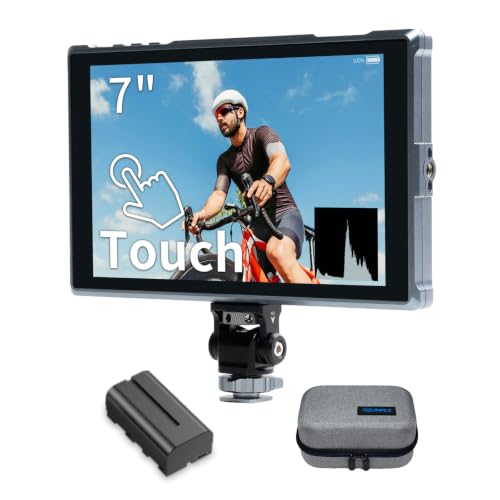
- 7-inch 1280x800 IPS touchscreen
- Lightweight 300g build for rigs and gimbals
- Histogram, zebra, focus assist, false color
Best For: Vloggers and beginners needing a portable on-camera monitor
Bright Large-Screen Choice
FEELWORLD LUT11S 10.1" 2000nit touchscreen monitor

- 2000nit brightness with ambient light sensor
- 10.1-inch 1920x1200 IPS touchscreen
- HDR, waveform, focus peaking, 3D LUT support
Best For: Daylight shooters and crews needing a large, bright field monitor
Camera-Control Value Pick
Godox GM6S Pro 5.5" touchscreen field monitor

- 2000nit touchscreen with 2200nit peak
- 4K@60Hz HDMI plus audio monitoring
- Waveform, false color, onion skin, 3D LUT
Best For: Creators wanting a compact monitor with optional camera-control features
Budget-Pro Monitoring
VILTROX DC-L2 7 inch SDI Camera Monitor

- 7-inch IPS display with touch controls
- HDMI and 3G-SDI in/out support
- Waveform, peaking, zebra, and 3D LUT tools
Best For: Shooters who want a touch-friendly 7-inch monitor with SDI support and essential assist tools.
Bright Studio Pick
NEEWER F700U 7" OLED Touchscreen Monitor

- 1200-nit 7-inch OLED touchscreen
- 1920 x 1080 resolution with high contrast
- HDMI/SDI routing plus advanced scopes and LUTs
Best For: Crews that need a bright full HD touch monitor with OLED contrast and pro monitoring tools.
Portable Touchscreen Choice
FEELWORLD P6XL 6 Inch Camera Monitor
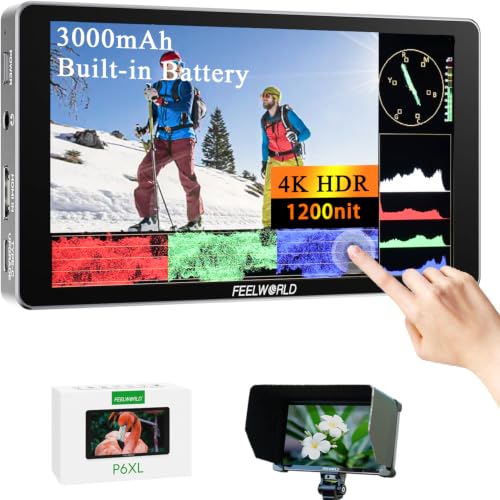
- 6-inch full HD touch display at 1200 nits
- Built-in battery for portable shooting
- Waveform, HDR, 3D LUT, and image overlay tools
Best For: Mobile creators who want a lightweight 6-inch touchscreen monitor with built-in power.
Bright 7-inch pro monitor – Bright 4K HDMI Field Display
If you want field monitors with touchscreens that are built for bright outdoor use, the NEEWER F700 is aimed at filmmakers who need a larger 7-inch display, strong visibility, and flexible monitoring tools. It combines a 2000-nit IPS panel with touch and button control, plus 4K HDMI loop in/out for working with DSLR and video cameras.
Best For: Crews and solo shooters who want a bright 7-inch touchscreen with pro monitoring tools and extended battery support.
Pros:
- 2000-nit 7-inch IPS touchscreen with 1920×1080 resolution and 160° viewing angle
- Supports 4K HDMI loop in/out and headphone audio monitoring
- Includes pro tools like waveform, vectorscope, false color, peak focus, HDR, and 3D LUT support
- Comes with 2 NP-F750 batteries, cold shoe mount, and built-in cooling fans
Cons:
- Heavier than smaller field monitors, especially with batteries attached
- Some power and battery accessories are limited by cable or charger requirements
This is a strong pick if brightness and feature depth matter more than compact size. The F700 gives you a practical touchscreen workflow with enough monitoring tools to support both run-and-gun shooting and more controlled setups.
Compact scope-rich monitor – Slim 5" Touchscreen Monitor
Among field monitors with touchscreens, the Portkeys PT5 II stands out for buyers who want a lightweight 5-inch monitor with serious exposure tools. It offers full HD resolution, a wide viewing angle, and a compact body that keeps rig weight low while still giving you waveform, LUT, and focus-assist features.
Best For: Shooters who want a compact touchscreen monitor with advanced waveform and LUT tools in a very light body.
Pros:
- 5-inch full-fit touchscreen with 1920×1080 resolution and 178° viewing angle
- Includes Luma Waveform, RGB Waveform, histogram, false color, peaking, and more
- Supports 3D LUT, anamorphic tools, image flip, guides, and battery voltage checking
- Very lightweight and slim at about 0.28 lb
Cons:
- Battery is not included
- Smaller 5-inch screen may feel cramped compared with larger field monitors
The PT5 II is a practical choice when portability is a priority and you still want a capable monitoring toolkit. Its slim design and broad scope features make it a useful on-camera display for tighter rigs.
Bright compact monitor – 5.5" Bright Touchscreen Monitor
If you’re comparing field monitors with touchscreens for outdoor video work, the FEELWORLD F5 Pro X is built around a bright 5.5-inch panel and easy pinch-to-zoom control. It adds 3D LUT support, HDR, and exposure tools like waveform and false color, making it a practical monitor for videographers who need a compact setup.
Best For: Outdoor videographers who want a bright touchscreen monitor with a useful external accessory mount.
Pros:
- 1600-nit 5.5-inch touchscreen with native 1920×1080 resolution
- Supports 4K 30 fps HDMI input and loop out with 3D LUT preview
- Includes histogram, false color, focus assist, pixel-to-pixel, and frame guides
- F970 external kit lets you mount and power extra accessories on the back
Cons:
- Maximum supported signal is 4K 30 fps, not higher frame rates
- Some power cable accessories are not included
The F5 Pro X is a flexible small monitor with enough brightness and tools for day-to-day field use. Its rear accessory kit is a standout if you want to keep your rig organized while adding accessories.
Bright 6-inch touchscreen – 6" High-Brightness Camera Display
The VILTROX DC-X2 is a strong option if you want field monitors with touchscreens that prioritize brightness and clean image monitoring. Its 6-inch IPS display, 2000-nit output, and 4K HDMI input/output make it suitable for both on-set and outdoor camera work, while the touchscreen UI is designed for more precise control.
Best For: Shooters who need a bright 6-inch touchscreen monitor with easy custom LUT loading and solid cooling.
Pros:
- 6-inch 2000-nit touchscreen with 1920×1080 resolution and 160° viewing angle
- Supports 4K 60Hz HDMI input/output and loop monitoring
- Custom 3D LUT support via USB drive plus tools like peaking, zebra, waveform, and image enlarge
- Multiple cooling paths, automatic fan control, and several power options including NP-F and USB-C
Cons:
- Only one NP-F battery is included
- Bulkier than some smaller 5-inch monitors
DC-X2 is well suited to users who want a bright touchscreen with a more modern interface and reliable thermal handling. It gives you a capable balance of visibility, monitoring tools, and flexible power support.
Compact Touchscreen Pick – FEELWORLD FW759 PRO 7" touchscreen field monitor
If you want field monitors with touchscreens that make framing easier without adding much weight, the FEELWORLD FW759 PRO is a practical 7-inch option. Its 1280×800 IPS display gives you a larger, clearer view than a camera’s built-in screen, while the touch interface and monitoring tools help you check focus and exposure on the fly.
Best For: Vloggers, beginners, and mobile creators who need a lightweight on-camera monitor for everyday shooting.
Pros:
- 7-inch IPS touchscreen with 1280×800 resolution for a clearer viewing area
- Includes useful monitoring tools like Histogram, Zebra Pattern, Focus Assist, and False Color
- Ultra-light 300g design works well for handheld rigs and gimbals
- Sunshade included for better visibility in brighter outdoor conditions
Cons:
- 400nit brightness is more modest than higher-end daylight monitors
- Smaller screen size may feel limited for users wanting a larger field display
- Best suited to HDMI-based setups rather than more complex signal workflows
Overall, this is a straightforward touchscreen field monitor for creators who prioritize portability and core exposure tools over maximum brightness. It fits well on compact rigs and is especially appealing if you want a simple, reliable upgrade from a camera’s rear screen.
Bright Large-Screen Choice – FEELWORLD LUT11S 10.1" 2000nit touchscreen monitor
For field monitors with touchscreens that stay readable in tough lighting, the FEELWORLD LUT11S stands out with a 10.1-inch IPS panel and 2000nit brightness. It adds a responsive touch interface, 4K 60Hz HDMI support, and advanced monitoring tools, making it a strong fit when you need a larger field display for serious production work.
Best For: Crews and creators who want a bright 10.1-inch touchscreen monitor for daylight shooting and detailed on-set monitoring.
Pros:
- 2000nit brightness and ambient light sensor improve outdoor visibility
- 10.1-inch 1920×1200 IPS panel offers a clear, large viewing area
- Supports touch control plus advanced tools like HDR, waveform, focus peaking, and 3D LUTs
- Includes HDMI and SDI connectivity with up to 4K 60Hz support over HDMI
Cons:
- Larger size is less compact than smaller field monitors
- At 1.8 pounds, it is not the lightest option for minimal rigs
- Its feature set may be more than casual shooters need
This model is a good choice if your priority is brightness, screen size, and professional monitoring tools in one touchscreen package. It is especially compelling for daylight work, color previewing, and fast-paced on-set use where visibility matters.
Camera-Control Value Pick – Godox GM6S Pro 5.5" touchscreen field monitor
If you want field monitors with touchscreens that add more than just a bigger screen, the Godox GM6S Pro brings camera-control features into a compact 5.5-inch body. It combines a bright IPS touch display with 4K@60Hz HDMI monitoring, audio support, and tools like waveform, false color, onion skin, and 3D LUT loading for more advanced on-set work.
Best For: Shooters who want a compact touchscreen monitor with camera-control capability and a strong set of monitoring tools.
Pros:
- 2000nit sustained brightness, peaking at 2200nit, improves visibility in sunlight
- Touchscreen display includes professional tools like waveform, false color, onion skin, and peak focus
- Supports 4K@60Hz HDMI input/output and live audio monitoring via 3.5mm jack
- Flexible power options and SD card support for LUT import and firmware upgrades
Cons:
- 5.5-inch screen is smaller than many competing field monitors
- Camera-control functions require an optional proprietary cable sold separately
- Compact size may be less comfortable for users who prefer a larger display
For users who value portability and control features, this is a versatile touchscreen monitor with a strong daylight-ready panel. It makes the most sense when you want a compact setup that still gives you professional monitoring and optional camera control.
Budget-Pro Monitoring – VILTROX DC-L2 7 inch SDI Camera Monitor
If you want field monitors with touchscreens that cover the basics well, the VILTROX DC-L2 is built for straightforward on-set monitoring. Its 7-inch IPS panel, 600-nit brightness, HDMI/SDI input-output support, and touch-based controls make it a practical choice for shooters who want core exposure and framing tools without a steep learning curve.
Best For: Shooters who want a touch-friendly 7-inch monitor with SDI support and essential assist tools.
Pros:
- 7-inch IPS display with 1280 x 800 resolution and 170-degree viewing angle
- Touchscreen UI plus 4 customizable shortcut keys for quick adjustments
- 4K 30Hz HDMI and 3G-SDI input/output for flexible camera setups
- Built-in monitoring tools including waveform, vectorscope, focus peaking, zebra, false color, and 3D LUT support
Cons:
- 600-nit brightness is lower than the brighter field monitors in this group
- Native resolution is 1280 x 800 rather than full HD
- Single 7-inch format may be less compact than smaller travel-oriented options
The DC-L2 makes the most sense if you value SDI connectivity, a touch interface, and a broad set of monitoring tools over top-end brightness. It is a solid utility monitor for general production work where dependable control matters more than premium panel specs.
Bright Studio Pick – NEEWER F700U 7" OLED Touchscreen Monitor
For field monitors with touchscreens that need to stay visible in difficult lighting, the NEEWER F700U stands out with a 1200-nit 7-inch OLED panel and full HD resolution. It adds HDMI and 3G-SDI connectivity, plus a strong set of exposure and focus tools, making it well suited to shooters who want a brighter, more polished monitoring experience.
Best For: Crews that need a bright full HD touch monitor with OLED contrast and pro monitoring tools.
Pros:
- 7-inch OLED touchscreen with 1920 x 1080 resolution and 1200 nits brightness
- 100000:1 contrast and 160-degree viewing angle for strong image clarity
- HDMI input/loop out and 3G-SDI input/output for professional signal routing
- Includes peaking, false color, zebra, waveform, vectorscope, HDR, and up to 64 custom LUTs
Cons:
- Uses a 7-inch body, so it is not the smallest option for ultra-light rigs
- SDI support tops out at 1080p formats in the supplied notes
- Requires separate accessories for some power options, such as the DC adapter
The F700U is the strongest pick here if brightness and contrast are your top priorities. Its OLED panel and full HD resolution give it a more premium monitoring feel, while the touch interface keeps adjustments quick on set.
Portable Touchscreen Choice – FEELWORLD P6XL 6 Inch Camera Monitor
If you want field monitors with touchscreens in a smaller travel-friendly package, the FEELWORLD P6XL is worth a look. Its 6-inch full HD IPS display, 1200-nit brightness, and built-in battery make it easy to carry, while the touch controls, waveform tools, and 3D LUT support keep it useful for serious shooting.
Best For: Mobile creators who want a lightweight 6-inch touchscreen monitor with built-in power.
Pros:
- 6-inch 1920 x 1080 IPS touchscreen with 1200-nit brightness
- Built-in rechargeable battery for about 2 hours at full brightness
- Waveform tools, vectorscope, histogram, audio phase/level displays, and HDR support
- Supports custom 3D LUT loading and image screenshot/overlay features
Cons:
- Only one HDMI port is listed in the supplied details
- Built-in battery runtime is limited to about 2 hours at 100% brightness
- Smaller 6-inch size may feel tight for users who prefer a larger display
The P6XL is a strong fit for creators who want portability first but still need real monitoring features. Its built-in battery and bright touchscreen make it especially practical for run-and-gun shooting, where quick setup and low weight matter.
How We Picked These Field Monitors with Touchscreens
We focused on the features that matter most in real-world shooting: screen brightness for outdoor use, responsive touch controls, color and exposure tools, video input/output options, and overall portability. We also considered whether each monitor makes sense for mirrorless cameras, DSLRs, and rigged video setups.
Because Field Monitors with Touchscreens are often used in fast-paced environments, we gave extra weight to practical details like menu speed, sunhood support, mounting convenience, and how well the monitor fits battery-powered field workflows.
Quick Comparison: What Stands Out
The biggest differences usually come down to screen size, brightness, and connection options. Smaller 5- to 5.5-inch models are easier to keep compact, while 7-inch and 10.1-inch monitors are better when you want a larger image for focus pulling or director review. High-nit displays are better for daylight, while SDI support matters more for professional video rigs.
If you want the simplest setup, look for HDMI-only models with useful onboard tools. If your workflow is more advanced, prioritize models with 4K pass-through, waveform, false color, 3D LUT support, and SDI input/output where available.
Key Buying Factors for Field Monitors with Touchscreens
Brightness and Viewing Conditions
Brightness is one of the most important specs. A low-nit display can work indoors, but outdoor shooting usually benefits from a much brighter panel. If you film in sunlight, a 1200-nit-plus monitor is often a safer choice.
Screen Size and Resolution
Choose screen size based on how you work. Smaller monitors are lighter and more portable, while larger screens make critical focus and framing easier. Resolution matters too, especially if you want a sharper image for detailed monitoring.
Touch Controls and Monitoring Tools
The best Field Monitors with Touchscreens make it easy to adjust settings quickly. Look for peaking, false color, histogram, waveform, and LUT loading if you rely on accurate exposure and color evaluation.
Inputs, Outputs, and Rig Compatibility
Confirm that the monitor matches your camera and recorder setup. HDMI is common, but SDI can be essential for broadcast or larger production rigs. Loop-through output is also helpful when you need to feed a second display or recorder.
Power and Accessories
Battery support, external power options, and included accessories can affect day-to-day usability more than people expect. A monitor that ships with a sunshade, battery plate, or mounting kit may offer better value than a slightly cheaper bare-bones model.
Who Should Buy Which Field Monitors with Touchscreens?
Run-and-gun creators and solo shooters should lean toward compact, bright monitors with responsive touch menus and strong exposure tools. Studio users and director stations may prefer larger screens for easier review. If you work in mixed camera environments, prioritize connectivity and format support over the biggest display size.
In short, choose the monitor that best matches your shooting conditions, not just the one with the longest spec sheet. The best fit is usually the model that balances visibility, controls, and portability for the way you actually film.