The best digital soldering microscopes make tiny components easier to inspect while giving you a clear, comfortable view of the work area. For PCB repair, rework, inspection, and hobby electronics, the right model can improve precision without forcing you to work through a cramped eyepiece.
We selected 10 options with different screen sizes, camera resolutions, lens configurations, mounts, and working distances so you can match the microscope to your bench, budget, and typical projects.
Best 10 Digital Soldering Microscopes Picks for 2026
Top-Series Versatility

- Three interchangeable lenses for soldering, coins, and slides
- 2160P HDMI output with 7-inch monitor
- Expanded station with storage and helping hands
Best For: Multi-purpose users building a complete soldering workstation
Autofocus 4K Pick

- AI autofocus with responsive TOF distance sensing
- 4K video and 52MP image capture
- 8-inch IPS display with battery and split-screen features
Best For: High-detail repair and inspection with minimal manual focusing
Pro Boom-Arm Value

- Three-lens system includes a soldering lens
- 2160P video with HDMI and 32GB storage
- Adjustable metal boom arm for a broad work envelope
Best For: Multi-purpose electronics repair and educational viewing
Large-Workspace Choice

- 10.1-inch IPS screen and 12.6-inch metal stand
- Roomy heat-resistant base for PCB repair
- Full-view coin inspection with 5X-1500X zoom
Best For: Coin inspection and spacious, stable soldering work
Best Versatility
Andonstar AD249S-M Plus 3-Lens Microscope

- Three lenses support soldering and general inspection
- 2160P HDMI output with a 10.1-inch display
- Expanded soldering station with helping hands and storage
Best For: Multi-purpose electronics benches and hobby inspection
Best for Collectors
TOMLOV DM9 7-Inch Digital Microscope

- Large 7-inch display for comfortable inspection
- Stable metal stand with adjustable lighting
- 12MP photos, 1080P video, and 16GB storage
Best For: Coin collecting with occasional electronics inspection
Best Compact Setup
5-Inch LCD Soldering Microscope

- C-clamp and flexible arm free both hands
- 5-inch IPS screen supports standalone use
- Plug-and-play viewing on Windows and Mac
Best For: Compact PCB repair and hands-free soldering
Best 3D Viewing
TOMLOV TM3K-3D Digital Soldering Microscope
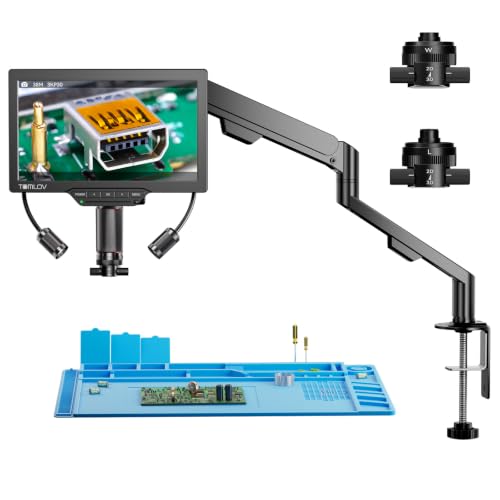
- 360° 3D side-viewing
- Magnetic long-distance and wide-angle lenses
- 3K UHD 7-inch IPS display
Best For: PCB repair, micro soldering, and multi-angle inspection
Best Large-Screen Value
Andonstar AD210 Digital Microscope

- 10.1-inch IPS display
- 1cm-to-26cm adjustable working distance
- Top, side, and bottom LED lighting
Best For: Soldering, coin inspection, and biological slide viewing
Best Flexible Workstation

- Adjustable multi-directional arm
- Three interchangeable lenses
- Heat-resistant soldering mat included
Best For: Flexible electronics repair and multi-purpose bench work
Top-Series Versatility – Andonstar AD246S-M Plus
The Andonstar AD246S-M Plus is a flexible choice among digital soldering microscopes, combining a 7-inch 2160P monitor with three interchangeable lenses. Its upgraded station adds a larger work area, storage boxes, a tool holder, and rotatable helping hands for electronics repair.
Best For: Users who want one microscope for soldering, coin viewing, and biological slides.
Pros:
- Three lenses cover soldering, general viewing, and biological slides.
- 2160P video, HDMI output, and included 32GB SD card support detailed viewing and recording.
- Expanded soldering base, tool storage, helping hands, and anti-static mat create a more complete workstation.
- Windows measurement software and remote control add convenience.
Cons:
- The broad accessory setup may be more than users seeking a basic soldering microscope need.
- Lens changes require removing and installing screws.
Choose this model when workstation features and multi-purpose magnification matter as much as soldering visibility. It is particularly well equipped for hobbyists who also inspect coins or slides.
Autofocus 4K Pick – Elikliv EM4K-AF
The Elikliv EM4K-AF stands out among digital soldering microscopes for its autofocus system, 4K video, and 8-inch IPS display. A TOF sensor helps it adjust focus quickly, while the tall stand and broad base provide room for repair work and full-coin viewing.
Best For: Repair users who prioritize autofocus, high-resolution imaging, and a larger built-in screen.
Pros:
- Autofocus uses AI algorithms and a TOF sensor for quick focus adjustments.
- 4K video, 52MP imaging, and a 1280×800 IPS screen provide detailed visuals.
- HDMI and USB outputs support viewing on larger displays.
- Rechargeable battery, remote controller, freeze mode, and split-screen viewing add flexibility.
Cons:
- The supplied warranty is one year, shorter than some alternatives in this group.
- Its feature set may be excessive for simple, occasional inspection tasks.
This is a strong fit when minimizing manual focusing is important. The combination of autofocus and 4K imaging should appeal to users handling moving samples or switching frequently between inspection tasks.
Pro Boom-Arm Value – Andonstar AD246S-M
The Andonstar AD246S-M is a versatile digital soldering microscope with a 7-inch display, 2160P video, HDMI output, and a three-lens design. Its adjustable metal boom arm creates a larger work envelope for circuit-board repair while the included slides and accessories support general exploration.
Best For: Electronics repairers and families wanting a multi-purpose microscope with a sturdy adjustable stand.
Pros:
- Lens L is designed for soldering and repair, while Lens A and Lens D support coins and slides.
- 2160P recording, HDMI connectivity, and an included 32GB card support documentation and larger-screen viewing.
- Adjustable metal boom arm accommodates front, rear, side, and angle adjustments.
- Remote control, eight LED brightness levels, and Windows measurement software improve usability.
Cons:
- It does not include the Plus model’s listed extension base, storage boxes, or helping hands.
- Changing lenses requires removing and installing screws.
Consider this version if you want the core three-lens system and pro boom arm without the Plus model’s expanded station accessories. It balances soldering-focused positioning with useful coin and slide capabilities.
Large-Workspace Choice – TOMLOV DM9 Max
The TOMLOV DM9 Max is a practical option among digital soldering microscopes for users who need extra clearance. Its 10.1-inch IPS screen, 12.6-inch metal stand, and large heat-resistant base leave room for circuit boards, soldering tools, and hand movement.
Best For: Coin collectors and repair users who value a large screen and spacious, stable work area.
Pros:
- Shows coins up to 30.61 mm in full view and offers 5X-1500X zoom.
- Large 10.1-inch IPS display provides a wide 178-degree viewing angle.
- Large metal base and tall stand offer additional clearance for soldering work.
- Adjustable LEDs, wireless remote, 20MP photos, and 1080P video support detailed documentation.
Cons:
- Its recorded video resolution is 1080P rather than 2160P or 4K.
- The product is less multi-purpose than three-lens models because the supplied notes do not list interchangeable lenses.
The DM9 Max makes sense when workspace and screen size take priority over maximum video resolution. Its full-view coin capability and roomy stand also make it a convenient choice for collectors who perform occasional PCB repairs.
Best Versatility – Andonstar AD249S-M Plus 3-Lens Microscope
For shoppers comparing digital soldering microscopes, the Andonstar AD249S-M Plus stands out as a complete, multi-purpose workstation. It includes three interchangeable lenses, a 10.1-inch display, 2160P HDMI output, and soldering-focused accessories for electronics repair.
Best For: Electronics repairers who also want to inspect coins, plants, stones, and biological slides.
Pros:
- Three lenses cover soldering, general inspection, and biological slides.
- 2160P video and HDMI support enable detailed viewing on larger screens.
- Includes a helping-hands tool, tool holder, extension base, storage boxes, and anti-static mat.
- Comes with a 32GB SD card, remote, adjustable LED lighting, and Windows measurement software.
Cons:
- The broad accessory package may take more setup space than a basic inspection microscope.
- Lens changes require removing and installing screws.
This is the most capable all-around option in the group, especially for users who want one microscope for soldering and varied close-up work. Its expanded stand and accessories make it better suited to a dedicated bench than a compact workspace.
Best for Collectors – TOMLOV DM9 7-Inch Digital Microscope
The TOMLOV DM9 is a practical choice among digital soldering microscopes for hobbyists who primarily inspect coins but occasionally work on small electronics. Its 7-inch screen, metal stand, adjustable lighting, and 12MP camera provide a comfortable setup for examining and documenting fine details.
Best For: Coin collectors, hobby electronics users, and anyone needing a stable microscope for shared viewing or documentation.
Pros:
- 7-inch screen provides a comfortable direct-view image for extended inspection.
- Solid metal base and adjustable metal stand help reduce shaking during use.
- 12MP photos, 1080P video, and included 16GB storage support collection records and project documentation.
- Eight LEDs and two flexible gooseneck lights help illuminate subjects from different angles.
Cons:
- It is primarily designed for coin inspection rather than advanced soldering work.
- Maximum magnification depends on positioning and focus adjustments.
The DM9 offers a balanced feature set for collectors who want a large screen and occasional repair capability. Choose it over a more specialized soldering model if coin examination and documentation are your main priorities.
Best Compact Setup – 5-Inch LCD Soldering Microscope
This 5-inch LCD model is a straightforward option for shoppers seeking digital soldering microscopes for PCB repair in a confined workspace. Its flexible arm, C-clamp, built-in screen, and plug-and-play computer connection keep the setup focused on inspecting solder joints and small components.
Best For: PCB repairers who need a compact, hands-free microscope that can work with or without a computer.
Pros:
- C-clamp and flexible arm help keep both hands available for soldering.
- 5-inch IPS display allows standalone use while reducing the need to lean over the work.
- Windows and Mac computer viewing works through standard camera applications without third-party software.
- Up to 1000X digital magnification is available through physical positioning and focus adjustments.
Cons:
- It is not an autofocus camera; focusing requires manual distance and wheel adjustments.
- A Micro SD card for saving photos and 1080P videos is required but not included.
- The smaller display and flexible-arm design are intended for micro-details, not large objects.
This model makes sense when bench space and hands-free positioning matter more than a large display or extensive accessories. Remember to add a compatible Micro SD card if recording repairs is important.
Best 3D Viewing – TOMLOV TM3K-3D Digital Soldering Microscope
For shoppers comparing digital soldering microscopes, the TOMLOV TM3K-3D stands out with side-viewing and rotating 3D imaging. Its 3K display, interchangeable magnetic lenses, and flexible arm are designed for detailed electronics inspection and precision work.
Best For: PCB repair, micro soldering, jewelry inspection, coin viewing, and users who need multiple viewing angles.
Pros:
- 3D side-viewing with 360° rotating imaging helps reveal details from multiple angles.
- Magnetic L and W lenses switch without tools for long-distance work or wide-area viewing.
- 3K UHD imaging appears on a 7-inch IPS screen, with HDMI and USB connectivity.
- Flexible arm stand and adjustable LED gooseneck spotlight support precise positioning.
Cons:
- The specialized 3D design may be more than needed for basic inspection tasks.
- The 7-inch display is smaller than some competing models with 10.1-inch screens.
The TM3K-3D is a feature-rich choice when viewing angle, workspace flexibility, and detailed imaging matter. Its lens system also makes it useful beyond soldering, although buyers seeking a straightforward microscope may prefer a simpler setup.
Best Large-Screen Value – Andonstar AD210 Digital Microscope
The Andonstar AD210 is one of the more versatile digital soldering microscopes for buyers who want a large display and broad working range. Its 10.1-inch IPS screen, adjustable metal stand, and multiple lighting options support soldering, coin inspection, and slide viewing.
Best For: Electronics repair, coin collecting, biological slides, and households or classrooms needing an all-purpose microscope.
Pros:
- Large 10.1-inch IPS display offers a 178° viewing angle and supports 1080p video and 12MP photos.
- Adjustable 1cm-to-26cm working distance accommodates both soldering and larger objects such as coins.
- Top, side, and bottom LED illumination can be adjusted for different inspection scenarios.
- Includes a 32GB memory card, remote control, slide kit, and bottom light stage.
Cons:
- Its broad accessory set may be unnecessary for buyers focused only on soldering.
- The stand is a substantial metal setup, which may take more bench space than a compact design.
The AD210 is a practical all-purpose option, especially if you want to move between circuit boards, coins, and slides without buying separate equipment. Its large screen and remote control also make shared viewing and capture more convenient.
Best Flexible Workstation – TOMLOV DM602 Flex Microscope
The TOMLOV DM602 Flex combines digital soldering microscope features with a flexible workstation setup. Its adjustable arm, interchangeable lenses, bright ring light, and included heat-resistant mat make it suitable for detailed repair work as well as coin and biological observation.
Best For: Electronics repairers and hobbyists who want adjustable positioning, lens flexibility, and a dedicated soldering mat.
Pros:
- Flexible arm provides 360° base rotation, 135° horizontal extension, and 180° vertical movement.
- Three interchangeable lenses cover micro soldering, full coin views, and biological observation.
- 10.1-inch IPS screen offers a 178° viewing angle, with HDMI and USB connectivity.
- Included silicone mat resists heat up to 932°F (500°C) and includes a ruler and parts compartments.
Cons:
- Changing lenses and adjusting the arm may add setup steps compared with a fixed configuration.
- The included workstation footprint may be larger than a basic microscope stand.
The DM602 Flex is a strong choice for buyers building a dedicated bench setup. It offers useful flexibility for soldering and inspection, while the additional lenses and mat extend its value beyond basic circuit-board magnification.
How We Picked These Digital Soldering Microscopes
We focused on features that matter during real soldering and inspection work: image clarity, usable working distance, screen size, lighting, camera controls, mounting stability, and the ability to connect to an external display. Models with interchangeable or dual lenses can offer more flexibility, while autofocus and 4K capture may help users who frequently switch between components or need detailed documentation.
We also considered how practical each design is on a workbench. A microscope can have impressive magnification numbers yet be difficult to use if the stand wobbles, the lens sits too close to the board, or the display offers a narrow viewing area. The products below cover compact setups, larger-screen stations, flexible-arm designs, and multi-lens systems.
Quick Comparison
| Feature | What to look for | Best suited to |
|---|---|---|
| Display | 5–10.1-inch LCD or HDMI output | Live soldering and comfortable inspection |
| Resolution | 1080p, 2160p, or 4K capture | Reading markings and documenting repairs |
| Lens system | Single, autofocus, 3-lens, or dual-lens | General work or faster magnification changes |
| Stand | C-clamp, fixed base, magnetic, or flexible arm | Small benches, portability, or positioning freedom |
| Connectivity | HDMI, USB, or onboard recording | External monitors, computers, or tutorials |
Key Buying Factors for Digital Soldering Microscopes
Working Distance and Soldering Room
Prioritize the space between the lens and the board, not just the advertised magnification. You need enough clearance for an iron, tweezers, and your hands. A lower magnification setting with a longer working distance is often more useful than extreme zoom.
Image Quality and Focus
Higher resolution can reveal fine traces and component markings, but lighting and focus stability matter just as much. Autofocus is convenient when viewing objects at different heights, while manual focus may be more predictable for fixed PCB work.
Lighting and Glare Control
Adjustable LED lighting helps expose solder joints, but reflective components can create glare. Look for brightness control, shadow-free illumination, or a design that lets you adjust the light angle.
Stand Stability and Adjustability
A stable stand prevents the image from shaking when you touch the board. Flexible arms and clamps save space, while heavier bases generally provide a steadier platform for frequent soldering.
Screen, HDMI, and Recording Options
An integrated LCD keeps the setup simple and reduces eye strain for many users. HDMI output is valuable if you want a larger monitor, classroom display, or recording setup. Check whether the model supports still images or video if documentation is important.
Who Should Buy Which Digital Soldering Microscopes?
Choose a compact 5- or 7-inch model if you have limited bench space or mainly inspect small repairs. Choose a 10.1-inch display if comfort and a larger live image matter more than portability. Choose autofocus or 4K if you regularly change viewing distances or need detailed images for records and tutorials.
Choose a multi-lens system if you want faster transitions between broad inspection and close-up soldering. A magnetic or flexible-arm design suits benches where positioning changes often, while a C-clamp model can be a practical choice for compact workstations. Beginners should prioritize stable mounting, simple controls, sufficient working distance, and clear lighting over the highest advertised magnification.