The best camera viewfinders make composition easier when an LCD screen is hard to see, distracting, or poorly suited to fast-paced shooting. This roundup covers optical, waist-level, LCD magnifying, and built-in digital options for compact cameras, rangefinders, and cold-shoe setups.
Before choosing, match the viewfinder’s focal length, framing lines, mounting system, and viewing style to your camera and the way you photograph.
Best 10 Camera Viewfinders Picks for 2026
Bright Frameline Pick
LightMate OV-X2 Optical Viewfinder

- Bright 28/35/50mm framelines
- High-transmittance optical glass
- Lightweight aluminum body
Best For: Multi-focal-length rangefinder-style framing
Sunlight Viewing Pick

- 3x focusable magnification
- Blocks excess outdoor light
- Fits many 3.0/3.2-inch 16:9 screens
Best For: LCD-based shooting in bright sunlight
Waist-Level Experience Pick
CHI Sight 28mm Optical Viewfinder

- Mirrored waist-level viewing
- 28mm view with 35/50mm frames
- Battery-free optical design
Best For: Classic waist-level street and travel shooting
Simple 35mm Framing Pick

- Dedicated 35mm framelines
- Multi-coated four-element optics
- Compact 25g aluminum body
Best For: Lightweight single-focal-length framing
Compact Optical Pick
28mm External Side-Axis Viewfinder

- Small, bright optical design
- Installs through a hot or cold shoe
- 28mm, 35mm, and 40mm options
Best For: Ricoh GR and Leica X Series-style cameras
Creative Screen-Free Choice
Godox C100 Lo-Fi Digital Camera

- Transparent optical viewfinder
- Built-in light meter for exposure guidance
- 65g body with 2MP stills and USB-C transfer
Best For: Beginners and creative film-style photography
Premium 28mm Framing Aid
SmallRig 5873 Optical Viewfinder

- Five optical-glass groups with up to 98% transmission
- Built-in 3:2 frame lines
- Broad compatibility across listed camera brands
Best For: Compatible cameras needing bright 28mm optical framing
Most Innovative
Godox C100 Transparent Viewfinder Camera

- Transparent optical viewfinder with HUD information
- Built-in film light meter and digital camera
- 65g body with OTG Type-C transfer
Best For: Film photographers and casual street shooters seeking an ultracompact, wearable camera
Best 35mm Framing
SmallRig 35mm External Optical Viewfinder

- 35mm-equivalent view with 3:2 frame lines
- Up to 93% light transmission through optical glass
- Cold-shoe mounting with broad camera compatibility
Best For: Street photographers wanting a bright external optical framing aid
Best for Low-Angle Shooting
ULANZI VF01 Waist-Level Viewfinder
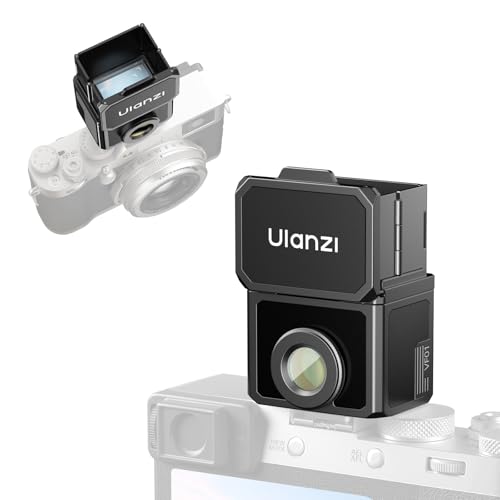
- Waist-level design for low-angle compositions
- Switchable 35mm and 50mm framelines
- Magnetic hood helps block stray light
Best For: Street photographers seeking discreet low-angle framing
Bright Frameline Pick – LightMate OV-X2 Optical Viewfinder
The LightMate OV-X2 is a compact choice for photographers who want traditional camera viewfinders with bright, built-in framing lines. Its optical design covers 28mm, 35mm, and 50mm full-frame-equivalent compositions, making it useful for quick, screen-free framing.
Best For: Leica M, Ricoh GR, Panasonic S9, film rangefinder, and compatible mirrorless camera users who want multiple framelines in a lightweight accessory.
Pros:
- Bright 28mm, 35mm, and 50mm framelines support flexible composition.
- Six high-transmittance optical glass lenses provide a clear view without resin-lens aging or yellowing.
- Aluminum construction is lightweight, scratch-resistant, and durable.
- Adjustable cold-shoe positions and a standard mount broaden compatibility.
Cons:
- Compatibility excludes some special mounts, including the Canon R50V.
- The optical viewfinder does not provide electronic exposure or focus information.
Choose this model if bright multi-focal-length framelines and a vintage rangefinder look matter more than electronic camera information. Its 21g weight also makes it convenient for daily carry.
Sunlight Viewing Pick – Kamerar CVF-2 LCD Viewfinder
The Kamerar CVF-2 takes a different approach to camera viewfinders by magnifying and shading a camera’s LCD screen. Its 3x focusable magnification and light-blocking design can make screen-based composition easier in bright outdoor conditions.
Best For: Videographers and photographers using compatible 3.0- or 3.2-inch, 16:9 LCD screens who need a more stable, contrast-rich viewing point.
Pros:
- Compatible with most 3.0- and 3.2-inch 16:9 LCD screens.
- 3x focusable magnification enlarges the LCD image for detailed viewing.
- Light-blocking eyecup improves visibility in bright sunlight.
- Adjustable rubber bands install securely without leaving marks.
Cons:
- Compatibility depends on the camera having a suitable 3.0- or 3.2-inch 16:9 screen.
- At 4 ounces, it is heavier than compact optical hot-shoe viewfinders.
This is a practical choice when your main challenge is seeing an LCD outdoors rather than adding optical framelines. The reversible eyecup also accommodates either eye and can be used with glasses.
Waist-Level Experience Pick – CHI Sight 28mm Optical Viewfinder
The CHI Sight brings a classic waist-level approach to camera viewfinders, showing a horizontally mirrored image for a distinctive composing experience. It combines a 28mm viewing angle with internal 35mm and 50mm frame lines and requires no battery.
Best For: Street, travel, and outdoor photographers seeking a screen-free waist-level composition with bright optical viewing and multiple focal-length guides.
Pros:
- Mirrored waist-level image offers an authentic classic-camera shooting experience.
- 28mm viewing angle includes 35mm and 50mm internal framelines.
- Detachable lens hood helps reduce flare in direct sunlight.
- Battery-free optical design avoids screen delay and electronic interference.
Cons:
- The horizontally mirrored image may require an adjustment period.
- Its 90-degree viewing angle and Fresnel design may not suit every composing preference.
- Compatibility relies on a camera with a suitable cold shoe.
Pick the CHI Sight for its shooting experience as much as its framing utility. The adjustable aluminum cold-shoe mount and bright optical display make it a distinctive option for deliberate, low-profile composition.
Simple 35mm Framing Pick – TTArtisan 35mm Viewfinder
The TTArtisan 35mm Viewfinder is a straightforward option for photographers who want one dedicated frame in their camera viewfinders setup. Its 35mm framelines, four-element optical design, and multi-coating are intended to provide clear, accurate composition through a standard cold shoe.
Best For: Cold-shoe camera users who regularly shoot at 35mm and prefer a compact, rangefinder-inspired accessory with a comfortable eyecup.
Pros:
- Dedicated 35mm framelines provide a perspective close to the human eye.
- Four-element, multi-coated optics support light transmission and a clear view.
- 25g anodized aluminum construction is compact and portable.
- Soft rubber eyecup supports comfortable viewing around the eye.
Cons:
- It provides 35mm framing rather than multiple focal-length framelines.
- As an external optical viewfinder, it does not supply electronic camera information.
- Mounting requires a standard cold shoe.
This model makes sense when 35mm is your primary focal length and you want a simple, lightweight framing aid. Its compact build and universal cold-shoe design keep the setup uncomplicated.
Compact Optical Pick – 28mm External Side-Axis Viewfinder
LICHIFIT 28mm External Optical Side Axis Viewfinder for Ricoh GR for Leica X Series Cameras
Check Price On AmazonThis compact optical accessory is a practical choice for photographers seeking camera viewfinders for Ricoh GR or Leica X Series-style setups. It mounts through a hot or cold shoe and provides a small, bright viewing aid for 28mm framing.
Best For: Ricoh GR and Leica X Series users who want a simple external 28mm optical viewfinder.
Pros:
- Small, transparent, and bright design.
- Easy to install and remove through the camera shoe.
- Available in 28mm, 35mm, and 40mm options.
Cons:
- Parallax can be large on cameras with a tall SLR-style prism housing.
- Requires selecting the focal-length version that matches your intended framing.
This is a straightforward replacement or backup viewfinder with stable, uncomplicated operation. Check your camera’s shoe design and body height before buying, especially if you do not use a low-profile rangefinder-style camera.
Creative Screen-Free Choice – Godox C100 Lo-Fi Digital Camera
The Godox C100 combines a transparent optical viewfinder with a built-in light meter, making it an approachable option for shoppers comparing camera viewfinders and screen-free shooting tools. Its 65g pocket-sized body is aimed at casual, creative photography rather than high-resolution image making.
Best For: Beginners, students, and creative photographers interested in film-style shooting and learning exposure.
Pros:
- Transparent optical viewfinder supports natural composition.
- Built-in light meter provides exposure guidance.
- Compact 65g design with multiple aspect ratios.
- USB-C OTG supports direct transfer to compatible smartphones.
Cons:
- Produces 2MP JPEG stills, so it is not intended for high-resolution photography.
- Manual focus and automatic exposure may limit control for some users.
- No built-in flash.
The C100 is best viewed as a creative, low-resolution companion for spontaneous photos, short videos, and learning-oriented shooting. Choose the 32GB kit if you want a memory card included for immediate use.
Premium 28mm Framing Aid – SmallRig 5873 Optical Viewfinder
The SmallRig 5873 is a dedicated external option for photographers who want camera viewfinders with a bright optical image and defined framing lines. Its cold-shoe mount, protective silicone pad, and broad listed compatibility make it useful for recreating a retro composing experience on many modern cameras.
Best For: Users of compatible Fujifilm, Nikon, Canon, Sony, Ricoh, and Leica cameras who want 28mm optical framing.
Pros:
- Five optical-glass groups provide up to 98% light transmission.
- Built-in 3:2 frame lines assist composition.
- Cold-shoe mounting includes a silicone pad to help protect contacts.
- Compatible with a wide range of listed mirrorless and compact cameras.
Cons:
- Fixed -0.52D design does not offer adjustable diopter correction.
- Optimal clarity requires a centered eye position close to the eyepiece.
- On APS-C cameras, an 18mm lens is recommended for matching framing.
The 5873 offers more detailed optical construction than a basic shoe-mounted finder, but buyers should verify camera compatibility and account for its fixed viewing design. It is especially appealing when consistent 28mm-style composition matters.
Most Innovative – Godox C100 Transparent Viewfinder Camera
The Godox C100 takes a different approach to camera viewfinders by combining a transparent optical viewfinder with a compact digital camera and film light meter. Its lightweight, wearable design suits casual street shooting, travel, and quick social content, though its automatic operation and basic 1MP resolution are better suited to snapshots than demanding photography.
Best For: Film photographers, casual street shooters, and creators who want an ultracompact camera with an immersive viewing experience.
Pros:
- Transparent viewfinder lets you see the scene while displaying framing and exposure information.
- Combines a center-weighted film light meter with a digital camera.
- Very lightweight wearable design with photo and 1080p video modes.
- Supports multiple aspect ratios and direct OTG Type-C file transfers.
Cons:
- Its 1MP effective still resolution limits image detail.
- No built-in flash and no stated water resistance.
- Automatic exposure and shooting modes offer limited manual control.
The C100 is an unusual pick among camera viewfinders, especially for buyers who value portability and a retro shooting concept over image quality or extensive controls. Its built-in light meter adds practical value for analog film users.
Best 35mm Framing – SmallRig 35mm External Optical Viewfinder
The SmallRig 6172 is a dedicated external optical accessory for photographers who want a clear, retro-style framing aid. Among camera viewfinders, it stands out for its 35mm-equivalent field of view, built-in 3:2 frame lines, broad camera compatibility, and bright five-group optical construction.
Best For: Street photographers and mirrorless camera users who want an optical 35mm framing reference without relying on the rear screen.
Pros:
- Provides a 35mm-equivalent view with built-in 3:2 frame lines.
- Five groups of optical glass offer up to 93% light transmission.
- Installs through a camera cold shoe and includes a silicone protective pad.
- Compatible with selected Fujifilm, Nikon, Canon, Sony, Ricoh, and Leica cameras.
Cons:
- Compatibility is limited to the listed camera models.
- Fixed -0.52D diopter design is not adjustable.
- Requires close, centered eye positioning for the recommended field of view.
The SmallRig 6172 is a focused composition tool rather than an electronic accessory. Check your camera model carefully before buying, and remember that its fixed diopter may not suit every user’s eyesight or shooting position.
Best for Low-Angle Shooting – ULANZI VF01 Waist-Level Viewfinder
The ULANZI VF01 is a waist-level option among camera viewfinders, designed to make low-angle and candid compositions easier to frame. It offers a 28mm full-frame view, switchable 35mm and 50mm framelines, and a flip-open hood that helps block stray light.
Best For: Street photographers and camera users who want a low-angle viewing position with selectable framing guides.
Pros:
- Waist-level design supports discreet, low-angle composition.
- Switchable bright 35mm and 50mm framelines add framing flexibility.
- Three-element, three-group optical lens is designed for clear viewing with reduced distortion.
- Universal cold-shoe mount and magnetic flip-open lens hood improve usability.
Cons:
- At 2.47 ounces, it is heavier than the SmallRig viewfinder listed here.
- Its cold-shoe mounting does not provide electronic communication with the camera.
- The 28mm view may require adjustment for users seeking a narrower native perspective.
The VF01 is a practical choice when shooting angle and viewing comfort matter more than a conventional eye-level setup. Its switchable framelines make it particularly useful for photographers working with 35mm- or 50mm-style compositions.
How We Picked These Camera Viewfinders
We selected models based on framing usefulness, camera compatibility, viewing comfort, mounting design, and the types of photography they support. The roundup includes external optical finders for fixed focal lengths, waist-level designs for discreet shooting, LCD magnifiers for video and live-view work, and compact cameras with integrated viewing solutions.
Because an external finder does not usually communicate with the camera, its framelines may be approximate rather than a precise representation of the captured image. Compatibility and intended focal length therefore matter as much as optical clarity.
Quick Comparison
| Viewfinder type | Best for | What to check |
|---|---|---|
| External optical | Street and rangefinder-style photography | Focal length, framelines, eye relief, and shoe fit |
| Waist-level optical | Discreet, low-angle, and candid shooting | Viewing angle, switching framelines, and brightness |
| LCD magnifier | Live view and video monitoring | Screen size, mounting method, magnification, and diopter adjustment |
| Built-in digital viewfinder | Simple all-in-one compact shooting | Screen visibility, battery life, metering, and controls |
Key Buying Factors for Camera Viewfinders
Focal Length and Framelines
Choose a finder that matches the lens or camera angle of view. A 28mm finder is useful for wide environmental scenes, while 35mm and 50mm options provide progressively tighter compositions. Switchable framelines are helpful if you regularly change focal lengths, but they can be less straightforward than a finder designed for one lens.
Mounting Compatibility
Most external models use a standard cold shoe, but not every camera shoe has identical clearance or strength. Check whether the finder will fit a Leica-style accessory shoe, a Ricoh GR setup, or another compact camera without blocking controls. Also consider whether the camera can support the finder securely in a bag or during active shooting.
Optical Clarity and Viewing Comfort
A bright, clear view is especially valuable in low light and high-contrast scenes. Pay attention to eye relief if you wear glasses, along with distortion, glare, and whether the finder is comfortable to use from your preferred shooting position.
Parallax and Composition Accuracy
External optical finders sit away from the lens, so close subjects may not align perfectly with the displayed frame. For critical composition, live view or an electronic display can be more accurate. Optical finders are strongest when speed, awareness, and a distraction-free view matter most.
Who Should Buy Which Camera Viewfinders?
- Street photographers: Choose a bright external optical finder matched to a 28mm, 35mm, or 50mm lens.
- Rangefinder users: Look for accurate framelines, comfortable eye relief, and a secure cold-shoe fit.
- Ricoh GR and compact-camera owners: Select a compact external finder that matches the camera’s equivalent focal length and accessory mount.
- Video and live-view shooters: A 3x LCD magnifier can make manual focus, framing, and exposure evaluation easier outdoors.
- Discreet or low-angle shooters: A waist-level design offers a less conspicuous viewing position and a different perspective.
- Beginners wanting simplicity: An all-in-one camera with an integrated transparent or digital viewfinder avoids accessory compatibility concerns.
Ultimately, the best camera viewfinder is the one that matches your focal length, camera mount, and shooting habits. Prioritize reliable fit and usable framing over extra features you are unlikely to use.