The right viewfinder can make a mirrorless camera easier to compose with, especially in bright sunlight, during video work, or when precise manual focus matters.
These 10 options cover dedicated electronic viewfinders, external monitors, LCD magnifiers, and compact optical accessories for different camera systems and shooting styles.
Best 10 Camera Viewfinders for Mirrorless Cameras Picks for 2026
Best Integrated Magnifier

- Approx. 2.5x LCD magnification
- Glare-reducing coated optical view
- Dedicated Sigma fp fit
Best For: Sigma fp users shooting in bright conditions
Best Tilting Electronic Option
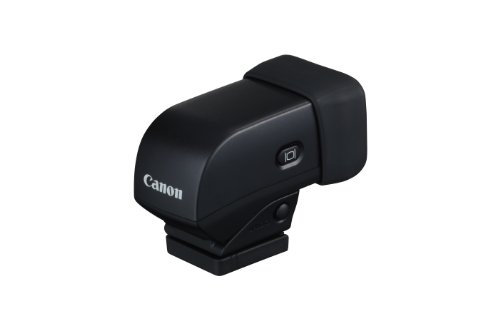
- 2.36MP XGA LCD display
- 90-degree upward tilt
- -3.0 to +1.0 dioptric adjustment
Best For: Canon users wanting a flexible accessory EVF
Best Universal Screen Magnifier

- 3x optical magnification
- Fits 3.0- and 3.2-inch screens
- Tripod and shoulder-bracket mounting
Best For: Daylight shooting with compatible LCD-screen cameras
Best Video-Oriented EVF

- Large electronic viewfinder
- 90-degree upward tilt
- Audio and portable SSD support
Best For: SIGMA fp-series video and hybrid shooting
Sunlight Shield
Kamerar CVF-2 3X LCD Viewfinder

- 3x focusable LCD magnification
- Blocks light for outdoor viewing
- Fits select 3.0- and 3.2-inch 16:9 screens
Best For: Outdoor LCD framing and focus checks
Dedicated Cinema EVF
Blackmagic Pocket Cinema Camera Pro EVF
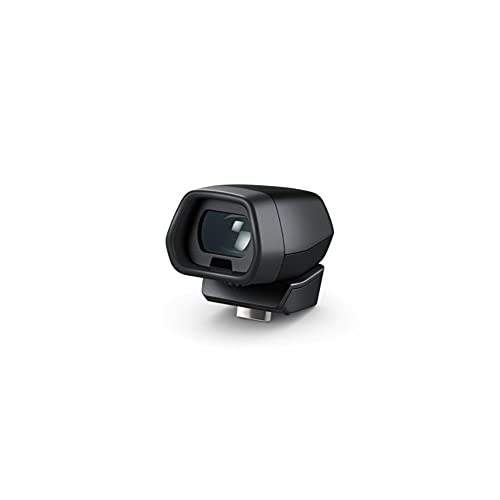
- Made for the Pocket Cinema Camera 6K Pro
- -4 to +4 diopter compensation
- Proximity sensor and status information
Best For: Blackmagic 6K Pro owners
Feature-Rich Monitoring
Portkeys LEYE SDI Electronic Viewfinder

- 1440x900 LCD with 450-nit brightness
- Adjustable +8D to -3D diopter
- Waveform, peaking, LUT, zebra, and more
Best For: Video monitoring with SDI or HDMI
Compact 28mm Framing Aid

- 28mm-equivalent optical view
- Built-in 1:1 framing marks
- Designed for Ricoh GXR
Best For: Ricoh GXR wide-angle photographers
Classic 35mm Composition

- Precise 35mm framelines
- Multi-coated four-element optics
- Compact universal cold-shoe design
Best For: Rangefinder-style 35mm framing
Flexible Multi-Focal Finder

- 28mm, 35mm, and 50mm framelines
- Bright multi-element glass optics
- Adjustable standard cold-shoe mount
Best For: Multi-focal-length optical composition
Best Integrated Magnifier – Sigma LVF-11 for fp
For Sigma fp owners seeking camera viewfinders for mirrorless cameras, the LVF-11 is a purpose-built optical accessory that enlarges the LCD view by approximately 2.5x. Its magnification, lens coating, and glare reduction are aimed at more precise composition and focusing, particularly in bright conditions.
Best For: Sigma fp photographers who want a dedicated, magnified viewing solution for outdoor framing and focus checks.
Pros:
- Approximately 2.5x magnification makes the LCD easier to view.
- Optical design supports detailed focus and exposure assessment.
- Lens coating helps reduce glare and reflections.
- Includes the BPL-11 base plate and is designed specifically for the Sigma fp.
Cons:
- Compatibility is limited to the Sigma fp.
- It is a dedicated optical/LCD accessory rather than a standalone electronic viewfinder.
The LVF-11 is a focused choice rather than a universal one. Its strong point is the combination of dedicated fit, substantial magnification, and glare reduction for Sigma fp users.
Best Tilting Electronic Option – Canon EVF-DC1
The Canon EVF-DC1 is an electronic accessory viewfinder for compatible Canon cameras, offering a 2.36MP XGA display with shooting information visible through the finder. For shoppers comparing camera viewfinders for mirrorless cameras, its upward tilt and dioptric adjustment add useful flexibility during composition.
Best For: Canon users who want an electronic finder with a high-eyepoint design, adjustable viewing angle, and built-in shooting information.
Pros:
- 2.36MP XGA LCD displays shooting information.
- 90-degree upward tilt supports flexible shooting angles.
- Dioptric adjustment ranges from -3.0 to +1.0.
- Mounts on the camera’s accessory shoe and uses camera controls for brightness adjustment.
Cons:
- Supplied notes do not specify a universal camera compatibility range.
- Requires one 9V battery.
- Its accessory-shoe design may not suit cameras without the appropriate mount.
With a detailed electronic display and tilting mechanism, the EVF-DC1 is practical for Canon shooters who value viewing flexibility. Confirm camera compatibility and power requirements before purchase.
Best Universal Screen Magnifier – 3X LCD Viewfinder
This 3X LCD viewfinder magnifier is a versatile option for photographers comparing camera viewfinders for mirrorless cameras and other screen-based cameras. Its optical-glass lens enlarges a 3.0- or 3.2-inch display, while the sunshade and soft rubber eyepiece are intended to improve daylight viewing comfort.
Best For: Mirrorless, SLR, and camcorder users who need a large-screen magnifier with tripod or shoulder-bracket mounting options.
Pros:
- 3x magnification provides a clearer enlarged view for daylight shooting.
- Optical glass is designed to preserve image clarity without distortion or cropping.
- Adjustable diopter and rubber eyepiece support viewing comfort.
- 1/4-inch and 3/8-inch screw holes allow tripod or shoulder-bracket mounting.
Cons:
- Designed for 3.0- and 3.2-inch LCD screens, so compatibility should be checked carefully.
- Requires assembly using the included-style fixing and mounting procedure.
- At 12.6 ounces, it may add noticeable weight to a compact setup.
This magnifier stands out for broad mounting flexibility and strong 3x enlargement rather than camera-specific integration. It is worth considering when a sunshade and enlarged LCD view matter more than a built-in electronic finder.
Best Video-Oriented EVF – Sigma EVF-11
The Sigma EVF-11 is an electronic viewfinder for the SIGMA fp series, designed around visibility, comfort, and video operation. Among camera viewfinders for mirrorless cameras, its 90-degree upward tilt and support for audio monitoring and external SSD recording make it especially relevant to fp-series video workflows.
Best For: SIGMA fp-series shooters who need a large, comfortable electronic finder for stills and video capture.
Pros:
- Large viewfinder is designed for clarity and viewing comfort.
- 90-degree upward tilt supports more flexible camera positioning.
- Supports audio monitoring during video capture.
- Works with external recording to a portable SSD.
Cons:
- Compatibility is limited to the SIGMA fp series.
- The supplied notes do not specify display resolution.
- Its video-oriented features may be unnecessary for stills-only users.
The EVF-11 is the more workflow-focused Sigma choice in this group. Its tilt, audio monitoring, and portable-SSD recording support make it particularly compelling for fp-series video work.
Sunlight Shield – Kamerar CVF-2 3X LCD Viewfinder
The Kamerar CVF-2 is a practical option among camera viewfinders for mirrorless cameras when your main challenge is seeing the rear LCD in bright conditions. It fits most 3.0- and 3.2-inch 16:9 screens and adds 3x magnification for more detailed viewing.
Best For: Mirrorless shooters who frame and focus using a compatible rear LCD, especially outdoors.
Pros:
- Blocks excess light for clearer, higher-contrast viewing in sunlight.
- Provides 3x focusable magnification with edge-to-edge sharpness.
- Works with either eye, including when wearing glasses.
- Mounts with adjustable rubber bands without leaving marks.
Cons:
- Compatibility is limited to suitable 3.0- or 3.2-inch 16:9 LCD screens.
- It magnifies the camera’s existing LCD rather than adding an independent display.
The CVF-2 is a straightforward, lightweight viewing aid for photographers who want better LCD visibility without a more involved electronic setup. Confirm your screen size and aspect ratio before buying.
Dedicated Cinema EVF – Blackmagic Pocket Cinema Camera Pro EVF
The Blackmagic Pocket Cinema Camera Pro EVF is a dedicated electronic viewfinder for the Pocket Cinema Camera 6K Pro. For filmmakers comparing camera viewfinders for mirrorless cameras and cinema-style bodies, it offers a proximity sensor, adjustable diopter compensation, and integrated status information.
Best For: Blackmagic Pocket Cinema Camera 6K Pro owners who want a purpose-built electronic shooting viewfinder.
Pros:
- Designed specifically for the Blackmagic Pocket Cinema Camera 6K Pro.
- Includes a proximity sensor for viewfinder operation.
- Four-part glass diopter provides adjustment from -4 to +4.
- Displays integrated status information and supports left- or right-eye use.
Cons:
- Compatibility is specifically listed for the Pocket Cinema Camera 6K Pro.
- It is not a universal viewfinder for other mirrorless cameras.
This EVF makes the most sense when you already use the compatible Blackmagic body and want a dedicated, adjustable viewing solution. It is less suitable for buyers seeking a broadly compatible accessory.
Feature-Rich Monitoring – Portkeys LEYE SDI Electronic Viewfinder
The Portkeys LEYE SDI combines a 2.4-inch electronic viewfinder with a 2.9-inch LCD specification, adjustable diopter control, and monitoring tools. It is worth considering among camera viewfinders for mirrorless cameras when you need exposure, focus, and color-assist features alongside an eyecup.
Best For: Video shooters who need waveform, peaking, LUT, and other monitoring tools in an SDI/HDMI viewfinder setup.
Pros:
- Offers a wide +8D to -3D adjustable diopter range.
- Provides 1440×900 resolution, 450-nit brightness, and an 1100:1 contrast ratio.
- Includes 3D LUT, waveform, histogram, peaking, false color, zebra, and audio-meter tools.
- Supports HDMI and SDI connectivity and uses a Canon E6 battery.
Cons:
- Its feature set and SDI/HDMI connections may be more than needed for simple still photography.
- Battery compatibility is specified as Canon E6, so power planning is required.
- The listed screen size and product naming may require checking the exact configuration before purchase.
The LEYE SDI is aimed at production-oriented users rather than casual LCD viewing. Its broad diopter adjustment and extensive image-analysis tools make it a stronger fit for video workflows with compatible connections.
Compact 28mm Framing Aid – Ricoh GV-2
The Ricoh GV-2 is a specialized choice among camera viewfinders for mirrorless cameras, designed for the Ricoh GXR system. Its optical design provides lag-free 28mm-equivalent framing, while built-in 1:1 markings help with square compositions.
Best For: Ricoh GXR users who want a lightweight optical viewfinder for wide-angle and square-format composition.
Pros:
- Designed specifically for the Ricoh GXR hot shoe
- 28mm-equivalent optical framing without electronic lag
- Built-in 1:1 aspect-ratio alignment marks
- Lightweight 23g body with protective case included
Cons:
- Compatibility is limited to the Ricoh GXR system
- Provides framing only, with no image stabilization, autofocus, or electronic exposure controls
- Not water resistant
The GV-2 is a focused accessory rather than a general-purpose finder. It makes the most sense for GXR photographers who prefer a clear optical view and regularly shoot at a 28mm-equivalent focal length.
Classic 35mm Composition – TTArtisan 35mm Viewfinder
For photographers seeking camera viewfinders for mirrorless cameras with a classic rangefinder feel, the TTArtisan 35mm Viewfinder offers a straightforward optical framing solution. Its 35mm framelines, multi-coated four-element optics, and universal cold-shoe design prioritize clear composition and portability.
Best For: Photographers who want a compact, rangefinder-inspired 35mm optical viewfinder for cameras with a standard cold shoe.
Pros:
- Precise 35mm framelines for a natural perspective
- Four-element optical design with multi-coating for improved light transmission
- Universal cold-shoe mounting works with most standard cold shoes
- Lightweight 25g aluminum construction with soft rubber eyecup
Cons:
- Offers only 35mm framing
- Uses a cold-shoe connection, so electronic communication is not provided
- Compatibility may vary with cameras lacking a standard cold shoe
The TTArtisan is a practical pick when you value simple, lag-free framing over electronic features. Its single focal-length view keeps the design compact, but it is less flexible than a multi-frameline model.
Flexible Multi-Focal Finder – LightMate OV-X2
The LightMate OV-X2 is a versatile option among camera viewfinders for mirrorless cameras, combining bright 28mm, 35mm, and 50mm framelines in one optical accessory. Its aluminum body, adjustable cold-shoe positions, and high-transmittance glass make it suited to photographers who want multiple composition options without an electronic display.
Best For: Mirrorless and rangefinder photographers who need one compact optical finder for 28mm, 35mm, and 50mm framing.
Pros:
- Built-in bright framelines for 28mm, 35mm, and 50mm compositions
- Six high-transmittance optical glass lenses for a clear view
- Lightweight 21g aluminum-alloy construction
- Adjustable cold-shoe positions help accommodate different shoe locations
Cons:
- Not compatible with certain special mounts, including the noted Canon R50V exception
- Optical framing does not provide electronic camera information
- Its compatibility with a specific camera should be checked before purchase
The OV-X2 stands out for flexibility: three focal-length framelines cover more shooting situations than a single-focal-length finder. The adjustable mount adds practical versatility, while the optional VfPort interface supports compatibility with the LightMate Area 2S light meter.
How We Picked the Best Camera Viewfinders for Mirrorless Cameras
We organized this roundup around practical compatibility and shooting needs rather than treating every viewfinder as interchangeable. The selection includes manufacturer-specific electronic viewfinders, third-party EVFs, loupe-style LCD accessories, optical finders, and cinema-focused monitoring solutions.
Key considerations included camera compatibility, viewing method, magnification or display quality, focusing assistance, diopter adjustment, mounting approach, portability, and whether the product is intended for photography, video, or both. Always verify the exact camera model, connector, shoe type, screen dimensions, and required batteries before ordering.
Quick Comparison
| Type | Best For | Main Advantage | Watch For |
|---|---|---|---|
| Dedicated electronic viewfinder | Compatible mirrorless bodies | Integrated live view and camera controls | Limited compatibility and proprietary connections |
| External cinema EVF or monitor | Video rigs and manual-focus work | Large, detailed monitoring with useful adjustments | Extra power, cables, and mounting hardware |
| LCD viewfinder magnifier | Bright conditions and handheld video | Blocks stray light and enlarges the rear screen | Requires a suitable screen size and mounting frame |
| Optical viewfinder | Simple framing and rangefinder-style shooting | No batteries and immediate viewing | Does not show exposure, focus, or the actual sensor image |
Key Buying Factors for Camera Viewfinders for Mirrorless Cameras
Compatibility and Connection
Start with the camera body, not the viewfinder’s appearance. Dedicated EVFs may use proprietary accessory ports, while cinema units commonly rely on HDMI or SDI. Check whether your camera outputs a compatible signal and whether the accessory shoe can support the unit securely.
Electronic, Optical, or LCD Viewing
An electronic viewfinder shows the camera’s live image and may support exposure previews, focus peaking, histograms, and playback. An LCD loupe magnifies the camera’s existing screen and is often useful for video. Optical finders are lightweight and power-free, but they provide framing guidance rather than a sensor-based preview.
Magnification, Diopter, and Visibility
Higher magnification can help with manual focus, but it may reduce the visible composition area. A broad diopter range is valuable for users who wear glasses or have different eyesight needs. For outdoor use, prioritize effective eye shielding and a bright, high-contrast display.
Size, Power, and Rigging
Consider the complete setup: batteries, cables, brackets, cage compatibility, and clearance around the camera. A compact accessory may suit travel photography, while a larger EVF can be worthwhile on a shoulder rig or cinema setup.
Who Should Buy Which Camera Viewfinders for Mirrorless Cameras?
Choose a dedicated electronic viewfinder if your camera officially supports one and you want the cleanest integration for photography. Choose a cinema EVF or external monitor for video rigs, SDI or HDMI workflows, and advanced manual-focus monitoring. Choose an LCD magnifier if your mirrorless camera lacks an EVF and you mainly need better visibility from its rear display. Choose an optical viewfinder for a lightweight, battery-free framing aid or a specific rangefinder-style experience.
For the best result, match the accessory to your primary body and shooting environment. A compact optical finder is not a substitute for a true EVF, and a professional external monitor may be unnecessary for casual still photography.