The right eyepiece can change how much detail, contrast, and sky you see through the same telescope. This roundup compares 10 telescope eyepieces and accessory kits across zoom, wide-angle, planetary, and deep-sky use.
Whether you want a versatile first upgrade or a specialized high-power lens, use the guide below to match focal length, field of view, and compatibility with your observing goals.
Best 10 Telescope Eyepieces Picks for 2026
Best All-in-One Zoom
Celestron 8-24mm Zoom Eyepiece

- Covers 8-24mm focal lengths
- Fully multi-coated optics
- Includes 2-year US warranty
Best For: Observers wanting flexible magnification from one eyepiece
Best Multi-Focal-Length Set
SVBONY 68° Wide-Angle Eyepiece Set
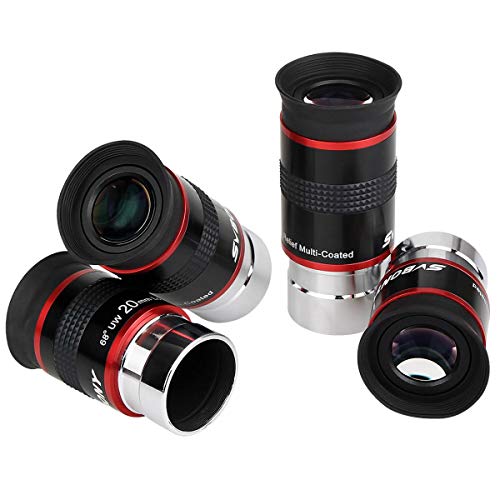
- Includes 6mm, 9mm, 15mm, and 20mm
- Offers a 68° apparent field
- Fully multi-coated multi-element optics
Best For: Building a varied 1.25-inch eyepiece collection
Best for Planetary Views
Celestron X-Cel LX 5mm Eyepiece
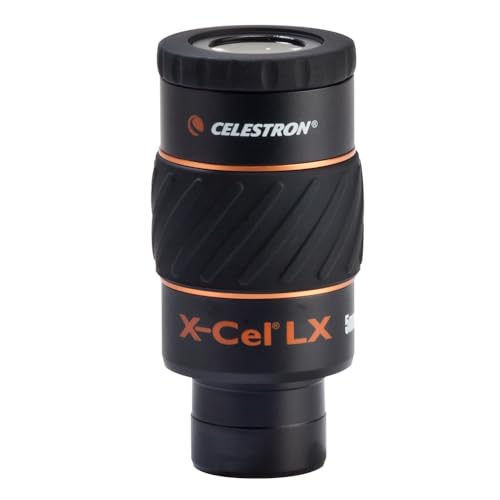
- Dedicated 5mm high-power focal length
- 60° field with six-element optics
- Twist-up rubber eyeguard
Best For: High-power planetary observing
Best Comfortable Zoom
SVBONY SV135 7-21mm Zoom Eyepiece
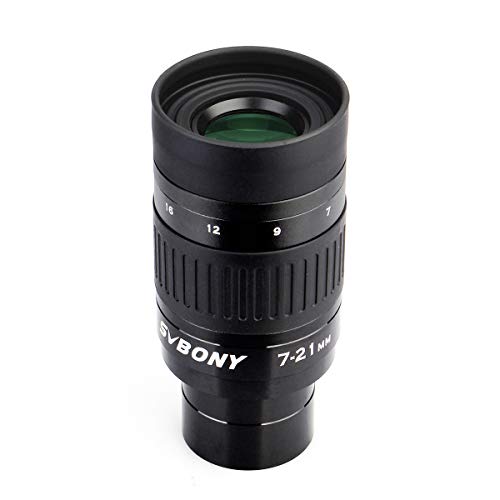
- Adjustable 7-21mm focal length
- Long stated eye relief for eyeglass wearers
- Fully multi-coated six-element design
Best For: Comfortable all-purpose lunar and planetary viewing
Best Wide-View Upgrade

- 60° field of view
- Fully multi-coated six-element optics
- Adjustable eyeguard and filter-ready barrel
Best For: Comfortable wide-field planetary and general observing
Best Complete Starter Set
Celestron Eyepiece and Filter Kit

- Five Plössl eyepieces from 32mm to 6mm
- Includes 2x Barlow and viewing filters
- Foam-lined case with room to grow
Best For: Building a versatile 1.25-inch telescope accessory collection
Best Budget Wide-Angle Set

- Three useful focal lengths
- 62° wide-angle views
- Fully multi-coated aspherical optics
Best For: Affordable wide-angle observing with 1.25-inch telescopes
Wide-Field Deep-Sky Pick

- 82° ultra-wide field of view
- Retractable eyecup with rubber grip
- Fully multi-coated, filter-ready optics
Best For: Wide-field lunar and deep-sky observing
High-Magnification Planetary Pick

- 6mm focal length for high magnification
- 68° wide-angle viewing
- 17mm eye relief for comfortable use
Best For: Lunar craters and planetary details
Broad-View Starter Pick
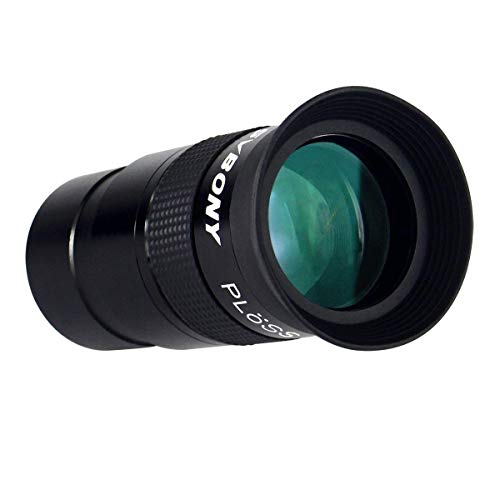
- 40mm focal length for broad views
- Four-element, fully multi-coated optics
- Fold-down eyeguard and filter thread
Best For: Moon, star clusters, nebulas, and deep-sky targets
Best All-in-One Zoom – Celestron 8-24mm Zoom Eyepiece
For observers who want flexible telescope eyepieces without carrying several fixed focal lengths, this Celestron zoom model covers 8mm to 24mm in one unit. Its fully multi-coated optics are designed to support brightness, color, and contrast across the range.
Best For: Stargazers who want to change magnification quickly with a single 1.25-inch eyepiece.
Pros:
- Variable 8-24mm focal length replaces multiple fixed eyepieces.
- Works with telescopes and spotting scopes accepting standard 1.25-inch eyepieces.
- Fully multi-coated optics, removable rubber eyecup, and T-threads for astrophotography.
- Includes a 2-year US warranty and unlimited support from Celestron.
Cons:
- A zoom eyepiece may be less specialized than dedicated fixed focal-length models.
- It is limited to telescopes with 1.25-inch eyepiece holders.
This is a practical choice for simplifying an eyepiece collection. The smooth 3:1 zoom range makes it easy to experiment with magnification while observing.
Best Multi-Focal-Length Set – SVBONY 68° Wide-Angle Eyepiece Set
This SVBONY set gives telescope owners four focal lengths—6mm, 9mm, 15mm, and 20mm—for experimenting with different magnifications. The 68-degree apparent field of view and fully multi-coated lenses are suited to broad-field astronomical observing.
Best For: Beginners and hobbyists building a versatile 1.25-inch telescope eyepiece collection.
Pros:
- Includes four focal lengths for varied observing needs.
- 68-degree apparent field of view provides broad-field views.
- Fully multi-coated optics and multi-element design support light transmission, sharpness, and contrast.
- Fold-down rubber eyeguards can help block stray light and accommodate eyeglass wearers.
Cons:
- Compatible devices must accept standard 1.25-inch eyepieces.
- The set requires switching eyepieces instead of offering built-in zoom adjustment.
As a package, this set offers more focal-length variety than a single eyepiece. Its wide field and included eyeguards make it a useful starting point for general astronomical observation.
Best for Planetary Views – Celestron X-Cel LX 5mm Eyepiece
Designed with planetary viewing in mind, this 5mm Celestron X-Cel LX is a high-power option for telescope owners seeking a dedicated short-focal-length eyepiece. Its six-element, fully multi-coated optical system provides a 60-degree field of view.
Best For: Observers who want a dedicated high-power telescope eyepiece for planetary viewing.
Pros:
- 5mm focal length is suited to high-power observing.
- Six-element fully multi-coated lens system with a 60-degree field of view.
- Twist-up rubber eyeguard supports comfortable viewing and contrast.
- Textured rubber grip helps provide a secure hold, including when wearing gloves.
Cons:
- Its fixed 5mm focal length offers less flexibility than a zoom eyepiece.
- High power may be less suitable when broader, lower-power views are preferred.
This model makes the most sense as a specialized addition to an existing set. The 1.25-inch filter-threaded barrel and comfort-focused design add practical usability for high-power sessions.
Best Comfortable Zoom – SVBONY SV135 7-21mm Zoom Eyepiece
The SVBONY SV135 is a flexible telescope eyepiece for observers who want adjustable magnification without swapping between several models. Its 7mm to 21mm zoom range, fully multi-coated six-element design, and long stated eye relief support varied astronomical and landscape viewing.
Best For: Eyeglass wearers and observers seeking a versatile zoom for lunar, planetary, nebula, and cluster viewing.
Pros:
- 7-21mm adjustable focal length covers multiple magnification options.
- 18mm to 16.3mm stated eye relief is designed for comfortable viewing, especially with glasses.
- Six-element, four-group fully multi-coated optical design supports edge and center sharpness.
- Standard 1.25-inch barrel fits telescopes accepting 1.25-inch eyepieces.
Cons:
- The apparent field varies from 40 to 57 degrees across the zoom range.
- It is limited to telescopes compatible with standard 1.25-inch eyepieces.
With its broad focal-length range and comfort-oriented eye relief, the SV135 is a convenient general-purpose option. It is particularly appealing when reducing eyepiece changes matters more than using separate fixed focal lengths.
Best Wide-View Upgrade – Celestron X-Cel LX 25mm
The Celestron X-Cel LX 25mm is a practical telescope eyepiece for observers who want a comfortable, moderately wide view with a 60° field of view. Its six-element, fully multi-coated design, adjustable eyeguard, and grippy exterior make it a well-equipped choice for planetary viewing and general observing.
Best For: Telescope users seeking a comfortable 25mm eyepiece with a wide field of view and solid handling.
Pros:
- 60° field of view supports wider, more immersive views.
- Six-element, fully multi-coated lens system is optimized for planetary viewing.
- Twist-up rubber eyeguard and textured grip improve comfort and handling.
- Threaded 1.25-inch barrel accepts filters.
Cons:
- Limited to telescopes that accept 1.25-inch eyepieces.
- Offers one 25mm focal length rather than a range of magnifications.
This is a strong single-eyepiece upgrade when comfort, field width, and planetary-oriented optics matter more than assembling a complete accessory set. Celestron also includes a 2-year US warranty and unlimited support.
Best Complete Starter Set – Celestron Eyepiece and Filter Kit
For shoppers building a telescope accessory collection, this Celestron kit bundles five telescope eyepieces, a 2x Barlow lens, filters, and a protective case. The 32mm, 17mm, 13mm, 8mm, and 6mm Plössl eyepieces cover low to high power, while the Barlow effectively expands the set’s magnification options.
Best For: Beginners and observers who want a broad 1.25-inch eyepiece, filter, and storage package in one purchase.
Pros:
- Includes five Plössl eyepieces spanning 32mm to 6mm.
- 2x Barlow lens doubles the magnification of the included eyepieces or other 1.25-inch eyepieces.
- Moon and colored planetary filters add viewing options.
- Foam-lined hard-sided case keeps accessories organized and leaves room to expand.
Cons:
- All components use a 1.25-inch format, so compatibility should be checked first.
- The kit is less targeted than choosing one specialized eyepiece.
This is the most versatile option of the three for someone starting from scratch. Its 14 essential accessories, storage case, and included 2-year warranty make it a convenient way to cover multiple viewing powers without buying each item separately.
Best Budget Wide-Angle Set – SVBONY 4mm, 10mm and 23mm
The SVBONY three-piece telescope eyepiece set provides 4mm, 10mm, and 23mm focal lengths for viewing bright objects, star clusters, and nebulae. Each 1.25-inch eyepiece has a 62° field of view, fully multi-coated optics, and an aspherical lens design intended to support clear, wide-angle views.
Best For: Observers wanting an affordable set of three wide-angle eyepieces for compatible 1.25-inch telescopes.
Pros:
- Three focal lengths cover high-, medium-, and lower-power observing.
- 62° field of view makes locating objects and viewing their surroundings easier.
- Aspherical, fully multi-coated optics are designed to reduce aberrations and improve light transmission.
- Filter threads and blackened internal surfaces support contrast-focused observing.
Cons:
- Compatibility is limited to telescopes with a 1.25-inch focuser.
- Users should calculate magnification and avoid exceeding the stated limit of twice the objective aperture.
- The set does not include a Barlow lens, filters, or carrying case.
This set is a sensible choice when three useful focal lengths and a wide apparent field matter more than a large accessory bundle. Confirm the telescope’s focuser size and calculate expected magnification before ordering.
Wide-Field Deep-Sky Pick – Celestron Luminos 15mm
For anyone comparing telescope eyepieces for lunar and deep-sky viewing, the Celestron Luminos 15mm stands out with its expansive 82° apparent field of view. Its fully multi-coated optics, parfocal design, and retractable eyecup make it a practical choice for comfortable visual observing.
Best For: Wide-field Moon, nebula, star-cluster, and deep-sky observations.
Pros:
- 82° ultra-wide field helps frame larger celestial targets.
- Retractable eyecup and rubber grip support comfortable handling.
- Fully multi-coated optics and a filter-threaded aluminum barrel.
- Includes a two-year US warranty and unlimited US-based support.
Cons:
- Its 15mm focal length may not provide enough magnification for close planetary details.
- At 12 ounces, it is heavier than some simpler eyepiece designs.
The Luminos 15mm is a strong all-purpose option when a broad, immersive view matters more than maximum planetary magnification. The twist-up eyecup and sturdy grip add useful comfort for extended sessions.
High-Magnification Planetary Pick – SVBONY 6mm 68°
This 6mm SVBONY is one of the more targeted telescope eyepieces for high-magnification planetary viewing. Its 68° wide-angle design, 17mm eye relief, and fully multi-coated optics are aimed at making lunar and planetary details easier to observe and track.
Best For: Viewing lunar craters and planetary features such as the rings of Saturn and details on Jupiter.
Pros:
- 6mm focal length provides high magnification.
- 68° field of view makes target acquisition and tracking easier.
- 17mm eye relief is more accommodating for eyeglass wearers.
- All-metal construction, folding eyecup, dust covers, and filter threading add practicality.
Cons:
- The short 6mm focal length is less suited to broad deep-sky views.
- High magnification can be more demanding of telescope alignment and viewing conditions.
Choose this eyepiece when planetary detail is the priority. The wide-angle view helps reduce frequent adjustments, while the long eye relief and rubber grip improve comfort during extended outdoor use.
Broad-View Starter Pick – SVBONY 40mm Plossl
The SVBONY 40mm Plossl is a practical choice among telescope eyepieces for broad, lower-magnification observing. Its four-element, fully multi-coated design and 40° apparent field of view suit lunar scenes, star clusters, nebulas, and other deep-sky targets.
Best For: Broad-field lunar viewing, medium star clusters, nebulas, and deep-sky targets.
Pros:
- 40mm focal length provides a broad viewing perspective.
- Four-element optics and fully multi-coated lenses support contrast and clarity.
- Fold-down rubber eyeguard accommodates eyeglass wearers.
- Standard 1.25-inch barrel and M28.5 x 0.6 filter thread support common accessories.
Cons:
- Its 40mm focal length is designed for broad views rather than high magnification.
- The 40° apparent field is narrower than the 68° and 82° options in this selection.
This is a sensible everyday eyepiece for locating and enjoying larger targets. The durable metal body, included storage case, comfortable eyeguard, and standard 1.25-inch fit make it an approachable addition to a visual observing kit.
How We Picked These Telescope Eyepieces
We selected options that cover the most useful observing situations rather than focusing on one specification alone. The lineup includes zoom eyepieces for flexibility, short-focal-length models for high-power planetary viewing, longer focal lengths for broad low-power views, and sets that provide several magnifications at once.
We also considered apparent field of view, common 1.25-inch barrel compatibility, optical coatings, included accessories, and practical value for beginners and experienced observers. Product descriptions and stated specifications should still be checked before purchase, especially when pairing an eyepiece with a particular telescope.
Quick Comparison
| Best For | Look For | Typical Choice |
|---|---|---|
| General-purpose viewing | Midrange focal length or zoom capability | 8–24mm or 7–21mm zoom |
| Planets and lunar detail | Short focal length and steady tracking | 4–6mm |
| Deep-sky objects | Moderate power and a wider field | 15–25mm |
| Large nebulae and star fields | Long focal length and generous exit pupil | 25–40mm |
| Building a starter collection | Multiple focal lengths and accessories | Eyepiece or accessory kit |
Key Buying Factors for Telescope Eyepieces
Focal Length and Magnification
Magnification equals your telescope’s focal length divided by the eyepiece focal length. Shorter eyepieces provide more magnification, but atmospheric turbulence, telescope aperture, and mount stability can limit usable power. A 6mm eyepiece may be excellent on a steady night but frustrating under poor conditions.
Apparent Field of View
A wider apparent field can make objects feel more immersive and helps keep targets in view, particularly with manual mounts. Wide-angle designs are often useful for deep-sky observing, while narrower designs can remain practical for focused lunar and planetary work.
Barrel Size and Telescope Compatibility
Confirm whether your focuser or diagonal accepts a 1.25-inch barrel. Some telescopes also support 2-inch accessories, but a 1.25-inch eyepiece will not automatically fit every setup without the appropriate adapter. Check clearance, focusing range, and any restrictions from a star diagonal or Barlow lens.
Exit Pupil and Observing Comfort
Exit pupil is the beam of light leaving the eyepiece. Very large exit pupils can waste light for some observers, while very small ones may produce a dim or difficult view. Eye relief, twist-up eyecups, and zoom convenience also matter if you wear glasses or observe for long sessions.
Who Should Buy Which Telescope Eyepieces?
Beginners: Choose a zoom model or a set with several useful focal lengths. These options make it easier to learn which magnifications work best with your telescope.
Planetary observers: Consider a 4–6mm eyepiece, but only if your telescope and local seeing conditions can support the extra power. A Barlow can add flexibility without requiring as many individual lenses.
Deep-sky observers: Look toward 15–25mm wide-field eyepieces for galaxies, clusters, and nebulae. A 40mm model can be useful for very broad views, provided your telescope’s exit pupil remains practical.
Travelers and casual observers: A compact zoom reduces the number of accessories you need to carry. For the best long-term collection, combine a moderate-power eyepiece with one low-power and one high-power option.