Whether you are checking workplace noise, documenting classroom conditions, monitoring equipment, or troubleshooting a loud environment, a sound level meter with data logging can turn occasional readings into useful evidence.
We selected 10 models with different recording methods, accuracy classes, display designs, alarm features, and installation options so you can match the meter to your measurement routine and budget.
Best 10 Sound Level Meters with Data Logging Picks for 2026
Best Rechargeable Option

- Stores up to 3,100 readings with PC export
- Rechargeable operation lasts about 8 hours
- 30–130 dB range with visual alarm indicators
Best For: Routine home, classroom, office, and industrial noise checks
Best Class 1 Meter

- Class 1 measurement for professional applications
- Logs from 1 second to 1 hour
- Saves Excel-compatible data to a removable SD card
Best For: Noise compliance, pollution control, and acoustics surveys
Best High-Capacity Logger

- Stores up to 43,000 data records
- Exports data for computer analysis and printing
- Adds A/C weighting, charts, and adjustable alarms
Best For: Extended monitoring with high-volume PC data review
Best for Environmental Surveys

- Captures average, minimum, maximum, and peak levels
- Supports scheduled, trigger, and delayed measurements
- Class 2 meter with CSV storage on microSD
Best For: Extended EHS, facility, and environmental noise surveys
Versatile Alarm Logger
SLM-390 Digital Sound Level Meter
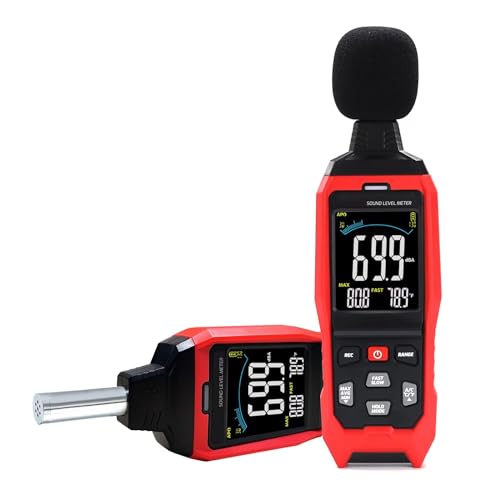
- 30–130 dB range with A, C, and Z weighting
- Stores up to 1,999 data groups
- Adjustable buzzer and light alarm limits
Best For: Configurable monitoring in homes, factories, and classrooms
High-Capacity Data Recorder
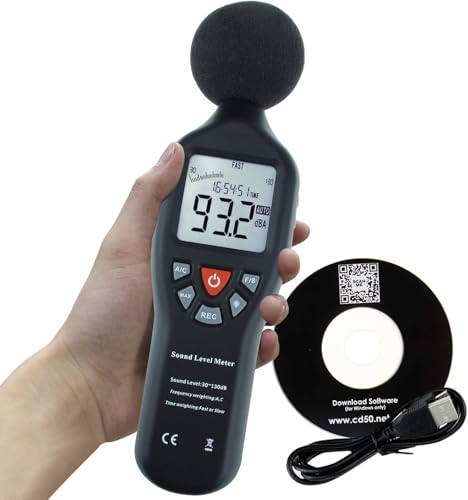
- Stores up to 32,000 timestamped data groups
- 30–130 dB range with 0.1 dBA resolution
- FAST/SLOW response, MAX, backlight, and AC/DC output
Best For: Extended logging and PC analysis across varied locations
Large-Screen Continuous Monitor
13-Inch Wall Mount Noise Meter

- Logs every two seconds and stores one year of data
- 13-inch display with four-inch digits
- 16.4-foot sensor and adjustable audible/visual alarm
Best For: Fixed classroom, studio, or home noise monitoring
Best Bluetooth Pick
Portable Data-Logging Decibel Meter

- Bluetooth app connectivity for Android and iOS
- Stores over 20,000 data points
- 30–130 dBA range with ±1.5 dB accuracy
Best For: Portable monitoring and smartphone-based data management
Best PC-Logging Option
Rechargeable Decibel Meter with Alarms

- Stores up to 43,000 data points
- USB PC syncing for monitoring and downloads
- A/C weighting plus fast and slow response modes
Best For: Windows-based logging in indoor and workplace settings
Best Large-Display Model
Wall-Mounted Noise Data Logger

- 13-inch LCD for at-a-glance readings
- Stores two-second readings for up to one year
- 16.4-foot sensor and configurable alarm output
Best For: Fixed monitoring in classrooms, studios, and workplaces
Best Rechargeable Option – GAIN EXPRESS Data Logger
For shoppers comparing sound level meters with data logging, this GAIN EXPRESS model combines a 30–130 dB(A) measurement range with rechargeable operation, PC connectivity, and visual alerts. It can record readings, display numerical and graphical data, and export measurements to a Windows computer.
Best For: Home, classroom, office, and general industrial noise monitoring where rechargeable power and PC data export are useful.
Pros:
- Stores up to 3,100 data records and supports PC export.
- Offers A- and C-weighted measurement ranges with ±1.5 dB accuracy.
- Rechargeable battery provides about 8 hours of operation per charge.
- Three-color alarm lights and a graphical display make changes easier to notice.
Cons:
- Data storage is lower than some competing data-loggers.
- PC compatibility is specified for Windows 7, 10, and 11.
- Automatic shutdown occurs after inactivity unless adjusted.
The rechargeable design and straightforward USB workflow make this a practical choice for recurring noise checks. Its record capacity is best suited to shorter surveys rather than extensive long-term logging.
Best Class 1 Meter – General Tools DSM403SD
General Tools DSM403SD Sound Level Meter with Data Logging SD Card, Class 1 Sound
Check Price On AmazonThe General Tools DSM403SD is a Class 1 sound level meter for buyers who want removable-media logging and flexible sampling intervals. It measures 30–130 dB, supports A or C weighting, and saves sampled data to an SD card in a format suitable for Excel.
Best For: Noise pollution control, OSHA-related measurement work, acoustics design, and users who prefer SD-card data transfer.
Pros:
- Class 1 sound level meter designed for more demanding measurement applications.
- Logs data at intervals from 1 second to 1 hour.
- Stores sampled readings on a removable 2 GB SD card for Excel use.
- Includes a hard case, wind shield ball, SD card, and manual.
Cons:
- Requires six AA batteries.
- Uses an SD-card workflow rather than direct PC connectivity described in the notes.
- Weighs more than the compact rechargeable models listed here.
Its Class 1 designation and adjustable logging interval make it the strongest fit for structured professional surveys. The tradeoff is a larger, battery-powered design that is less convenient for casual portable use.
Best High-Capacity Logger – DANOPLUS DP-441
Among sound level meters with data logging, the DANOPLUS DP-441 stands out for its stated 43,000-record capacity and PC export features. It also provides A/C frequency weighting, adjustable response speed, a line-chart display, and configurable three-color alarms.
Best For: Users who need high-capacity recording, real-time visual trends, and computer-based review or printing.
Pros:
- Records up to 43,000 data points and exports files through a PC connection.
- Supports A and C frequency weighting with FAST or SLOW response.
- Shows line charts, analog bars, date, and time on a color screen.
- Includes adjustable green, yellow, and red alarm thresholds.
Cons:
- PC connectivity is specified for Windows 7, 10, and 11.
- The notes do not specify a logging interval or included storage media.
- Charging takes about 1.5 hours, but operating time is not stated.
This is a compelling option when record capacity and data visualization matter more than basic spot measurements. Its DC output also adds flexibility for setups that need a voltage-based noise signal.
Best for Environmental Surveys – CRY2832-2 Lite
The CRY2832-2 Lite is a Class 2 data-logging sound level meter built for recording noise over hours or days. It captures LAeq, maximum, minimum, and peak measurements while offering scheduled, trigger-based, and delayed measurement modes.
Best For: EHS, facility, and environmental teams conducting extended noise surveys with time-based or threshold-triggered recording.
Pros:
- Measures 24–130 dB(A) with A, C, and Z weighting and F, S, and I time weighting.
- Records LEQ, LMAX, LMIN, and LPEAK simultaneously.
- Offers auto, trigger, and delay modes for scheduled or event-based surveys.
- Includes a calibration certificate, windscreen, power adapter, and four AA batteries.
Cons:
- MicroSD card and card reader are not included.
- USB-C powers the meter but does not charge the batteries or transfer logged files.
- WiFi and Bluetooth do not transfer measurement data.
This meter provides the most specialized survey features in the group, especially for average, peak, and threshold-based analysis. Buyers should plan on removing the microSD card for CSV transfer and using external 5 V power for especially long sessions.
Versatile Alarm Logger – SLM-390 Digital Sound Level Meter
For buyers comparing sound level meters with data logging, the SLM-390 combines a 30–130 dB range with A, C, and Z weighting, adjustable alarms, and PC connectivity. It records up to 1,999 data groups and includes a backlit display for easier readings.
Best For: Home, factory, and classroom users who need configurable sound limits and occasional PC-based data review.
Pros:
- Measures from 30 to 130 dB with a high-precision 1/2-inch microphone.
- Offers A, C, and Z frequency weighting options.
- Stores up to 1,999 groups and supports real-time Windows PC connection.
- Adjustable upper and lower limits trigger both a buzzer and light alarm.
Cons:
- Its 1,999-group capacity is lower than some larger data-loggers.
- PC compatibility is specified for 64-bit Windows 7, 8, 10, and 11 systems.
This is a flexible handheld option when alarm settings and multiple weighting choices matter more than maximum storage capacity.
High-Capacity Data Recorder – KIB-925 Sound Level Meter
Among sound level meters with data logging, the DANOPLUS KIB-925 stands out for its 32,000-group memory, date-and-time recording, and PC software connection. Its 30–130 dB range, 0.1 dBA resolution, and selectable response speeds suit routine measurements in varied environments.
Best For: Users who need substantial timestamped storage for sound checks around factories, schools, offices, homes, roads, or events.
Pros:
- Records up to 32,000 groups with date and time.
- Measures 30–130 dB with 0.1 dBA resolution and stated ±1.5 dB accuracy.
- Provides FAST and SLOW response modes plus MAX measurement functionality.
- Includes LCD backlight and AC/DC output for connection to other devices.
Cons:
- Requires four AA batteries.
- Its listed PC compatibility covers Windows XP through Windows 10, rather than newer versions.
The KIB-925 is a practical choice when a large timestamped log is the priority, especially for repeated monitoring and later computer analysis.
Large-Screen Continuous Monitor – 13-Inch Wall Mount Noise Meter
For visible, long-term monitoring, this wall-mount model is one of the more specialized sound level meters with data logging. It records readings every two seconds, can store one year of data, and uses a 13-inch display with large digits for viewing from a distance.
Best For: Classrooms, studios, homes, and other spaces that need an always-visible noise display with audible and visual alerts.
Pros:
- Stores up to one year of readings recorded every two seconds and supports PC export.
- 13-inch HD screen uses four-inch digits for clear viewing from afar.
- Includes a 16.4-foot sensor cable for flexible sound-source placement.
- Offers adjustable audible and visual alarms, desktop or wall mounting, and a 12V external alarm output.
Cons:
- Its 2.66-pound, 13-inch design is less portable than handheld meters.
- The default alarm threshold is 120 dB and requires manual adjustment if a different limit is needed.
This monitor is best suited to fixed installations where at-a-glance visibility and extended logging are more important than compact size.
Best Bluetooth Pick – Portable Data-Logging Decibel Meter
If you want sound level meters with data logging that work alongside a phone, this compact Bluetooth model offers a practical setup for collecting and reviewing measurements. It covers 30–130 dBA, stores more than 20,000 data points, and provides a 0.1 dB-resolution display.
Best For: Portable monitoring, smartphone-based recording, and users who want a lightweight meter for extended use.
Pros:
- Bluetooth connectivity supports data transfer and management through the dB Tester app on Android or iOS.
- Stores over 20,000 measurement points for ongoing monitoring and analysis.
- Offers a 30–130 dBA range with stated ±1.5 dB accuracy, plus MAX, MIN, data hold, and an alarm.
- Compact 3.4-ounce design includes a 1/4-inch mounting thread.
Cons:
- Uses three AAA batteries rather than a rechargeable battery.
- App-based data management requires a compatible Android or iOS device.
This is a strong choice when portability and wireless transfer matter most. Its large logging capacity and mounting thread also make it useful for repeat measurements in different locations.
Best PC-Logging Option – Rechargeable Decibel Meter with Alarms
For sound level meters with data logging and computer-based review, this model combines PC syncing with flexible measurement controls. It records up to 43,000 data points, supports A/C weighting, and includes fast and slow response modes for different noise-monitoring situations.
Best For: Home, classroom, office, and factory users who need substantial logging capacity and Windows PC downloads.
Pros:
- Records up to 43,000 data points and connects to a PC through the included USB cable.
- A-weighting suits general sound measurements, while C-weighting addresses low-frequency noise.
- Fast 125 ms and slow 1-second response modes help capture transient or average noise levels.
- Three customizable light-alarm limits provide visual warnings when levels exceed set boundaries.
Cons:
- PC compatibility is specified for Windows 7, 8, 10, and 11.
- The supplied notes identify a 9V battery power source, so rechargeable operation should be confirmed before purchase.
- At 8.4 ounces, it is less lightweight than the smallest portable option in this roundup.
Choose this meter if PC synchronization and higher storage capacity are priorities. Its weighting and response-time options give it added flexibility for both general monitoring and changing noise conditions.
Best Large-Display Model – Wall-Mounted Noise Data Logger
Among sound level meters with data logging, this wall-mountable model is designed for continuous, highly visible monitoring. Its 13-inch LCD, 16.4-foot sensor cable, two-second recording interval, and one-year storage capacity make it suited to rooms where readings need to remain easy to see.
Best For: Classrooms, studios, offices, factories, and other fixed monitoring locations that need a large display and alarm output.
Pros:
- Large 13-inch LCD makes readings easier to view from across a room.
- Records measurements every two seconds and stores data for up to one year.
- 16.4-foot corded sensor supports flexible placement away from the display unit.
- Offers audible and visual alarms, adjustable thresholds and durations, and an output for an external speaker.
Cons:
- Its 3.19-pound size and fixed-style design are less convenient for handheld field measurements.
- PC software is specified for 64-bit Windows 7, 8, 10, and 11 only.
- Tripod mounting is supported, but the tripod is not included.
This is the most suitable option when visibility and long-term room monitoring outweigh portability. The remote sensor, configurable alarms, and multiple mounting choices make it particularly practical for permanent or semi-permanent installations.
How We Picked the Best Sound Level Meters with Data Logging
We focused on meters that do more than show a live decibel reading. Each selected model offers some form of stored measurement data, such as internal memory, SD card recording, USB export, or smartphone-based logging. We also compared measurement range, weighting options, display readability, alarm functions, power arrangements, and portability.
Accuracy claims matter, but they should be interpreted in context. A Class 1 meter is generally intended for more demanding measurement work than a Class 2 model, while many general-purpose meters are best suited to screening, maintenance, education, and home use. We also considered practical features such as rechargeable batteries, backlighting, remote sensors, wall mounting, and the ability to export readings for later review.
Quick Comparison
- Best for professional-style measurements: Choose a Class 1 model, such as the General Tools DSM403SD, when documented accuracy and SD card storage are priorities.
- Best for general monitoring: A rechargeable 30–130 dB meter with internal memory and a visible alarm can cover workshops, offices, homes, and equipment checks.
- Best for high-volume recording: Look for models advertising tens of thousands of stored readings or direct export to a computer.
- Best for classrooms and public spaces: Large wall displays, remote sensors, and buzzer or color alarms make noise levels easy to see at a distance.
- Best for mobile workflows: Bluetooth models can send readings to a smartphone app for convenient logging and sharing.
Key Buying Factors for Sound Level Meters with Data Logging
Recording Capacity and Export
Check how many readings the meter stores, how often it records, and whether data can be exported. SD cards are convenient for long sessions, while USB and app-based systems may simplify computer analysis. Confirm whether the listed capacity refers to individual readings, session files, or total storage.
Accuracy, Range, and Weighting
A 30–130 dB range covers many everyday noise situations, but the right range depends on your environment. A-weighting approximates human hearing and is common for general noise assessments. C-weighting is more useful for louder sounds and low-frequency content, while Z-weighting is intended to be flatter and less filtered. Fast and slow response settings can also affect how changing sounds are captured.
Display, Alarms, and Sensor Design
Choose a backlit or oversized display when readings must be viewed from across a room. Three-color indicators and audible alarms are useful for quick pass/fail monitoring. A remote or corded sensor helps when the display needs to stay outside a noisy area, inside an enclosure, or mounted on a wall.
Power and Usability
Rechargeable models reduce battery replacement, but verify runtime and charging requirements. For extended logging, consider whether the meter can operate while charging. A tripod thread, automatic power-off control, sturdy case, and intuitive controls can make repeated measurements much easier.
Who Should Buy Which Sound Level Meters with Data Logging?
Professionals and inspectors should prioritize a recognized accuracy class, calibration support, selectable weighting, and dependable export. Facilities teams and workshop owners will usually benefit from rechargeable operation, alarm thresholds, and ample memory. Teachers, offices, and public-space managers should look for large displays, remote sensors, and highly visible alerts. Home users and hobbyists can save money with a compact meter that records internally and covers the standard 30–130 dB range. If you need reports on the go, a Bluetooth model may be the most convenient choice.