The right light stand makes a photography setup safer, faster, and easier to position. This roundup compares 10 options for portrait sessions, product photography, video, and studio work.
We included compact aluminum tripods, spring-cushioned and air-cushioned designs, heavy-duty stainless steel stands, a C stand, and a wheeled model so you can match support to your gear and workspace.
Best 10 Light Stands Picks for 2026
Portable Pair
Amazon Basics 6.7-Foot Light Stands

- Two aluminum stands with carrying cases
- Adjusts from 2.8 to 6.7 feet
- Folds to about 2.38 feet
Best For: Mobile setups needing a lightweight pair
Heavy-Duty Spring Cushion
NEEWER 7.2-Foot Stainless Steel Stand

- 22-pound load capacity
- Spring-cushioned stainless steel construction
- Reversible 1/4-inch and 3/8-inch adapter
Best For: Heavier lighting equipment and outdoor shooting
Compact Single Stand
NEEWER 6.23-Foot Photography Light Stand

- 13.5-pound maximum load
- Folds to 25.98 inches
- Lightweight aluminum alloy construction
Best For: Single-light setups and portable studio use
Studio Boom Support
NEEWER BASICS SC320 Lite C Stand

- 10.5-foot height with 4.2-foot boom arm
- Stainless steel turtle-base construction
- Includes two grip heads and 1/4-inch/3/8-inch screws
Best For: Heavy studio lighting and boom-mounted setups
Best for Easy Setup

- Two portable aluminum-alloy stands
- Adjusts from 2.5 to 7 feet
- Supports up to 11 pounds
Best For: Traveling creators, photography, video, podcasts, and social content
Best Heavy-Duty Rolling Stand
NEEWER Stainless Steel Stand with Casters
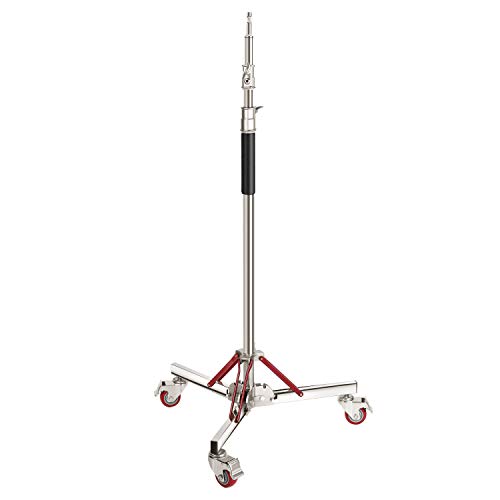
- Supports up to 66 pounds
- 10-foot maximum height
- Locking 360-degree casters
Best For: Studios using heavy lighting equipment
Best Budget Two-Pack
NEEWER 7Ft Aluminum Light Stands

- Two compact aluminum-alloy stands
- Adjusts from 28.3 inches to 7 feet
- 5.51-pound maximum load
Best For: Everyday photography, umbrellas, reflectors, and lightweight modifiers
Best Tall Stand
K&F CONCEPT 9.3ft Extendable Tripod

- Reaches approximately 9.3 feet
- Metal tripod with non-slip feet
- Folds to 39.4 inches
Best For: Tall studio and location lighting setups
Best Compact Travel Stand
NEEWER ST195 Reversible Aluminum

- Collapses to 1.4 feet
- Weighs about 2.2 pounds
- Supports up to 4.4 pounds
Best For: Portable lighting and camera setups
Best Safety-Focused Stand
SMALLRIG RA-S280 Air-Cushioned

- Air-cushioned height adjustment
- Supports up to 8 kilograms
- Reaches 9.2 feet
Best For: Heavier studio and video lighting gear
Portable Pair – Amazon Basics 6.7-Foot Light Stands
If you need a practical pair of light stands, this Amazon Basics set provides adjustable support for standard lights, strobes, backgrounds, softboxes, umbrellas, and more. The lightweight aluminum construction and included carrying cases make these light stands convenient for mobile setups.
Best For: Portable photography and video setups that need two compact, adjustable stands.
Pros:
- Includes two stands and two carrying cases.
- Adjusts from 2.8 to 6.7 feet for flexible positioning.
- Lightweight aluminum construction folds to about 2.38 feet.
- Each stand has a 1/4-inch screw tip and supports up to 7 pounds at the first section.
Cons:
- Maximum load varies by section, dropping to 1.1 pounds at the third section.
- Not water resistant.
This is a sensible choice when portability and having two stands matter more than maximum load capacity. Keep heavier equipment closer to the lower sections for better support.
Heavy-Duty Spring Cushion – NEEWER 7.2-Foot Stainless Steel Stand
This NEEWER light stand is built for users who need higher load capacity and impact protection. Its stainless steel construction, spring cushioning, and reversible 1/4-inch to 3/8-inch adapter make it suitable for lights and accessories used in studio or outdoor shooting.
Best For: Photographers and videographers mounting heavier lights, softboxes, strobes, or reflectors.
Pros:
- Supports up to 22 pounds/10 kilograms.
- Spring cushioning helps protect mounted equipment during adjustment or drops.
- Reversible 1/4-inch and 3/8-inch adapter supports different fixtures.
- Adjusts from 3.2 to 7.2 feet and folds for transport.
Cons:
- At 4.16 pounds, it is heavier than lightweight aluminum alternatives.
- Sandbags for additional stability are sold separately.
Choose this stand when durability and load capacity are priorities. The stainless steel build adds weight, but that tradeoff suits demanding equipment and outdoor work.
Compact Single Stand – NEEWER 6.23-Foot Photography Light Stand
This single NEEWER light stand offers a straightforward setup for lights, reflectors, softboxes, umbrellas, and backgrounds. Its aluminum alloy construction keeps the stand relatively light while providing a 13.5-pound maximum load capacity.
Best For: Home studios and photographers who need one affordable, compact stand with useful load capacity.
Pros:
- Supports up to 13.5 pounds.
- Reaches 74.8 inches, or about 6.23 feet.
- Folds to a compact 25.98 inches.
- Aluminum construction weighs approximately 0.5 kilogram.
Cons:
- Sold as a single stand rather than a pair.
- Maximum height is lower than some 7.2-foot and 10.5-foot options.
This model is a balanced option for buyers who want a light, portable stand without giving up a moderate load rating. It works well as an extra stand or for a simple one-light setup.
Studio Boom Support – NEEWER BASICS SC320 Lite C Stand
For demanding studio arrangements, this NEEWER BASICS C stand combines a stainless steel center column, foldable turtle base, boom arm, and two grip heads. Its height range and multiple mounting threads give you more positioning control than a basic tripod light stand.
Best For: Studio photographers who need a stable C stand for heavy lights, softboxes, reflectors, or overhead positioning.
Pros:
- Center column adjusts from 4.7 to 10.5 feet and supports up to 44 pounds.
- 4.2-foot boom arm supports up to 17.6 pounds.
- Includes two grip heads with multiple hole sizes for flexible mounting.
- Foldable turtle base has nonslip rubber pads and requires no tools for setup.
Cons:
- Weighs 7.64 kilograms, making it much less portable than aluminum tripod stands.
- Designed as a single C stand, not a multi-stand kit.
- Its larger studio-oriented design may be excessive for lightweight travel setups.
This is the strongest and most versatile option in the group for controlled studio work. Its heavier construction and boom hardware are useful for precise positioning, but they come with added carrying weight.
Best for Easy Setup – EMART 7Ft Light Stand 2-Pack
For creators who need dependable light stands without adding much bulk, the EMART 7-foot pair offers a practical balance of portability, adjustment, and capacity. Each aluminum-alloy stand adjusts from 2.5 to 7 feet and supports up to 11 pounds, making the set suitable for many everyday lighting setups.
Best For: Indoor or outdoor photography, video shoots, podcasts, and content creation where a portable two-stand kit is useful.
Pros:
- Two stands are included with a carrying bag for storage and travel.
- Height adjusts from 2.5 to 7 feet with locking buttons.
- Supports up to 11 pounds and uses a 1/4-inch screw thread for broad compatibility.
- Includes a one-year warranty and US-based customer support.
Cons:
- Heavy-duty softbox or flash setups may require a sandbag for added stability.
- The stands are not water resistant.
This EMART kit is a versatile choice when portability and quantity matter more than specialized heavy-duty construction. Add sandbags for larger modifiers or demanding setups.
Best Heavy-Duty Rolling Stand – NEEWER Stainless Steel Stand with Casters
When your lighting setup is too heavy to reposition comfortably, this NEEWER rolling light stand provides a sturdier studio-oriented solution. Its stainless-steel tripod supports up to 66 pounds, reaches 10 feet, and uses 360-degree casters with step-on brakes for controlled movement.
Best For: Studio photographers, videographers, and filmmakers using heavy strobes, monolights, softboxes, or other substantial equipment.
Pros:
- Supports equipment weighing up to 66 pounds.
- 360-degree casters make repositioning easier, while step-on brakes hold the stand in place.
- Adjusts from 4.3 to 10 feet and folds to about 3.9 feet for storage.
- Stainless-steel construction is designed to resist corrosion, moisture, heat, and shocks.
Cons:
- At 17 pounds, it is substantially less portable than lightweight aluminum stands.
- Only one stand is included.
This is the strongest option in the group for demanding studio work and mobile heavy equipment. Its casters add convenience, but the heavier build is best suited to users who prioritize capacity over easy travel.
Best Budget Two-Pack – NEEWER 7Ft Aluminum Light Stands
This NEEWER two-pack keeps light stands simple and portable for daily studio or location work. The aluminum-alloy stands adjust from 28.3 inches to 7 feet, fold down compactly, and support up to 5.51 pounds each for common lights, umbrellas, reflectors, and softboxes.
Best For: Photographers and creators who need two straightforward, lightweight stands for standard lighting accessories and smaller equipment.
Pros:
- Two 7-foot aluminum-alloy stands are included.
- Height adjusts from 72 to 210 centimeters.
- Lightweight, compact design is convenient for storage and location shoots.
- Compatible with major brands of lights, reflectors, softboxes, umbrellas, and backgrounds.
Cons:
- Maximum load is 5.51 pounds, limiting use with heavier equipment.
- The stands are not water resistant.
For basic lighting duties, this NEEWER pair offers useful coverage without a bulky setup. Choose a heavier-duty stand if your modifiers or lights approach the stated load limit.
Best Tall Stand – K&F CONCEPT 9.3ft Extendable Tripod
For photographers who need tall, adaptable light stands, the K&F CONCEPT model reaches up to 9.3 feet while folding to 39.4 inches for transport. Its metal tripod design, adjustable legs, and standard 1/4-inch mount make it suitable for studio and location work.
Best For: Portraits, product photography, video work, and users who need a taller stand with an 11-pound stated load capacity.
Pros:
- Adjusts from approximately 3.7 to 9.3 feet.
- Metal construction, non-slip feet, and collapsible long legs support stability.
- Standard 1/4-inch-20 mount works with cameras, lights, softboxes, umbrellas, and other accessories.
- Folds to 39.4 inches for car or gear-bag transport.
Cons:
- A sandbag may be useful with heavy modifiers at full height, and one is not included.
- At about 3.8 pounds, it is less travel-focused than lighter compact options.
This is a practical all-around choice among light stands when height and compatibility matter more than minimum carry weight. Its broad adjustment range suits changing setups, while extra stabilization is advisable for demanding outdoor or fully extended configurations.
Best Compact Travel Stand – NEEWER ST195 Reversible Aluminum
The NEEWER ST195 is a compact option for photographers and content creators who prioritize portability. It adjusts from 1.5 to 6.4 feet, supports up to 4.4 pounds, and collapses to just 1.4 feet with reversible legs.
Best For: Travel photography, outdoor content creation, small lights, cameras, ring lights, and other lightweight equipment.
Pros:
- Lightweight design weighs about 2.2 pounds.
- Reversible legs fold 180 degrees and reduce the collapsed length to 44 centimeters.
- Three-section center column adjusts from 1.5 to 6.4 feet.
- 1/4-inch screw supports lights, cameras, softboxes, umbrellas, and action cameras.
Cons:
- The 4.4-pound load limit is lower than the taller, heavier-duty options in this roundup.
- Its maximum height is 6.4 feet, so it may not suit setups requiring a very tall stand.
Among these light stands, the ST195 is the easiest to pack and carry. Its smaller maximum height and lower capacity make it better for compact gear than large modifiers, but the reversible-leg design is useful when storage space is limited.
Best Safety-Focused Stand – SMALLRIG RA-S280 Air-Cushioned
The SMALLRIG RA-S280 combines a 9.2-foot maximum height with an air-cushioned center column designed to help prevent sudden drops and finger pinches during adjustment. Its metal connection parts, flip locks, and wide leg spread make it a strong candidate for demanding studio and video setups.
Best For: Studio lights, LED video lights, ring lights, softboxes, reflectors, and users who value controlled height adjustment and a high load rating.
Pros:
- Air cushioning helps control the center column during height changes.
- Adjusts from 94 centimeters to 280 centimeters and supports up to 8 kilograms.
- Metal connection parts and a thick iron support bar provide a firm construction.
- Wide leg spread reaches 1.2 meters, while the flip locks are designed for straightforward adjustment.
Cons:
- At about 2.1 kilograms, it is heavier than the compact NEEWER option.
- Its folded size is 940 millimeters, so it is less convenient for small travel bags.
This SMALLRIG is a compelling choice among light stands when load capacity and safer height changes are priorities. It is best suited to stable studio or location setups where the larger packed size and heavier construction are acceptable.
How We Picked These Light Stands
We selected stands across the main categories photographers use: portable tripod stands, higher-reaching models, reinforced stainless steel designs, C stands, and stands with casters. We considered maximum height, construction, cushioning, footprint, portability, and the kinds of modifiers or lights each design is suited to support.
Because specifications and included accessories can vary, confirm the listed load capacity, mounting thread, folded length, and package contents before buying. A stand should be rated for the combined weight of the light, modifier, adapter, and any accessories—not just the light itself.
Quick Comparison
| Best For | Look For | Stand Type |
|---|---|---|
| Travel and occasional use | Lightweight aluminum, compact folded size, carrying case | Portable tripod |
| Flash and softbox setups | Moderate height, stable legs, secure locking knobs | Standard tripod |
| Heavier lights or modifiers | Steel construction, wide footprint, cushioned sections | Heavy-duty tripod |
| Overhead or precise positioning | Boom arm, counterweight capability, strong grip hardware | C stand |
| Large studio setups | Locking casters and broad, stable base | Wheeled stand |
Key Buying Factors for Light Stands
Height and Reach
Choose a maximum height that places the light where you need it without fully extending every section. A 6- to 7-foot stand suits many portraits and tabletop setups, while taller models help with overhead lighting, full-length portraits, and background illumination.
Material and Stability
Aluminum stands are generally easier to carry, while stainless steel models typically offer more rigidity and resistance to tipping under heavier loads. A wider leg spread improves stability, but it also requires more floor space.
Cushioning and Locking Hardware
Air or spring cushioning slows a falling center column when sections are loosened, helping protect fingers and equipment. Check that each section has firm locks and that the mounting stud fits your light or adapter.
Portability and Storage
For location work, compare folded length, weight, included cases, and whether the stand fits your existing bag. A two-pack can be convenient for matched key and fill lights, but individual stands may be preferable when you need different sizes or load ratings.
Footprint and Accessories
C stands and wheeled stands are useful in controlled studio environments, but they are heavier and less convenient on location. Casters should lock securely, and boom arms should be balanced before equipment is mounted.
Who Should Buy Which Light Stands?
Choose a compact aluminum two-pack if you need affordable, portable support for speedlights, small LED panels, umbrellas, or lightweight softboxes. Pick a standard 6- to 7-foot tripod for general portrait, product, and video work. A taller stand is better for overhead angles and larger modifiers.
Move to a stainless steel or cushioned heavy-duty model when your light and modifier combination is substantial or when you regularly work in busy spaces where stability matters. Choose a C stand with an arm for controlled studio positioning and overhead or side-mounted setups. If lights must be repositioned frequently across a studio floor, a locking wheeled stand can save time—provided the casters are locked during shooting.