The right light stand keeps your flash, softbox, LED panel, or reflector positioned securely while making your photography setup faster to adjust. The best choice depends on more than maximum height: stability, portability, load capacity, cushioning, and footprint all matter.
We selected 10 light stands for photography spanning compact aluminum tripods, taller stainless steel models, rolling stands, air-cushioned designs, and convenient multi-packs. Use the guide below to match your shooting style, lighting equipment, and workspace.
Best 10 Light Stands for Photography Picks for 2026
Best Value Pair
Portable Aluminum Light Stands

- Two-pack includes carrying cases
- Adjusts from 2.8 to 6.7 feet
- Lightweight and folds compactly
Best For: Portable setups using lighter photography equipment
Best Heavy-Duty Single
Spring-Cushioned Stainless Steel Stand

- Supports up to 22 pounds
- Spring cushion helps protect equipment
- Includes reversible 1/4-inch and 3/8-inch adapter
Best For: Heavier lights and modifiers in studio or location work
Best Two-Pack for Travel

- Two stands with portable carrying bag
- Adjusts from 2.5 to 7 feet
- Supports up to 11 pounds per stand
Best For: Mobile photography, video, podcasts, and content creation
Best Rolling Stand
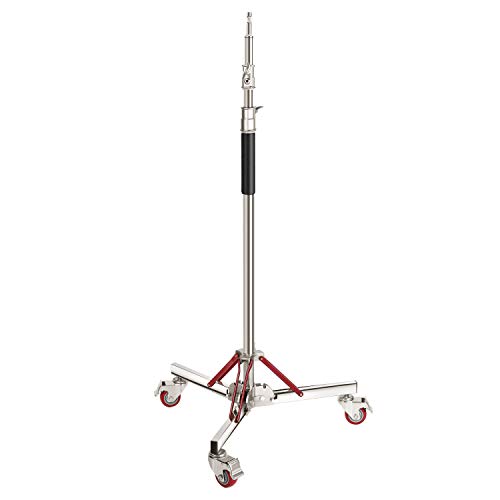
- 66-pound load capacity
- 360-degree casters with step-on brakes
- Adjusts from 4.3 to 10 feet
Best For: Studios using heavy lighting equipment that needs repositioning
Best Two-Piece Kit
NEEWER 7-Foot Aluminum Light Stands

- Two 7-foot stands included
- Adjusts from 28.3 to 83 inches
- Supports up to 5.51 pounds
Best For: Paired studio and location setups
Best Heavy-Duty Height
K&F CONCEPT 9.3-Foot Light Stand

- Reaches up to 9.3 feet
- 11-pound stated load capacity
- Folds to 39.4 inches
Best For: Tall portrait, product, and video setups
Best Compact Travel Stand
NEEWER ST195 Reversible Light Stand

- Weighs about 2.2 pounds
- Collapses to 44 centimeters
- Supports up to 4.4 pounds
Best For: Travel and outdoor content creation
Best with Extra Features
9.2-Foot Stainless Steel Light Stand

- 3.6- to 9.2-foot adjustable height
- Supports up to 17 pounds
- Dual springs and reinforced tripod base
Best For: Large strobes, LED lights, and softboxes
Safety-Focused Pick
SMALLRIG 9.2-Foot Air-Cushioned Stand

- Air-cushioned height adjustment
- Supports up to 8 kg
- Includes a two-year warranty
Best For: Photo and video setups needing controlled lowering
Two-Stand Value Pick

- Includes two adjustable stands
- Supports up to 22 pounds each
- Folds to about 39 inches
Best For: Dual-light, portrait, product, and video setups
Best Value Pair – Portable Aluminum Light Stands
If you need versatile light stands for photography without carrying bulky gear, this two-pack offers adjustable height, lightweight aluminum construction, and included cases. Each stand reaches 6.7 feet and uses a standard 1/4-inch screw tip for compatible lighting accessories.
Best For: Photographers who need an affordable, portable pair for speedlights, LED lights, softboxes, backgrounds, or other relatively light equipment.
Pros:
- Includes two stands and two carrying cases.
- Adjusts from 2.8 to 6.7 feet for flexible positioning.
- Folds to about 2.38 feet and weighs under 1 kg per stand.
- Supports up to 7 pounds at the lowest section.
Cons:
- Capacity decreases to 5.5 pounds and 1.1 pounds on higher sections.
- Not water resistant.
This is a practical starter set for portable indoor setups and lighter outdoor kits. For heavier modifiers, keep the load low and consider a more robust stand.
Best Heavy-Duty Single – Spring-Cushioned Stainless Steel Stand
For photographers who prioritize strength and equipment protection, this stainless steel option is one of the more substantial light stands for photography in the group. Its spring cushion, 22-pound load rating, and reversible 1/4-inch-to-3/8-inch adapter suit a broad range of lighting fixtures.
Best For: Studio or location users mounting LED lights, monolights, strobes, ring lights, reflectors, or softboxes that require more support than a lightweight stand provides.
Pros:
- Supports up to 22 pounds (10 kg).
- Spring cushioning helps protect mounted equipment during height adjustments.
- Stainless steel construction resists corrosion and moisture.
- 3.2-to-7.2-foot height range with 1/4-inch and 3/8-inch mounting threads.
Cons:
- At 4.16 pounds, it is heavier than aluminum travel stands.
- Sandbags are sold separately for added stability.
This stand is a strong choice when load capacity matters more than minimum carrying weight. Its compact folding design still makes transport manageable, while the dual-thread adapter improves compatibility.
Best Two-Pack for Travel – EMART 7-Foot Light Stands
This EMART two-pack balances portability and everyday versatility, making it a useful option among light stands for photography. The stands extend to 7 feet, fold to about 28 inches, and include a carrying bag for mobile shoots, content creation, and small studio setups.
Best For: Photographers, creators, and video users who want two lightweight stands for speedlights, strobes, umbrellas, reflectors, or softboxes.
Pros:
- Includes two portable stands and a carrying bag.
- Adjusts from 2.5 to 7 feet with secure locking buttons.
- Each stand weighs about 2.2 pounds and supports up to 11 pounds.
- Backed by a one-year manufacturer warranty and US-based support.
Cons:
- Heavy softbox or flash setups may need a separately purchased sandbag.
- Not water resistant.
With its two-stand format and relatively low weight, this kit is well suited to interviews, portraits, livestreams, and social-media production. Use extra ballast when mounting larger modifiers.
Best Rolling Stand – Heavy-Duty Wheeled Tripod
When you need to reposition heavy lighting without lifting the stand, this wheeled NEEWER model offers a distinctive solution. It is built for demanding light stands for photography applications, with stainless steel construction, 360-degree casters, locking brakes, and a 66-pound capacity.
Best For: Studio photographers, videographers, and filmmakers using heavy strobes, monolights, ring lights, reflectors, or softboxes that benefit from rolling mobility.
Pros:
- Supports up to 66 pounds (30 kg).
- 360-degree swivel casters allow smooth repositioning, with step-on brakes for stability.
- Adjusts from 4.3 to 10 feet for broad height flexibility.
- Folding legs, a buffer spring, and a foam grip aid transport and storage.
Cons:
- At 17 pounds, it is substantially heavier than portable tripod stands.
- Its 4.3-foot minimum height is less suitable for low-angle setups.
- Designed as a single stand rather than a multi-pack.
This is the specialized choice for studios where equipment weight and frequent repositioning are priorities. The locking casters help convert mobility into a stable working platform once the light is placed.
Best Two-Piece Kit – NEEWER 7-Foot Aluminum Light Stands
If you need light stands for photography in pairs, this NEEWER kit provides two adjustable aluminum stands for studio or location work. Each stand reaches 7 feet, folds to 28.3 inches, and supports up to 5.51 pounds.
Best For: Photographers who need two portable stands for reflectors, softboxes, umbrellas, backgrounds, or lights.
Pros:
- Includes two 7-foot aluminum alloy light stands
- Adjusts from 28.3 inches to 83 inches
- Folds into a compact size for storage and transport
- Locking design helps secure mounted equipment
Cons:
- Maximum load is limited to 5.51 pounds per stand
- Not water resistant
This is a practical choice when a two-stand setup matters more than extra height or heavy-duty capacity. Its compact folded size also makes it convenient for photographers moving between locations.
Best Heavy-Duty Height – K&F CONCEPT 9.3-Foot Light Stand
Among light stands for photography, this K&F CONCEPT model stands out for its taller maximum height and higher stated load capacity. Its metal tripod design adjusts from 3.7 to 9.3 feet and folds to 39.4 inches for transport.
Best For: Portrait, product, and video shooters who need extra height and support for compatible lights, softboxes, umbrellas, or cameras.
Pros:
- Extends up to 9.3 feet
- Supports loads up to 11 pounds according to the product bullets
- Non-slip feet and wide collapsible legs support stability
- Standard 1/4-inch-20 threaded mount works with many accessories
Cons:
- Heavy modifiers at full height may require a sandbag, which is not included
- Folds to 39.4 inches, making it longer when packed than compact stands
- Only one stand is included
The adjustable height and metal construction make this a versatile option for larger setups. For maximum-height use with heavier modifiers, plan to add the recommended sandbag for extra stability.
Best Compact Travel Stand – NEEWER ST195 Reversible Light Stand
For photographers prioritizing portability, this NEEWER stand is a lightweight option for travel and outdoor work. It adjusts from 1.5 to 6.4 feet, supports up to 4.4 pounds, and collapses to just 1.4 feet.
Best For: Travel photographers and outdoor content creators using compact lights, cameras, ring lights, softboxes, umbrellas, or action cameras.
Pros:
- Weighs about 2.2 pounds
- Collapses to 44 centimeters for easy transport
- 1/4-inch screw supports a broad range of devices
- Adjustable legs offer three unfolding angles and reversible folding
Cons:
- Maximum height is 6.4 feet, lower than some full-size stands
- Maximum load is 4.4 pounds
- Not water resistant
This stand is best when packed size and low weight are more important than maximum height or capacity. The 1/4-inch mount adds flexibility for mixed photo and video accessories.
Best with Extra Features – 9.2-Foot Stainless Steel Light Stand
If you need light stands for photography that can support substantial gear, this stainless steel tripod offers a height range from 3.6 to 9.2 feet and a rated load capacity of up to 17 pounds. Its reinforced base and spring buffers make it suited to demanding studio or location setups.
Best For: Photographers who need a tall, heavy-duty stand for strobes, LED lights, softboxes, or ring lights.
Pros:
- Adjusts from approximately 3.6 to 9.2 feet.
- Supports up to 17 pounds with a steel body and metal locking mechanism.
- Uses dual spring buffers to reduce impact when lowering equipment.
- Includes 1/4-inch and 3/8-inch mounting options with top- or side-mount flexibility.
Cons:
- At 2.81 kg, it is heavier than many lightweight aluminum stands.
- It is not water resistant.
- Only one stand is included.
This is a strong choice when stability and load capacity matter more than minimizing carry weight. The reinforced tripod base and anti-slip feet add confidence for larger lighting setups.
Safety-Focused Pick – SMALLRIG 9.2-Foot Air-Cushioned Stand
For light stands for photography with a focus on safer height adjustments, the SMALLRIG RA-S280 combines air cushioning with a sturdy aluminum tripod design. It adjusts from 94 cm to 280 cm and supports up to 8 kg for studio and video lighting equipment.
Best For: Photo and video creators who prioritize air-cushioned lowering, simple flip locks, and a two-year warranty.
Pros:
- Air cushioning helps prevent sudden drops and finger pinches.
- Adjusts from 94 cm to 280 cm, or about 9.2 feet.
- Supports loads up to 8 kg with metal connection parts and an iron support bar.
- Includes a stainless steel 1/4-inch adapter and a two-year manufacturer warranty.
Cons:
- Its 8 kg capacity is lower than the 17-pound rating of some heavy-duty alternatives.
- Only one stand is included.
- It is not water resistant.
The RA-S280 is a balanced option for mixed photo and video work. Its air cushion and flip-lock system are especially useful when equipment is frequently repositioned during a shoot.
Two-Stand Value Pick – 9.8-Foot Stainless Steel Pair
This two-pack is a practical option for photographers who need light stands for photography across a broader setup. Each stand adjusts from 47.2 to 126 inches, supports up to 22 pounds, and folds to about 39 inches for storage or transport.
Best For: Studio, portrait, product, and video shooters who need two tall stands with high load ratings.
Pros:
- Two stands are included for dual-light or paired-equipment setups.
- Adjusts from 47.2 to 126 inches with quick-locking knobs.
- Rated to support up to 22 pounds with thick 25–35 mm tubes.
- Offers 1/4-inch and 3/8-inch mounts, three-way socket positioning, and spring cushioning.
Cons:
- The pair weighs 9.9 pounds in total, making it less convenient than a lightweight single stand.
- The listed minimum height is about 47 inches, limiting very low-angle placement.
- It is not water resistant.
With two stands, a 22-pound capacity, and a 126-inch maximum height, this set is aimed at more substantial lighting arrangements. The compact folded length and one-knob adjustment also help when moving between studio and outdoor locations.
How We Picked the Best Light Stands for Photography
We focused on the practical features that affect day-to-day shooting: height range, construction material, stability, portability, adjustment design, and compatibility with common lighting equipment. Aluminum stands generally offer lower weight and easier transport, while stainless steel models tend to provide greater rigidity and durability. We also considered useful extras such as spring or air cushioning, casters, included adapters, carrying cases, and two-pack value.
Because lighting setups vary widely, this list includes both entry-level stands for speedlights and compact kits and heavier options for softboxes, strobes, LED fixtures, and video work. Always compare the stand’s recommended load with the fully assembled weight of your light, modifier, bracket, and any accessories.
Quick Comparison
| Best For | What to Look For |
|---|---|
| Travel and occasional use | Lightweight aluminum construction, compact folded size, and a carrying case |
| Speedlights and small flashes | A stable tripod base, practical height range, and standard mounting thread |
| Softboxes and larger lights | Heavier tubing, wider legs, stronger locks, and cushioning |
| Studio or video setups | Steel construction, air cushioning, high load capacity, or locking casters |
| Multiple-light kits | Two-pack value and matching height or adjustment ranges |
Key Buying Factors for Light Stands for Photography
Height and Working Range
Check both the minimum and maximum height. A tall stand is useful for hair lights, background illumination, and overhead positioning, but a lower minimum height is better for tabletop work and close portraits. Maximum height alone does not indicate stability; fully extended columns are more affected by vibration and uneven floors.
Material and Stability
Aluminum is usually the best choice for mobile photographers because it reduces carrying weight. Steel adds mass and can better resist movement from large modifiers, though it is less convenient to transport. Look for broad leg spreads, secure locking knobs, sturdy collars, and a center column that does not flex noticeably.
Cushioning and Safety
Spring- or air-cushioned columns slow the descent of mounted equipment when a section is loosened. This helps protect lights and fingers, especially with taller stands or heavier fixtures. Even with cushioning, lower the sections carefully and keep one hand on the equipment.
Mounting Compatibility and Capacity
Confirm whether the stand uses a standard spigot, 1/4-inch thread, 3/8-inch thread, or an included adapter. Verify the load rating and account for modifiers that catch wind or shift the center of gravity. Sandbags are strongly recommended for outdoor sessions and large softboxes.
Who Should Buy Which Light Stands for Photography?
Traveling photographers and beginners: Choose a compact aluminum stand or a two-pack with a case for portraits, product photography, and small flashes.
Portrait and event shooters: Prioritize quick adjustments, practical 7- to 9-foot height, and spring cushioning. A matching pair is useful for key and fill lights.
Studio photographers: Favor heavier stainless steel construction, wide bases, and higher load capacity. A wheeled model can make frequent repositioning easier on smooth floors.
Hybrid photo and video creators: Look for air cushioning, a secure standard mount, and enough height for LED panels or overhead lighting. Add sandbags whenever the setup is tall, top-heavy, or used around people.