The right light meter can help you evaluate reading areas, workshops, plant shelves, photography setups, and rooms where brightness matters. These handheld models offer a range of features, from basic lux readings to rotating or split sensors and temperature measurements.
Our roundup compares 10 light meters for home use so you can choose a practical option based on measuring range, display visibility, portability, and the type of lighting you want to check.
Best 10 Light Meters for Home Use Picks for 2026
Best Value
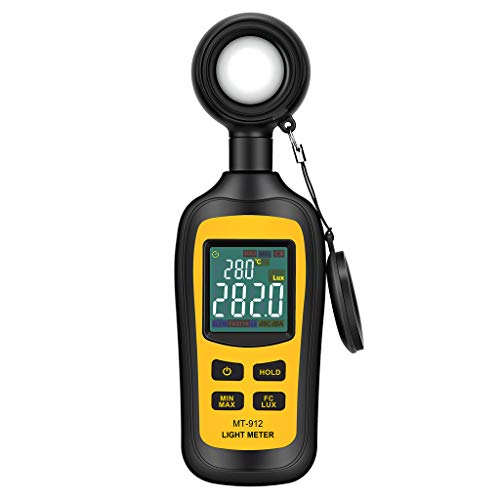
- 0–200,000 lux measurement range
- Temperature, MIN/MAX, and data hold
- Compact design with two-year warranty
Best For: General home lighting checks on a budget
Simple Controls
Extech LT40 White LED Light Meter
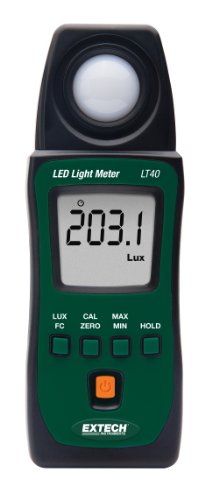
- Measures lux and foot candles
- 4000-count backlit LCD
- Data hold and auto power-off
Best For: Quick white LED lighting checks at home
Best for Logging
BTMETER BT-881D Rotating-Sensor Meter
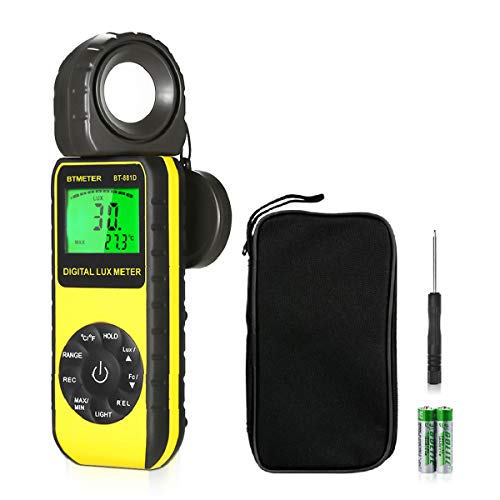
- 0.01–400,000 lux range
- 270-degree rotating light sensor
- Stores 33 readings with relative mode
Best For: Comparing plant and fixture lighting from multiple angles
Best Display

- Large 2.25-inch backlit display
- 180-degree rotating probe
- Measures light, temperature, and humidity
Best For: Easy-to-read home, office, and plant lighting checks
Reliable Home Illuminance Tester

- Measures up to 200,000 lux
- Lux and foot-candle modes
- Hold and auto-ranging functions
Best For: Basic household lighting checks
Fast Split-Sensor Pick
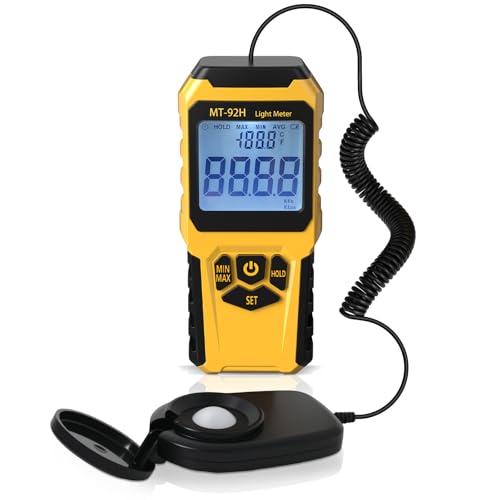
- 0.5-second refresh rate
- Separate probe for flexible positioning
- Switchable backlit display
Best For: Detailed household measurements and hard-to-reach areas
Connected Measurement Choice

- Bluetooth app data transfer
- Measures up to 199,900 lux
- Backlit display with max/min and hold
Best For: Recording and analyzing household light levels
Wide-Range Home Tester

- Measures up to 200,000 lux with automatic range conversion.
- Switches between LUX and FC readings.
- Includes hold, MAX/MIN, backlight, and auto-off functions.
Best For: Homes, plants, and mixed indoor/outdoor measurements
Fast-Reading Classic

- Provides readings twice per second.
- Switches between FC and LUX units.
- Includes PEAK recording and a low-battery alert.
Best For: Plant lighting and quick home or outdoor checks
Feature-Rich Pocket Pick

- Measures up to 200,000 lux with stated accuracy under incandescent lamps.
- Adds a backlight, bar graph, data hold, and MAX/MIN recording.
- Includes batteries and a two-year warranty.
Best For: Detailed plant, photography, and low-light measurements
Best Value – High-Range Digital Lux Meter
For shoppers comparing light meters for home use, this compact handheld model offers a broad 0–200,000 lux range and straightforward controls. It also measures ambient temperature, making it useful for checking rooms, workspaces, and home lighting setups.
Best For: Home users who want a versatile, affordable meter with a wide measurement range.
Pros:
- Measures light from 0 to 200,000 lux.
- Includes MIN/MAX readings, data hold, and auto power-off.
- Uses a four-digit color LCD and includes a low-battery indicator.
- Compact 6.7-ounce design with a two-year warranty.
Cons:
- Requires three AAA batteries.
- Specified accuracy varies between lower and higher readings.
This is a practical general-purpose choice when you need broad coverage without a complicated interface. Its temperature measurement and compact build add useful flexibility for everyday home checks.
Simple Controls – Extech LT40 White LED Light Meter
The Extech LT40 is a compact option for light meters for home use, with lux and foot-candle measurement for checking white LED lighting. Its backlit display and data-hold function make readings easier to view and record during basic inspections.
Best For: Users who prefer a small, simple meter for white LED light measurements.
Pros:
- Measures both lux and foot candles.
- Has a 4000-count backlit LCD display.
- Includes data hold and auto power-off.
- Lightweight 4.9-ounce design with batteries included.
Cons:
- The supplied notes do not specify its measurement range or accuracy.
- Its listed features are more basic than those of the wider-range models here.
The LT40 makes sense when a straightforward white-LED meter is more important than extensive logging or environmental measurements. Its compact size and backlit screen suit quick household checks.
Best for Logging – BTMETER BT-881D Rotating-Sensor Meter
For light meters for home use that need flexible positioning and repeated readings, the BTMETER BT-881D combines a 270-degree rotating sensor with a 0.01–400,000 lux range. It can store 33 readings and offers relative measurement for comparing current and recorded light levels.
Best For: Plant, LED, and indoor or outdoor lighting checks that involve multiple angles or repeated measurements.
Pros:
- Very wide 0.01–400,000 lux measurement range.
- Rotating sensor helps measure from different angles without turning the meter.
- Samples two to three times per second for a fast response.
- Stores 33 readings and includes a relative measuring mode.
Cons:
- The larger body may be less convenient than the most compact models.
- The supplied notes do not list battery requirements or auto-power-off functionality.
This model stands out for measurement flexibility and memory. It is a strong fit when you want to compare lighting around plants, rooms, or fixtures rather than take only occasional single readings.
Best Display – TopTes TS-710 Light Meter
The TopTes TS-710 is a well-rounded pick among light meters for home use, pairing a 180-degree rotating probe with a large 2.25-inch backlit display. It measures lux and foot candles, while also tracking temperature and humidity for broader home, office, plant, and workshop checks.
Best For: Home users who want an easy-to-read meter with rotating positioning and environmental measurements.
Pros:
- Measures 0.1–200,000 lux and 0.1–20,000 foot candles.
- Large backlit LCD and 180-degree rotating sensor improve usability.
- Includes temperature, humidity, MAX/MIN, and data-hold functions.
- Comes with a soft case, sensor cover, user manual, and three AAA batteries.
Cons:
- The temperature sensor adapts to new environments over time.
- Auto shut-off occurs after 10 minutes of inactivity, which may interrupt longer checks.
With its readable screen, broad range, and extra environmental readings, the TS-710 is a versatile choice for routine household diagnostics. It is especially useful when viewing the display from awkward angles or checking several lighting types.
Reliable Home Illuminance Tester – Digital Luxmeter
This digital luxmeter is a straightforward option for comparing lighting levels around the house. It measures up to 200,000 lux, supports lux and foot-candle readings, and includes both hold and auto-ranging functions.
Best For: Home users who want a simple, broad-range light meter for checking room lighting.
Pros:
- Measures up to 200,000 lux with 0.1-lux resolution.
- Supports both lux and foot-candle units.
- Includes hold, auto-range, manual-range, and low-battery functions.
- Compact 3.53-ounce design.
Cons:
- Requires a 9V battery, which is not included.
- Automatically powers off after approximately 15 minutes.
For shoppers comparing light meters for home use, this model offers useful measurement range and basic controls without an overly complicated feature set. Its main drawback is the need to purchase the 9V battery separately.
Fast Split-Sensor Pick – MT-92H Light Meter
The MT-92H stands out among light meters for home use with a separate probe, quick refresh rate, and backlit display. It measures up to 200,000 lux and also provides temperature readings in Celsius or Fahrenheit.
Best For: Users who want flexible probe positioning, rapid readings, and a display that is easier to read in changing light.
Pros:
- Measures 0–200,000 lux with ±3% accuracy and 0.1-lux resolution.
- Refreshes readings every 0.5 seconds.
- Split-sensor design allows flexible positioning of the probe.
- Switchable backlight and lux/foot-candle modes improve usability.
Cons:
- Requires three AAA batteries, adding more batteries to keep on hand.
- Its temperature-measurement feature may be unnecessary for simple lighting checks.
This is a feature-rich choice for home measurements, especially when the sensor needs to be positioned away from the display. The included AAA batteries and compact 7-ounce body make it convenient to start using.
Connected Measurement Choice – UNI-T UT383BT Light Meter
The UNI-T UT383BT adds Bluetooth connectivity to the core functions expected from light meters for home use. It measures up to 199,900 lux, offers lux and foot-candle readings, and can transfer data to the iENV app for recording, storage, export, and analysis.
Best For: Home users who want to save and review lighting measurements on an iOS or Android device.
Pros:
- Measures up to 199,900 lux and 18,500 foot-candles.
- Bluetooth connectivity supports app-based recording and analysis.
- Provides 0.5-second sampling, max/min, data hold, and overload indication.
- Compact design includes a backlit four-digit LCD.
Cons:
- Using the app adds setup beyond taking readings directly on the meter.
- The supplied notes do not specify the required battery type.
Choose the UT383BT if measurement history matters as much as the live reading. Its app support is particularly useful for comparing rooms or documenting changes, while the meter remains small and portable for everyday household use.
Wide-Range Home Tester – S8608 200,000-Lux Light Meter
For shoppers comparing light meters for home use, the S8608 is a practical choice when you want broad coverage for indoor rooms, plants, or occasional outdoor checks. It measures up to 200,000 lux, automatically selects the range, and supports both LUX and FC readings.
Best For: Homeowners, plant growers, and hobby photographers who want a versatile meter with a wide measurement range.
Pros:
- Measures visible brightness from low indoor levels through bright outdoor light, up to 200,000 lux.
- Offers LUX/FC switching, data hold, MAX/MIN readings, and a backlight.
- Includes three AAA batteries and has auto power-off plus a low-battery indicator.
Cons:
- The notes do not specify a measurement accuracy rating.
- Its feature set may be more than needed for simple room checks.
With its broad range and straightforward functions, this meter is a flexible pick for checking home lighting and grow areas, especially when readings may vary substantially.
Fast-Reading Classic – Dr.meter 0-200,000 Lux Meter
The Dr.meter 1330B-V is a straightforward option among light meters for home use, particularly if you value quick readings and a dedicated peak-recording function. Its 0-200,000 lux range suits both household checks and bright sunlight measurements.
Best For: Home gardeners and users who want fast LUX/FC readings with peak-value recording.
Pros:
- Samples twice per second for fast light-intensity readings.
- Supports convenient switching between FC and LUX.
- PEAK mode records the highest light pulse value, and a low-battery alert helps with maintenance.
- Suitable for indoor and outdoor use, including plant-light checks.
Cons:
- Uses a 9V battery rather than the AAA or AA batteries used by the other listed meters.
- The supplied notes do not mention a backlight, data hold, or auto-off function.
This model keeps the controls focused on rapid readings and peak capture. It is a sensible fit when you need a simple meter for plants, rooms, offices, or sunlight without requiring a large set of extra modes.
Feature-Rich Pocket Pick – POROMETISTO LT01 Light Meter
For detailed home lighting checks, the POROMETISTO LT01 combines a 0-200,000-lux range with a stated accuracy of ±(3% + 5 lux) under standard incandescent lamps. Its compact design, backlit display, and recording modes make it a convenient choice among light meters for home use.
Best For: Plant growers, home photographers, and users who want clear readings in both bright and low-light environments.
Pros:
- Measures 0-200,000 lux and 0-20,000 FC with a stated accuracy specification under standard incandescent lamps.
- Uses a digital display with an analog bar graph and samples twice per second.
- Provides data hold, MAX/MIN recording, backlight, auto power-off, and low-battery indication.
- Includes batteries, a sensor cap, lanyard, manual, and a two-year warranty.
Cons:
- The listed battery details conflict: the product notes mention two AAA batteries in the package but specify two AA batteries in the details.
- The stated accuracy is specifically described for standard incandescent lamps, so performance may vary with other light sources.
The LT01 is the most feature-packed option here for users who want portability and easier reading in dim areas. Its accuracy qualification and battery-detail inconsistency are worth keeping in mind before purchase.
How We Picked the Best Light Meters for Home Use
We focused on handheld digital meters suited to common residential tasks, including checking room brightness, comparing lamps, positioning plants, evaluating workspaces, and troubleshooting uneven lighting. The selected models cover a broad range of capabilities, from straightforward lux meters to instruments that also measure foot-candles, temperature, or offer rotating and separated sensors.
We considered stated measuring range, display design, sensor flexibility, refresh behavior, portability, and ease of reading results. Because specifications and real-world performance can vary by model and seller, use the listed accuracy and operating details as a comparison guide rather than treating every meter as a laboratory-grade instrument.
Quick Comparison
| Feature | What to look for | Why it matters |
|---|---|---|
| Measurement range | Up to 200,000 lux for broad versatility | Handles dim rooms and very bright sources |
| Units | Lux, foot-candles, or both | Useful when following different lighting guidelines |
| Sensor design | Fixed, rotating, or split sensor | Makes it easier to measure awkward angles |
| Display | Large LCD, backlight, or color screen | Improves readability in dark or bright spaces |
| Extra functions | Temperature, data hold, auto-ranging, or Bluetooth | Adds convenience for repeated measurements |
Key Buying Factors for Light Meters for Home Use
Range and Resolution
A wide range is helpful if you will measure both low-light rooms and bright windows or fixtures. For basic home checks, resolution and stable readings may matter more than the highest advertised limit. Look for clear unit selection and an easy-to-read value at the brightness levels you expect to test.
Lux Versus Foot-Candles
Lux is commonly used in metric lighting recommendations, while foot-candles remain common in some professional and North American settings. If you use guidance from different sources, choose a meter that supports both units or be prepared to convert between them.
Sensor Movement and Handling
A rotating sensor can face a light source without requiring you to tilt the entire meter. Split-sensor designs are convenient when the display needs to remain in your hand while the sensor reaches a shelf, ceiling, or narrow workspace. A compact body is useful for occasional checks and storage.
Display and Controls
Backlighting, large digits, data hold, and fast refresh rates can make measurements easier to record. If you work in dim rooms, a backlit display is particularly useful. Temperature readings and wireless connectivity are optional conveniences rather than essential features for most households.
Who Should Buy Which Light Meters for Home Use?
Choose a basic digital lux meter if you want an affordable tool for checking rooms, desks, lamps, or general home lighting. Models with a 180- or 270-degree rotating sensor are better for ceiling fixtures, shelves, and measurements taken from unusual angles. A split-sensor meter suits users who frequently measure confined spaces or need to watch the display from a distance.
If you compare lighting across many locations, prioritize a wide range, clear backlight, data hold, and a quick refresh rate. Buyers who need documented or highly precise measurements should verify calibration information and published accuracy before purchasing, and may want a professional-grade instrument instead of relying solely on a consumer meter.