The best light meters for hobbyists make it easier to measure brightness, balance exposure, check workspaces, or fine-tune grow lights without relying on guesswork.
We selected 10 practical options, from simple 200,000-lux handheld meters to dedicated photography and PAR meters, so you can match features and accuracy to your project.
Best 10 Light Meters for Hobbyists Picks for 2026
Best Everyday Pick
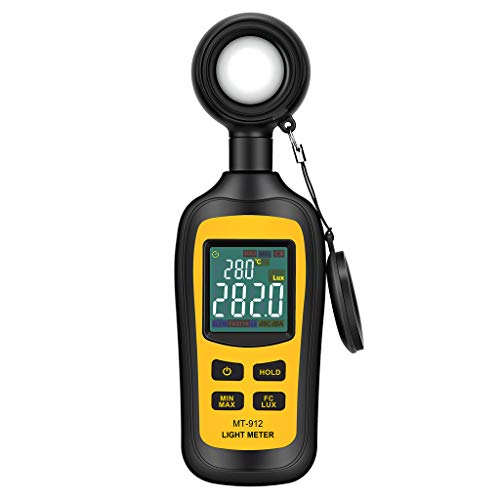
- Measures 0–200,000 lux
- Reads ambient temperature
- Two-year warranty and data hold
Best For: General home, office, and hobby light checks
Best for Grow-Light Analysis
PAR Meter with UVA and RGB Readings

- Measures PAR and UVA
- Breaks PAR into blue, green, and red
- Stores up to 100 PAR readings
Best For: Indoor grow-light analysis and mapping
Best Value Lux Meter
Fast-Reading 200,000-Lux Tester

- Reads up to 200,000 lux
- Switches between lux and foot-candles
- Provides fast and peak readings
Best For: Plant, sunlight, home, and office measurements
Best for Photography
Sekonic Incident and Reflected Meter

- Handles ambient and flash exposure
- Offers photo, cine, and HD cine modes
- Accurate to a tenth of a stop
Best For: Photography, DSLR video, and cinema exposure control
Advanced Color Analysis Pick
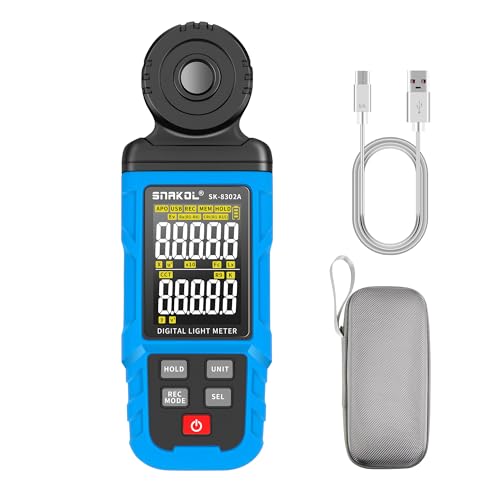
- Measures up to 200,000 lux
- Adds CCT, CRI, R9, and color coordinates
- Stores data and connects to PC software
Best For: Hobby lighting analysis and LED testing
Compact Everyday Pick
UNI-T UT383 Digital Light Meter

- Reads up to 199,900 lux
- Supports lux and foot-candle units
- Lightweight design with fast sampling
Best For: Portable household, studio, and hobby measurements
Simple High-Range Pick

- Measures up to 200,000 lux
- Automatically converts measurement ranges
- Includes max/min, hold, and backlight functions
Best For: General indoor, outdoor, grow, and photography checks
Best All-Around Range
POROMETISTO Digital Illuminance Light Meter

- 0–200,000 lux and 0–20,000 FC range
- Digital and analog displays with backlight
- Data hold, MAX/MIN, and two-year warranty
Best For: Hobby gardeners and photographers needing broad-range readings
Best for Flexible Measurements
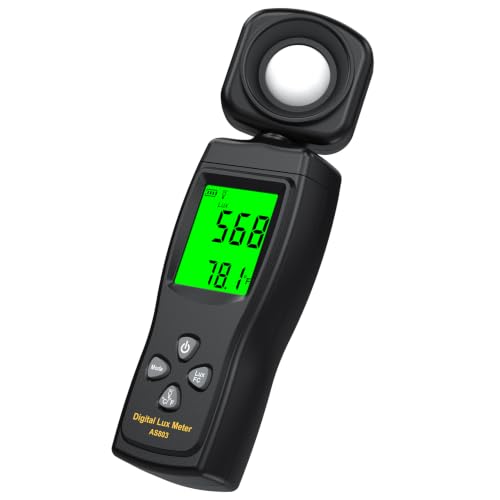
- 180-degree rotating sensor
- 0–200,000 lux range with backlit LCD
- Temperature, data hold, and MAX/MIN modes
Best For: Growers and photographers measuring from varied angles
Best for Sensor Positioning

- Separate 360-degree rotating sensor
- Four lux ranges up to 200,000
- Switchable lux and foot-candle units
Best For: Hobbyists measuring from difficult angles
Best Everyday Pick – Compact 200,000-Lux Meter
For hobbyists comparing light meters for hobbyists, this handheld model is a practical all-purpose choice. It measures 0 to 200,000 lux, also reads ambient temperature, and adds helpful features such as minimum/maximum readings, data hold, and auto power-off.
Best For: Home, office, set-design, and general-purpose light checks.
Pros:
- Wide 0–200,000 lux measurement range
- Compact 6.7-ounce design with a four-digit color LCD
- Includes min/max, data hold, low-battery indication, and a two-year warranty
Cons:
- Requires three AAA batteries
- Accuracy varies slightly between lower and higher lux readings
This is a straightforward option when you want broad illuminance coverage without a specialized plant or photography feature set. Its small size and clear display make it easy to carry for routine measurements.
Best for Grow-Light Analysis – PAR Meter with UVA and RGB Readings
Gardeners choosing light meters for hobbyists may prefer this specialized PAR meter for examining grow-light performance. It measures PAR from 400–750 nm, UVA from 320–400 nm, and separately displays blue, green, and red PAR contributions.
Best For: Indoor growers mapping light distribution and comparing grow-light spectrum.
Pros:
- Measures both PAR and UVA irradiance
- Shows separate blue, green, and red PAR contributions
- Records up to 100 PAR measurements for distribution mapping
- Includes hold function and multiple display modes
Cons:
- More specialized than a general lux meter
- Requires two AAA batteries
Its spectrum breakdown and recording function give hobby growers more context than a single illuminance number. Choose it when plant-light analysis matters more than broad household measurements.
Best Value Lux Meter – Fast-Reading 200,000-Lux Tester
This Dr.meter model is a useful value-oriented option among light meters for hobbyists, especially for plant and sunlight checks. It covers 0–200,000 lux, responds twice per second, and lets you switch between lux and foot-candles.
Best For: Gardeners and hobbyists who want fast readings with selectable measurement units.
Pros:
- Measures up to 200,000 lux
- Switches between lux and foot-candles
- Fast response rate of two readings per second
- Peak mode can capture the highest light pulse value
Cons:
- Uses a 9V battery
- Weighs 12 ounces, making it heavier than some compact alternatives
With unit conversion, peak recording, and a broad range, this meter handles everyday indoor and outdoor checks well. It is a sensible pick if quick readings and flexible display units are priorities.
Best for Photography – Sekonic Incident and Reflected Meter
Photographers and videographers looking beyond basic light meters for hobbyists can use the Sekonic L-308X-U for exposure control. It supports incident and reflected readings, ambient and electronic flash measurements, plus dedicated photo, cine, and HD cine modes.
Best For: Still photography, DSLR and mirrorless video, and cinema-style exposure work.
Pros:
- Measures ambient and electronic flash exposure to a tenth of a stop
- Supports incident and reflected exposure readings
- Includes photo, cine, and HD cine modes
- Pocket-sized 3.52-ounce design with an LCD auto backlight
Cons:
- More specialized for camera exposure than general illuminance testing
- Requires two AAA batteries
This is the most purpose-built choice in the group for camera users. Its selectable frame rates, shutter angles, and flash options make it especially useful when consistent photo or video exposure is the goal.
Advanced Color Analysis Pick – SK-8302A Spectral Light Meter
For hobbyists who need more than a basic brightness reading, the SK-8302A is one of the more feature-rich light meters for hobbyists. It measures illuminance up to 200,000 lux while also providing color-temperature, CRI, R9, RA, and color-coordinate data.
Best For: Hobby lighting analysis, LED testing, photography, and projects that benefit from stored measurements and color data.
Pros:
- Measures 0–200,000 lux and 2,500K–15,000K CCT.
- Includes RA, CRI, R9, and color-coordinate readings.
- Stores up to 999 groups of data and supports USB PC software.
- Protective silicone case improves grip and drop resistance.
Cons:
- More complex than a simple lux-only meter.
- At 1.08 pounds, it is heavier than the compact alternatives.
The SK-8302A is a strong choice when hobby projects involve comparing lamps, evaluating LEDs, or documenting repeated tests. Its software and color metrics add versatility, though casual users may not need every function.
Compact Everyday Pick – UNI-T UT383 Digital Light Meter
The UNI-T UT383 is a straightforward option for hobbyists who want a portable way to check brightness. It reads up to 199,900 lux, displays results in lux or foot-candles, and includes practical controls such as max/min, data hold, and auto shutdown.
Best For: Home projects, photography and studio checks, plant or workspace measurements, and general-purpose brightness testing.
Pros:
- Wide 0–199,900 lux and 0–18,500 FC measurement range.
- Compact 5-ounce design with a backlit four-digit LCD.
- Fast 0.5-second sampling time.
- Includes max/min, data hold, overload indication, and auto shutdown.
Cons:
- Does not provide the color metrics offered by a spectral meter.
- Accuracy is specified as ±(4%+8).
For most routine brightness checks, the UT383 keeps operation simple and portable. It is a sensible fit for hobbyists who value quick readings and basic measurement functions over detailed light-color analysis.
Simple High-Range Pick – S8608 200,000-Lux Light Meter
The S8608 offers a broad measurement range in a simple handheld format, making it a practical candidate among light meters for hobbyists. It measures visible brightness up to 200,000 lux, automatically changes range, and displays readings in either lux or foot-candles.
Best For: Indoor and outdoor brightness checks, grow-plant projects, film photography, and general lighting comparisons.
Pros:
- Measures up to 200,000 lux and 18,500 FC.
- Automatic range conversion simplifies operation.
- Includes max/min, data hold, backlight, and auto power-off functions.
- Large display and low-battery indicator improve usability.
Cons:
- Focuses on visible brightness rather than color-temperature or CRI measurements.
- Requires three AAA batteries.
The S8608 is well suited to hobbyists who want broad coverage without specialized color-analysis features. Its large display and straightforward controls make it useful for checking lighting in rooms, outdoor areas, grow setups, and photography projects.
Best All-Around Range – POROMETISTO Digital Illuminance Light Meter
For hobbyists comparing light meters for hobbyists, the POROMETISTO LT01 offers a broad 0–200,000 lux range in a compact handheld format. Its digital and analog displays, backlight, and practical recording functions make it suitable for checking plant lighting, photography setups, and everyday indoor or outdoor illumination.
Best For: Hobby gardeners, photographers, and users who want wide-range measurements with a backlit display.
Pros:
- Measures up to 200,000 lux and 20,000 foot-candles with stated ±(3% + 5 lux) accuracy under standard incandescent lamps.
- Combines a digital reading with an analog bar graph and samples twice per second.
- Includes data hold, MAX/MIN recording, low-battery indication, and a 10-minute auto-off feature.
- Comes with two AAA batteries, a sensor cap, lanyard, manual, and a stated two-year warranty.
Cons:
- The stated accuracy specification is specifically given for standard incandescent lamps.
- The sensor is not described as rotating, which may be less convenient for awkward measuring angles.
The LT01 is a well-rounded choice when you want strong range, quick readings, and straightforward controls without a bulky instrument. Its included batteries and warranty also make it convenient for first-time hobby use.
Best for Flexible Measurements – Ohcans AS803 Light Meter
The Ohcans AS803 is a useful option for people comparing light meters for hobbyists who work around plants, cameras, or indoor spaces. Its 180-degree rotating sensor helps with positioning, while the backlit screen, fast sampling, and temperature readout add flexibility for everyday measurements.
Best For: Plant growers, photographers, and indoor-space users who value an adjustable sensor and temperature monitoring.
Pros:
- Measures 0–200,000 lux with stated ±4% +10 accuracy.
- Its 180-degree rotating sensor supports measurements from different angles.
- Samples every 0.5 seconds and includes a backlit LCD for low-light reading.
- Also displays temperature in Celsius or Fahrenheit and offers data hold plus MAX/MIN modes.
Cons:
- Its stated accuracy is less precise than the POROMETISTO’s listed specification.
- Requires three AAA batteries, adding one more battery than some comparable handheld meters.
The AS803 stands out for its rotating sensor and added temperature function. It is a practical pick when a hobby light meter needs to do more than measure brightness, especially in plant-growing or indoor evaluation settings.
Best for Sensor Positioning – DANOPLUS DP-331 Light Meter
For hobbyists seeking light meters for hobbyists with positioning flexibility, the DANOPLUS DP-331 uses a separate 360-degree rotating sensor. It provides four automatic lux ranges, switchable foot-candle units, and practical hold and recording features for checking plants, rooms, headlights, and other visible-light sources.
Best For: Users who need to orient the sensor independently while measuring plants, homes, offices, or equipment lighting.
Pros:
- Offers four lux ranges from 200 to 200,000 and switches to a 0–20,000 foot-candle scale.
- The separate sensor rotates 360 degrees for easier positioning and aiming.
- Includes auto-ranging, MIN/MAX readings, data hold, low-battery indication, and selectable auto power-off.
- Measures visible light across the stated 400–700 nm spectral range.
Cons:
- The stated accuracy is ±4% ±10 digits, so readings are not presented as laboratory-grade precision.
- The notes do not mention a backlight, temperature sensing, or an included warranty.
The DP-331 is especially appealing when sensor placement matters more than extra environmental features. Its rotating sensor, automatic range selection, and compact handheld design make it a flexible tool for routine hobby measurements.
How We Picked the Best Light Meters for Hobbyists
We focused on meters suited to common home and enthusiast uses: photography, indoor lighting checks, workshop projects, plant growth, and general brightness measurement. The shortlist includes basic lux meters for everyday testing, specialized tools for photographic exposure and horticultural lighting, and models with broader color or spectral information.
Important considerations included measurement range, sensor design, display readability, portability, measurement units, and useful extras such as data holding, recording, temperature readings, rotating sensors, or automatic modes. Because specifications and included accessories can vary by seller, confirm the current listing before buying.
Quick Comparison
| Best For | Look For | Typical Choice |
|---|---|---|
| General brightness checks | Wide lux range, clear LCD, simple controls | Basic handheld lux meter |
| Photography | Incident and reflected readings, flash support, exposure modes | Dedicated photographic light meter |
| Grow lights | PAR or PPFD measurement and suitable spectral coverage | PAR meter |
| Color evaluation | CCT, CRI, R9, and spectral data | Spectral illuminance meter |
| Portable hobby projects | Rotating sensor, backlight, compact body, data hold | Handheld digital meter |
Key Buying Factors for Light Meters for Hobbyists
Choose the Right Measurement
Lux measures illuminance as perceived by the human eye, making it useful for rooms, work surfaces, displays, and many general lighting checks. Photographers may need incident and reflected exposure readings instead. For plants, PPFD or PAR measurements are usually more relevant than lux because they describe the light used for photosynthesis.
Check Range, Resolution, and Accuracy
A range reaching 200,000 lux provides flexibility for bright windows, lamps, and outdoor conditions, while a lower range may be sufficient indoors. Resolution tells you how finely readings change; accuracy indicates how closely they represent the actual level. If you need repeatable technical measurements, prioritize published accuracy and calibration information over range alone.
Consider Sensor Placement and Display Design
A rotating or detachable sensor can help when measuring awkward angles. A backlit, high-contrast display is valuable in dim rooms, while a hold function lets you record readings without constantly viewing the screen. Auto-ranging simplifies casual use; manual ranges can be useful for controlled testing.
Look for Features That Match Your Project
Data logging, temperature measurement, color temperature, CRI, spectral breakdowns, flash modes, and cine settings can justify a higher price—but only if you will use them. For occasional brightness checks, a straightforward lux meter is often easier and more economical.
Who Should Buy Which Light Meters for Hobbyists?
- Choose a basic digital lux meter for room lighting, desk illumination, DIY testing, and quick comparisons.
- Choose the Sekonic-style photographic meter if you shoot with manual exposure, studio lights, flash, or cine equipment.
- Choose a PAR meter if your main goal is measuring grow-light intensity for plants.
- Choose a spectral meter when color temperature, CRI, R9, or broader color analysis matters.
- Choose a rotating-sensor model for shelves, fixtures, photography setups, or measurements where sensor alignment is inconvenient.
For most hobbyists, the best value comes from matching the meter to the measurement rather than buying the most advanced model. Decide whether you need lux, exposure, PPFD, or color data first, then compare readability, range, sensor flexibility, and recording features within that category.