The best weather stations for home use make it easier to track conditions around your property, plan outdoor activities, and monitor temperature, humidity, wind, and rainfall at a glance.
We compared 10 popular models across connectivity, sensor coverage, display quality, alerts, and ease of setup to help you choose the right station for your home.
Best 10 Weather Stations for Home Use Picks for 2026
Best Smart-Home Pick
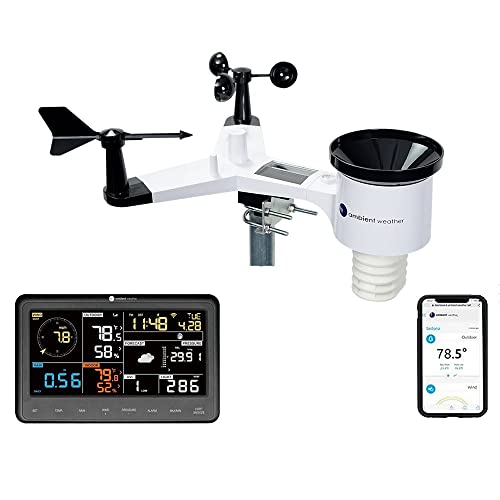
- Tracks wind, rain, temperature, humidity, UV, and solar radiation
- Wi-Fi enables remote monitoring and customizable alerts
- Compatible with Alexa, Google Home, and IFTTT
Best For: Connected home weather monitoring and smart-home routines
Best Connected Value
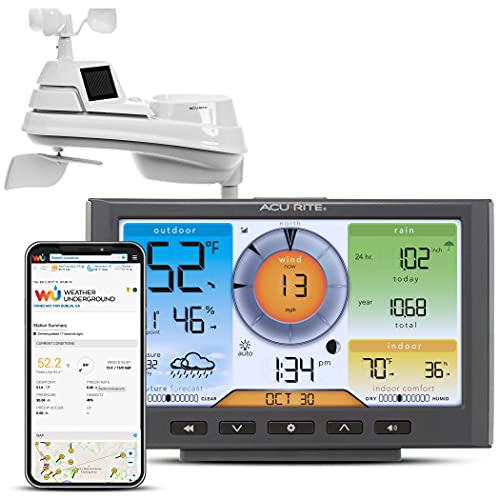
- Monitors temperature, humidity, wind, pressure, and rainfall
- Offers more than 25 data points and historical tracking
- Connects to Weather Underground for remote viewing
Best For: Everyday home monitoring with weather-data sharing
Best Large-Display Option
Sainlogic 12-in-1 Weather Station

- Large 6.5-inch screen uses bold, high-contrast fonts
- Measures rain, wind, pressure, temperature, and humidity
- Solar-powered sensor supports wireless outdoor installation
Best For: Readable monitoring in homes, gardens, farms, and orchards
Best for Storm Tracking
AcuRite Iris Lightning Detection
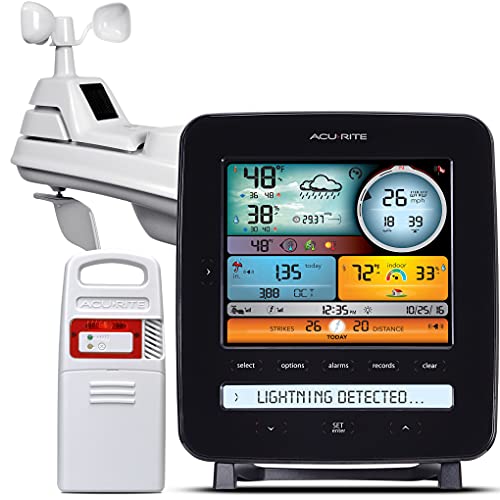
- Estimates lightning distance and counts detected strikes
- Provides more than 50 weather and historical data points
- Includes alerts, auto-dimming, and a weather ticker
Best For: Detailed home monitoring with lightning and storm awareness
Best High-Accuracy Wi-Fi Pick
Sainlogic 12-in-1 Weather Station

- 12-in-1 monitoring with wind, rain, pressure, and moon phase
- 5GHz/2.4GHz Wi-Fi app alerts
- Stores up to two years of data with Excel export
Best For: Connected home, garden, and greenhouse monitoring
Best Easy-Read Display
La Crosse C85845-INT Weather Station

- Large color display with comfort charts
- Tracks temperature, humidity, dew point, and heat index
- Atomic clock with customizable alerts
Best For: Everyday household weather and time monitoring
Best for Multi-Zone Monitoring
Wireless Atomic Clock Weather Station

- 7.6-inch high-contrast VA display
- Supports up to three remote sensors
- Atomic clock with seven time zones
Best For: Monitoring multiple rooms and outdoor areas
Best Overall Simplicity
AcuRite Color Home Weather Station

- Color LCD shows key indoor and outdoor conditions
- 12-hour hyperlocal forecast with trend icons
- Includes humidity, pressure, moon phase, and high/low data
Best For: Homeowners wanting an easy-to-read everyday weather display
Best for Timekeeping
La Crosse Advanced Weather Station

- Atomic time with automatic daylight-saving adjustment
- Sensor range reaches up to 330 feet without obstructions
- Includes weather alerts, alarm, and adjustable backlight
Best For: Homes needing a weather station and atomic clock in one
Best for Multiple Sensors
Newentor Wireless Weather Station

- Supports up to three remote sensors
- Large color display with forecast and pressure data
- Offers wall-powered display or battery eco mode
Best For: Monitoring weather conditions in multiple rooms or locations
Best Smart-Home Pick – Ambient Weather WS-2902
Ambient Weather WS-2902 Wi-Fi Smart Weather Station | With Wi-Fi Remote Monitoring and Alerts
Check Price On AmazonThe Ambient Weather WS-2902 is a strong choice among weather stations for home use if you want detailed backyard readings plus Wi-Fi access. Its sensor array tracks temperature, humidity, wind, rainfall, UV intensity, and solar radiation, while the color LCD console keeps core data visible indoors.
Best For: Homeowners who want hyperlocal data, remote monitoring, customizable alerts, and smart-home integration.
Pros:
- Measures a broad range of outdoor conditions, including wind, rain, UV, and solar radiation.
- Wi-Fi connectivity supports remote access, alerts, and optional weather-network sharing.
- Works with IFTTT, Google Home, and Alexa for smart-home routines.
Cons:
- Wi-Fi operates on the 2.4 GHz frequency.
- The system requires three AAA batteries in addition to its solar-powered sensor setup.
- Its one-year warranty is relatively limited.
The WS-2902 stands out for connected monitoring and flexible alerts. Choose it if app-style access and smart-home compatibility matter as much as the on-site display.
Best Connected Value – AcuRite Iris 5-in-1 Wi-Fi
The AcuRite Iris 01540M is a practical option among weather stations for home use, combining a color LCD display with wireless readings for temperature, humidity, wind, pressure, and rainfall. Its Wi-Fi connection to Weather Underground adds remote monitoring and data sharing.
Best For: Households that want an easy-to-read weather clock, historical data, and Weather Underground connectivity.
Pros:
- Displays indoor and outdoor temperature, humidity, wind, pressure, and rainfall.
- Provides more than 25 data points, including heat index, dew point, and wind chill.
- Color LCD includes an adjustable dimmer plus time and date information.
Cons:
- The stated temperature accuracy is plus or minus 2 degrees Fahrenheit.
- The outdoor operating range begins at 32°F, limiting use in colder conditions.
- Remote sharing is tied to Weather Underground rather than a broader smart-home platform.
This AcuRite is a balanced pick for everyday household monitoring. It offers useful historical and comfort readings without overwhelming the main display, while Weather Underground adds convenient remote access.
Best Large-Display Option – Sainlogic 12-in-1 Weather Station
The Sainlogic 12-in-1 focuses on broad real-time coverage and readability, making it worth considering among weather stations for home use. Its 6.5-inch display uses large, high-contrast fonts and shows readings such as wind, rainfall, pressure, dew point, and perceived temperature.
Best For: Gardeners, farmers, seniors, and users who prioritize a large indoor display and extensive outdoor measurements.
Pros:
- Tracks rainfall, temperature, humidity, wind, pressure, dew point, and perceived temperature.
- Large display offers bold fonts and three adjustable backlight levels.
- Solar-powered outdoor operation includes battery-backup support for continuous use.
- Wireless installation suits yards, farms, orchards, and other large outdoor spaces.
Cons:
- The required backup battery is not included.
- Temperature accuracy is listed as 2 degrees Celsius.
- The supplied details do not specify Wi-Fi or remote-monitoring capability.
The Sainlogic is a straightforward choice when screen visibility and measurement breadth take priority over connected features. Its mounting flexibility also makes it suitable for larger properties and outdoor projects.
Best for Storm Tracking – AcuRite Iris Lightning Detection
AcuRite Iris (5-in-1) Professional Weather Station with LCD Display and Lightning Detection (01022M)
Check Price On AmazonThe AcuRite Iris 01022M is one of the more specialized weather stations for home use, adding lightning detection to standard indoor and outdoor weather readings. Its illuminated color display reports storm distance estimates, lightning counts, rainfall records, and a wide range of comfort and forecast data.
Best For: Home users who want detailed weather history and a dedicated way to monitor nearby lightning-producing storms.
Pros:
- Detects lightning and estimates the distance to lightning-producing storms.
- Tracks more than 50 information points, including pressure trends, dew point, heat index, and rainfall records.
- Color display provides auto-dimming brightness, alerts, and a weather ticker.
- Self-calibrating technology provides a personalized 12-hour forecast from current conditions.
Cons:
- Its broad feature set may be more than casual users need.
- The display requires corded power, while the outdoor sensor uses six AA batteries.
- The listed temperature accuracy is plus or minus 1.11 degrees Celsius.
Choose this model if storm awareness is a central buying factor. The lightning counter and distance estimate add functionality that is not typically included with basic home weather stations, while the detailed records support ongoing weather observation.
Best High-Accuracy Wi-Fi Pick – Sainlogic 12-in-1 Weather Station
For shoppers comparing weather stations for home use, the Sainlogic 12-in-1 stands out for its broad measurement range, dual-band Wi-Fi, and historical data tools. It tracks indoor and outdoor temperature and humidity, wind, rainfall, pressure, moon phase, and more, while sending alerts through the Inercom app.
Best For: Homeowners, gardeners, greenhouse users, and anyone who wants connected monitoring with detailed weather history.
Pros:
- Measures 12 weather and time variables, including wind, rain, pressure, and moon phase.
- Uses 5GHz or 2.4GHz Wi-Fi for app monitoring and customizable alerts.
- Stores up to two years of data and supports Excel export without subscription costs.
- Lists temperature accuracy of ±0.2°C and humidity accuracy of ±1.8%RH.
Cons:
- Requires outdoor sensor installation and setup through the app.
- The display and sensor require batteries, so ongoing battery management may be needed.
- The feature-rich system may be more than needed for basic temperature readings.
This is a strong choice if you want a connected home weather station with extensive measurements, alerts, and long-term records. Its installation and app features make it better suited to detail-oriented users than to shoppers seeking a simple plug-and-read thermometer.
Best Easy-Read Display – La Crosse C85845-INT Weather Station
The La Crosse C85845-INT is a practical option among weather stations for home use, combining a large color display with indoor and wireless outdoor readings. It also adds customizable temperature and humidity alerts, comfort charts, dew point, heat index, and an atomic clock.
Best For: Households that want an easy-to-read indoor display for everyday temperature, humidity, time, and comfort tracking.
Pros:
- Shows indoor and outdoor temperature and humidity with colorful comfort-level bars.
- Provides dew point, heat index, daily high/low records, and customizable alerts.
- Includes an atomic self-setting clock, calendar, time-zone options, and daylight-saving adjustment.
- AC-powered display has adjustable brightness and includes battery backup support.
Cons:
- The forecast feature requires about 7–10 days for barometric calibration.
- Backup batteries for the display and the outdoor sensor are not included.
- The supplied specifications list temperature accuracy as ±2°F, so it is not positioned as a laboratory-grade instrument.
Choose this model if convenient indoor viewing and clock functionality matter more than advanced data logging or Wi-Fi access. Its straightforward wireless sensor and comfort-focused display make it well suited to kitchens, living rooms, gardens, and general household use.
Best for Multi-Zone Monitoring – Wireless Atomic Clock Weather Station
This wireless model is a versatile choice for weather stations for home use, especially when you want to monitor several areas. Its 7.6-inch VA display is designed for clear viewing, while the system supports up to three remote sensors and offers an advertised wireless range of up to 328 feet.
Best For: Families monitoring separate indoor and outdoor zones such as bedrooms, basements, garages, patios, and gardens.
Pros:
- Large 7.6-inch VA display provides strong color contrast and readability.
- Supports up to three remote sensors for whole-home monitoring.
- Remote sensor includes its own 2-inch digital screen and self-draining design.
- Atomic clock supports seven time zones and daily WWVB synchronization.
Cons:
- The supplied notes do not specify Wi-Fi connectivity, app access, or long-term data logging.
- Atomic time synchronization requires correct time-zone and daylight-saving settings.
- Additional remote sensors may be needed to use the full multi-zone capability.
This station makes the most sense for users who prioritize visibility and multiple measurement points over smartphone features. The separate sensor display is useful for checking conditions at a patio or workbench, while the main unit keeps several areas organized in one view.
Best Overall Simplicity – AcuRite Color Home Weather Station
For shoppers comparing weather stations for home use, this AcuRite model offers a straightforward way to monitor indoor and outdoor conditions. Its color LCD reports temperature, humidity, pressure trends, forecast icons, moon phase, and more in an easy-to-read format.
Best For: Homeowners who want a simple, colorful display with personalized short-term forecasts.
Pros:
- Displays indoor and outdoor temperature, humidity, and barometric pressure trends.
- Provides a hyperlocal forecast for approximately the next 12 hours.
- Color LCD includes adjustable dimming, trend arrows, moon phase, and high/low records.
- Outdoor sensor installs with two AA batteries and an integrated hanger.
Cons:
- Outdoor sensor batteries are not included.
- It is outlet powered, which may limit placement away from an outlet.
- The listed temperature accuracy is approximately ±1.11°C.
This is a practical pick when clear presentation and uncomplicated setup matter more than advanced connectivity. It packs a broad set of everyday readings into a compact display for a home, office, or RV.
Best for Timekeeping – La Crosse Advanced Weather Station
This La Crosse station is a strong option among weather stations for home use if you also want precise timekeeping. Along with indoor and outdoor temperature and humidity readings, it adds atomic time, calendar functions, alerts, an alarm, and a customizable full-color display.
Best For: Households that want weather monitoring combined with an atomic clock and alarm.
Pros:
- Atomic time and calendar automatically account for daylight-saving time changes.
- Wireless sensor has a stated range of up to 330 feet without obstructions.
- Shows indoor/outdoor temperature, humidity, minimum/maximum records, and alerts.
- Adjustable backlight settings and a 10-minute snooze alarm add convenience.
Cons:
- Full display operation uses the included 5V power adapter; backup power requires three AAA batteries.
- Backlight is temporary when running on batteries.
- The listed temperature accuracy is approximately ±2°F.
Choose this model if a weather station that doubles as a dependable clock is useful in your bedroom, kitchen, or office. Its long sensor range and alerts make it especially practical for routine indoor/outdoor monitoring.
Best for Multiple Sensors – Newentor Wireless Weather Station
The Newentor is worth considering when comparing weather stations for home use across several rooms or locations. Its large color screen tracks indoor and outdoor temperature and humidity, while the system can support up to three wireless sensors and offers flexible power options.
Best For: Families or homeowners who may want to monitor conditions in multiple locations.
Pros:
- Supports up to three wireless sensors, with one included in the package.
- Large color LCD shows temperature, humidity, forecasts, pressure, moon phase, and time.
- Wall power enables an always-on display, while batteries provide an energy-saving quick-glance mode.
- Includes atomic time, dual alarms, snooze, and customizable alerts.
Cons:
- Additional sensors are not included beyond the single supplied sensor.
- Battery-only operation dims the screen after a 15-second glance.
- Its stated outdoor operating range begins at 14°F.
This model offers the most expansion potential of the three, making it useful for tracking a nursery, basement, garden area, or other location. The adapter is the better choice if you want its large display visible continuously.
How We Picked the Best Weather Stations for Home Use
We focused on the features that matter most in everyday residential monitoring: sensor range, measurement coverage, display readability, wireless reliability, setup requirements, and alert options. Models with Wi-Fi or Weather Underground support received extra consideration for users who want remote access or historical data, while straightforward display-based stations remain strong choices for kitchens, offices, bedrooms, and garages.
We also considered whether each station offers useful readings beyond temperature, such as humidity, wind speed and direction, rainfall, dew point, heat index, barometric pressure, or lightning detection. The right balance depends on whether you want a simple indoor-outdoor thermometer or a more complete local weather-monitoring system.
Quick Comparison
- Best for smart-home connectivity: Ambient Weather WS-2902 Wi-Fi Smart Weather Station
- Best for broad feature coverage: Sainlogic 12-in-1 Wireless Weather Station
- Best for a clear color display: AcuRite Wireless Home Weather Station 02077M
- Best for lightning awareness: AcuRite Iris 01022M
- Best for customizable alerts: La Crosse Technology Weather Station with Customizable Alerts
- Best for simple household monitoring: Newentor Wireless Indoor Outdoor Thermometer
Key Buying Factors for Weather Stations for Home Use
Sensor Measurements
Decide which readings you will actually use. Temperature and humidity are enough for basic comfort monitoring, while gardeners and weather enthusiasts may benefit from rainfall, wind, pressure, dew point, and heat-index data. A 5-in-1 or 12-in-1 sensor can provide more insight, but it may also require more careful placement and maintenance.
Wi-Fi and Remote Access
Wi-Fi models can send data to an app, website, or weather-sharing service, making them useful when you are away from home. Check whether the station supports your network frequency, particularly if your router uses separate 2.4GHz and 5GHz bands. Non-connected models are often simpler and avoid account or app requirements.
Display and Alerts
A large, bright display is valuable if you plan to check conditions from across a room. Look for readable outdoor data, adjustable brightness, atomic time, and customizable high- or low-temperature alerts. A compact display may be preferable for a bedside table, while a full-color console suits a central living space.
Installation and Durability
Outdoor sensors need an unobstructed location away from direct heat sources, sprinklers, and nearby walls that can distort wind or temperature readings. Confirm the wireless range, power requirements, mounting hardware, and battery or solar-assist design before buying.
Who Should Buy Which Weather Stations for Home Use?
Choose a Wi-Fi-enabled Ambient Weather, AcuRite, or Sainlogic model if you want remote monitoring, online data, or detailed weather history. A multi-sensor Sainlogic station is a better fit for users who want rainfall and wind information alongside temperature and humidity. AcuRite and La Crosse models are appealing when a polished console, alerts, atomic time, or specialized readings matter most.
For basic indoor and outdoor temperature checks, a simpler Newentor or wireless thermometer-style station can provide the essentials without unnecessary complexity. Before ordering, prioritize the measurements you need, the display you will use most, and whether reliable Wi-Fi access is worth the added setup.