Choosing the right support gear can make or break your night-sky images. With mirrorless cameras, the best setup depends on your mount, lens, and how much tracking precision you need.
This roundup focuses on practical astrophotography mounts for mirrorless cameras, plus the adapters and heads that help you frame stars, planets, and deep-sky targets with less frustration.
Best 10 Astrophotography Mounts for Mirrorless Cameras Picks for 2026
Sony E Adapter Ring

- Fits Sony E-mount mirrorless bodies
- Works with Celestron T-Adapters
- Aluminum bayonet-style secure fit
Best For: Sony E-mount users connecting a mirrorless camera to a telescope
Geared Tripod Head
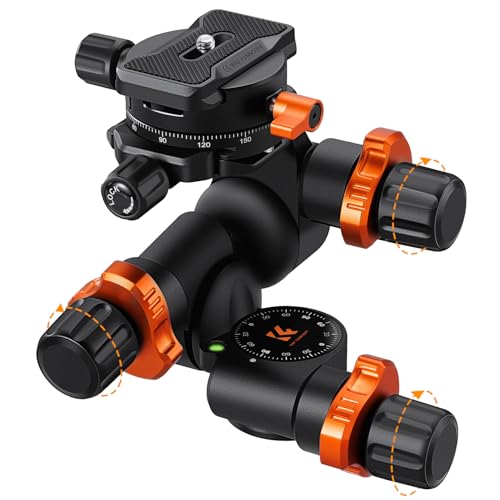
- Three-axis micro-adjustment for precise framing
- Supports mirrorless cameras up to 6kg
- Bubble levels and scale markings aid alignment
Best For: Manual astro framing and exact tripod positioning
Canon EOS M T2 Adapter

- Fits Canon EOS M EF-M mirrorless bodies
- Supports T/T2 telescope and accessory mounts
- Adjustable anodized aluminum construction
Best For: Manual telescope-to-camera attachment on Canon EOS M bodies
Ultra-Wide Night Lens
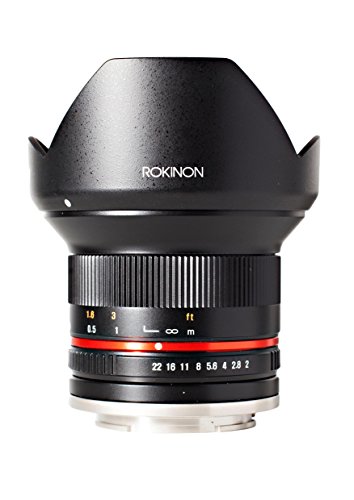
- Ultra-wide 12mm view for night scenes
- Bright f/2.0 aperture helps in low light
- Compact manual-focus design for Sony E APS-C
Best For: Sony E APS-C night-sky and wide-field shooters
Finder Scope Hotshoe Adapter
Universal Dovetail-to-Hotshoe Bridge

- Fits standard finder/guide-scope dovetails
- Slides into most camera hotshoe or cold shoe mounts
- Includes hand-tightened locking ring and rubber pad
Best For: Mirrorless users mounting finder-style accessories to a camera shoe
Ultra-Wide Fisheye Lens

- Sony E-mount 6.5mm fisheye lens
- F2.0 aperture supports low-light shooting
- 192° view suits dramatic night-sky framing
Best For: Sony E-mount creators wanting a bold ultra-wide astrophotography look
Nikon Z Telescope T Adapter
Rigid Mirrorless Telescope Link

- Connects Nikon Z bodies to compatible telescopes
- Durable aluminum alloy construction
- Designed for secure fit and alignment
Best For: Nikon Z users attaching a mirrorless camera to a telescope
Ultra-Wide Nightscape Lens
TTARTISAN 10mm F2 for Nikon Z APS-C

- 105b0 field of view for expansive sky compositions
- F2.0 aperture for low-light and night scenes
- Manual focus with near-zero distortion optics
Best For: Nikon Z APS-C shooters prioritizing ultra-wide astrophotography framing
T2 Adapter Ring
Astromania T T2 adapter for Sony NEX

- Fits listed Sony NEX E-mount cameras
- All-metal aluminum construction
- Includes hex wrench for angle adjustment
Best For: Sony NEX owners connecting T2 astronomy accessories
Prime Focus Telescope Adapter
Canon EOS R 1.25-inch T adapter

- Fits Canon EOS R-series mirrorless bodies
- Built for prime-focus telescope photography
- Durable aluminum alloy with rust-resistant finish
Best For: Canon EOS R shooters doing telescope-based astrophotography
Sony E Adapter Ring – Celestron Sony E T-Ring
If you’re building an astrophotography setup for a Sony E-mount mirrorless body, this Celestron T-Ring is the simple adapter piece that lets your camera connect to compatible Celestron T-Adapters. It’s a practical choice when you want a secure bayonet fit and a straightforward mechanical link for telescope imaging.
Best For: Sony E-mount mirrorless photographers who need a reliable T-ring for telescope attachment.
Pros:
- Designed specifically for Sony E mirrorless camera bodies.
- Works with Celestron T-Adapters using a 42mm female diameter thread.
- Sturdy bayonet flange helps lock the camera in securely.
- Aluminum construction with a black anodized finish.
Cons:
- T-ring only, so you still need a compatible telescope adapter.
- Made for Sony E-mount bodies, not other camera systems.
For Sony users, this is a focused accessory that keeps the connection simple and solid. It’s best viewed as an essential adapter component rather than a complete astrophotography solution.
Geared Tripod Head – K&F Concept 3-Way Geared Head
For astrophotography mounts for mirrorless cameras, this K&F Concept geared tripod head is aimed at precise composition rather than tracking. The 3-axis micro-adjustment system, bubble levels, and scale markings make it easier to fine-tune framing when you’re setting up a mirrorless camera for stars, landscapes, or other long-exposure work.
Best For: Mirrorless shooters who want exact manual positioning on a sturdy tripod head.
Pros:
- Three geared axes with high-precision micro-adjustment knobs.
- 0.1° fine tuning plus four bubble levels for alignment.
- All-metal build supports up to 6kg.
- 360° panoramic base and clamp for controlled panning.
Cons:
- It’s a tripod head, not a motorized astro-tracking mount.
- Heavier than simpler ball heads at 1135 g.
If your priority is careful manual framing, this head offers more control than a basic tripod head. It’s especially useful when small adjustments matter and you want repeatable positioning.
Canon EOS M T2 Adapter – Astromania T2 Mount Ring
This Astromania T2 adapter is the direct-link option if you want to attach T/T2 mount optics or telescope accessories to a Canon EOS M mirrorless body. It’s built for manual use, with an adjustable lens position and a metal construction that suits a straightforward astrophotography setup.
Best For: Canon EOS M owners who want a manual telescope-to-camera adapter.
Pros:
- Compatible with Canon EOS M EF-M mirrorless camera bodies.
- Works with T/T2 mount lenses, telescopes, microscopes, enlargers, and bellows attachments.
- Adjustable lens position with a provided allen key.
- Made from anodized aluminum alloy for durability.
Cons:
- Manual operation only; autofocus and auto diaphragm do not function.
- Designed for Canon EOS M bodies, so compatibility is limited.
For users comfortable with manual focus and aperture control, this adapter provides a clean mechanical fit. It’s a useful tool when you want to connect telescope optics without adding complexity.
Ultra-Wide Night Lens – Rokinon 12mm f/2 Sony E
While not a mount, this Rokinon 12mm f/2 lens is a strong mirrorless option for night-sky work when you want a wide field of view on a Sony E APS-C camera. Its manual focus design, bright aperture, and compact size make it a practical choice for astro scenes where portability and low-light performance matter.
Best For: Sony E APS-C shooters who want a compact ultra-wide lens for night photography.
Pros:
- Ultra-wide 12mm focal length with a 98.9° angle of view.
- Fast f/2.0 aperture for dim conditions.
- Manual focus with a long focus throw for precise adjustment.
- Lightweight and compact at under 9 oz.
Cons:
- Manual focus only, so it won’t suit autofocus-focused workflows.
- Designed for Sony E APS-C cameras, not a universal mount choice.
This lens is best for shooters who want a bright, portable optic rather than a telescope connection or tracking platform. It gives Sony E users a straightforward way to capture wide night scenes with good control over focus.
Finder Scope Hotshoe Adapter – Universal Dovetail-to-Hotshoe Bridge
If you’re building astrophotography mounts for mirrorless cameras, this adapter is a simple way to connect a finder-scope dovetail setup to your camera’s hotshoe or cold shoe. It’s a compact accessory that adds mounting flexibility for guide scopes, reflex finders, and bracketed camera rigs without much bulk.
Best For: Mirrorless shooters who want to mount a finder or guide-scope style accessory through the camera hotshoe.
Pros:
- Finder-base top is compatible with standard guide-scope and finder dovetails.
- Male flash shoe bottom fits most camera hotshoe or cold shoe mounts.
- Knurled locking ring tightens by hand for quick setup.
- Rubber pad helps improve grip and protect the shoe mount.
Cons:
- It is an adapter, not a full mount or tracking solution.
- Designed around shoe-based mounting, so it may not suit every rig.
- Best use is accessory attachment rather than direct camera support.
This is a practical add-on if your mirrorless astrophotography setup needs a compact bridge between a finder-style accessory and the camera body. The included 1/4-inch threaded hole also adds some extra mounting flexibility for compatible brackets.
Ultra-Wide Fisheye Lens – 192° F2 Creative Astro Lens
For astrophotography mounts for mirrorless cameras, this is less about the mount itself and more about the lens you put on it. The AstrHori 6.5mm F2.0 is a Sony E-mount fisheye lens with a 192° circular angle of view, making it a strong pick when you want dramatic night-sky framing, creative star scenes, or ultra-wide environmental shots.
Best For: Sony E-mount mirrorless shooters looking for a creative ultra-wide lens for night sky and astro-style images.
Pros:
- 192° circular fisheye view creates a highly dramatic perspective.
- F2.0 large aperture is useful for low-light astrophotography.
- 20 cm close-focus distance supports creative close-up framing.
- Manual focus design gives direct control over composition.
Cons:
- Only compatible with Sony E-mount cameras.
- Fisheye distortion is intentional, but not ideal for every astro style.
- No image stabilization is included.
This lens is a niche but compelling option if you want a mirrorless setup that emphasizes creativity over conventional star-field rendering. Its very wide field of view and fast aperture make it better suited to expressive night scenes than to standard telescope-style astrophotography.
Nikon Z Telescope T Adapter – Rigid Mirrorless Telescope Link
If you’re comparing astrophotography mounts for mirrorless cameras, a telescope T adapter like this is often the core connection piece. This Nikon Z adapter is designed to link Nikon Z-mount mirrorless bodies to compatible telescopes for basic focus photography, with a rigid aluminum build meant to help keep the optical path aligned.
Best For: Nikon Z-mount mirrorless photographers who want a straightforward telescope connection for moon and planet imaging.
Pros:
- Compatible with Nikon Z5, Z50, Z6, Z6 II, Z7, and Z7 II, plus other Z-mount cameras.
- Aluminum alloy construction is designed for durability and rust resistance.
- Built for secure fit and alignment with compatible telescopes.
- Suited to full-frame basic focus astrophotography.
Cons:
- Not compatible with Nikon F-mount cameras.
- Manual-use accessory, so it doesn’t add tracking or automation.
- Works only with compatible telescopes and mounting setups.
This is a focused utility adapter rather than a feature-heavy imaging accessory, which can be exactly what many telescope-based mirrorless setups need. If your Nikon Z body is going behind a telescope, this kind of rigid adapter helps keep the system simple and stable.
Ultra-Wide Nightscape Lens – TTARTISAN 10mm F2 for Nikon Z APS-C
If you want astrophotography mounts for mirrorless cameras to pair with a very wide lens, this TTARTISAN 10mm F2 is built for dramatic sky and landscape framing on Nikon Z APS-C bodies. The 105b0 field of view, manual focus design, and f/2 aperture make it a practical pick for night scenes, star fields, and city lights when you need speed and a broad composition.
Best For: Nikon Z APS-C mirrorless shooters who want an ultra-wide manual lens for stars, landscapes, and night city scenes.
Pros:
- 105b0 ultra-wide angle helps capture expansive skies and foregrounds.
- F2.0 aperture supports low-light shooting for stars and neon-lit scenes.
- Near-zero distortion keeps straight lines cleaner in landscape and night architecture shots.
- 8-blade design produces a defined octagonal starburst effect.
Cons:
- Manual focus only, so it is less convenient for fast-changing subjects.
- Requires switching compatible Nikon Z full-frame bodies into APS-C mode.
- No image stabilization is included.
This is a strong choice if your priority is a wide, clean night-sky look rather than automation. The included 72mm filter holder also adds flexibility for ND, graduated, and polarizing filters.
T2 Adapter Ring – Astromania T T2 adapter for Sony NEX
When building a setup around astrophotography mounts for mirrorless cameras, a solid adapter is what lets your Sony NEX body connect cleanly to T2 accessories. This Astromania T T2 lens mount ring is designed for Sony E-mount NEX cameras and uses an all-metal aluminum build, with a provided hex wrench for angle adjustment and easy installation.
Best For: Sony NEX mirrorless users who need a straightforward T2 adapter for telescope and astronomy accessories.
Pros:
- Compatible with Sony NEX E-mount cameras listed in the notes.
- All-metal aluminum construction is made for long-term use.
- Includes a hex wrench for easy angle adjustment.
- Straight grooves help make screwing and unscrewing easier during installation.
Cons:
- Only works with Sony NEX E-mount bodies, not other mirrorless systems.
- Adapter use is limited to T2 lenses or accessories.
- Does not add optical features such as focus assistance or stabilization.
This is a practical accessory-focused choice rather than a camera or optic upgrade. If you already have telescope-side gear and need a reliable way to mount it on a Sony NEX camera, the simple design is the main advantage.
Prime Focus Telescope Adapter – Canon EOS R 1.25-inch T adapter
For photographers shopping astrophotography mounts for mirrorless cameras, this Canon EOS R telescope adapter is aimed at prime-focus shooting through a telescope rather than lens-based wide-field work. It fits Canon EOS R-series full-frame mirrorless bodies and uses durable aluminum alloy construction to create a secure connection between the camera and a 1.25-inch telescope eyepiece mount.
Best For: Canon EOS R-series mirrorless users who want a simple prime-focus adapter for telescope astrophotography.
Pros:
- Fits Canon EOS R, RP, R5, and R6 full-frame mirrorless cameras.
- Designed for basic prime-focus photography with a telescope.
- High-quality aluminum alloy build with rust-resistant oxidized surface.
- Works with 1.25-inch telescope eyepiece mounts and multiple telescope types.
Cons:
- Not compatible with Canon EF/EF-S mount DSLR bodies.
- Limited to telescope-based photography rather than general lens use.
- Manual-focus workflow only, so it is not a versatile everyday adapter.
This adapter makes sense if your goal is direct telescope imaging with a Canon EOS R body. It is a focused, no-frills accessory for users who want a secure prime-focus setup for the Moon, planets, and other astronomy targets.
How We Picked the Best Astrophotography Mounts for Mirrorless Cameras
We focused on gear that makes mirrorless astrophotography easier in real-world use: secure camera attachment, compatibility with common camera systems, smooth adjustment, and value for beginners through advanced users. For Astrophotography Mounts for Mirrorless Cameras, small fit issues can ruin an imaging session, so compatibility and build quality matter as much as features.
Quick Comparison
The strongest options in this roundup fall into a few groups: camera-to-telescope adapters, geared tripod heads for precise composition, ultra-wide lenses for wide-field sky shots, and mounting accessories that let you connect a mirrorless body to existing astronomy hardware. If you already own a telescope, adapters are often the most important upgrade. If you shoot star fields or Milky Way scenes, lens choice and framing control matter more.
Key Buying Factors for Astrophotography Mounts for Mirrorless Cameras
Compatibility
Check your camera mount first. Sony E, Nikon Z, Canon EOS R, and Micro Four Thirds all use different adapters, flange distances, and accessory requirements. A product that fits one body may not work on another without the proper ring or T-adapter.
Tracking and Stability
If you plan long exposures, stability is essential. While some accessories only connect your camera to a telescope or tripod head, the whole setup still needs to stay rigid enough to avoid flex, sag, or vibration. Heavier lenses and telescopes demand stronger support.
Focal Length and Field of View
For wide Milky Way shots, shorter focal lengths are easier to use and more forgiving. For lunar or deep-sky work, adapters and mounts that support telescopes become more valuable. Match the system to the kind of imaging you want most.
Manual Control and Fine Adjustment
Astrophotography often requires careful framing. Geared heads and other precision adjustment tools can make composition much easier than standard ball heads, especially when working in the dark.
Who Should Buy Which Astrophotography Mounts for Mirrorless Cameras?
Beginners who want simple wide-field night photography should prioritize a fast, ultra-wide lens and a stable tripod setup. Telescope owners should focus on the correct T-ring or T-adapter for their camera body. If you already have support gear but struggle with composition, a geared tripod head can be the most useful improvement. For mirrorless shooters building a dedicated rig, the best Astrophotography Mounts for Mirrorless Cameras are the ones that match your camera mount, your telescope or lens, and your preferred style of shooting without adding unnecessary complexity.