Portable astrophotography mounts make it easier to capture sharp stars, clean nebula detail, and longer exposures without hauling a full observatory setup.
Whether you want a simple star tracker for wide-field Milky Way shots or a more capable GoTo solution for deep-sky targets, the right choice comes down to payload, tracking accuracy, and portability.
Best 10 Portable Astrophotography Mounts Picks for 2026
Most versatile travel tracker
Sky-Watcher Star Adventurer 2i Pro Pack
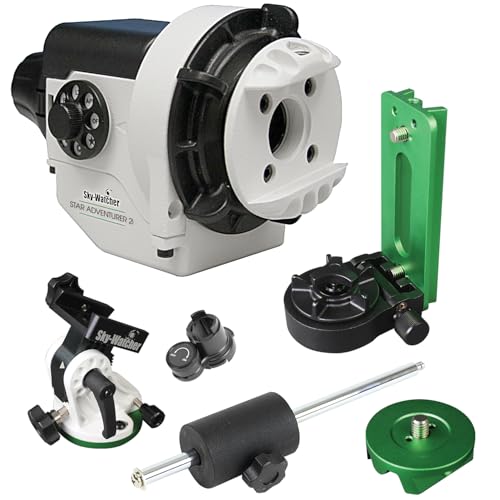
- Motorized platform for Milky Way and eclipse imaging
- Modular design works with existing photographic tripods
- Wi‑Fi control via Sky-Watcher SAM Console app
Best For: travel-friendly wide-field astrophotography and time-lapse
Lightweight long-session tracker
iOptron SkyGuider Pro Full Package

- 2.2 lb body is easy to pack for field use
- All-metal construction helps reduce vibration
- Internal battery lasts up to 20 hours
Best For: portable camera tracking with simple polar alignment
Advanced app-driven tracker
iEXOS-100-2 PMC-Eight Equatorial Tracker

- PMC-Eight system uses eight independent CPUs
- ExploreStars app supports Apple, Android, and Windows tablets
- Clutched axes and altitude control aid precise setup
Best For: advanced users who want app-controlled equatorial tracking
Complete grab-and-go kit
iOptron SkyGuider Pro Accessories Pack
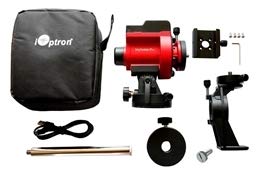
- Includes padded bag, DEC and CW kit, and USB cable
- Multiple tracking speeds for solar, lunar, and sidereal use
- Water-resistant body adds field convenience
Best For: buyers who want a ready-to-travel camera tracking kit
Portable GoTo Starter Kit
Sky-Watcher Star Adventurer GTi Full Kit

- Full kit includes tripod, pier extension, and counterweight hardware
- Built-in polar scope with illuminator supports alignment
- Built-in WiFi and GoTo tracking suit field use
Best For: Travel photographers who want a complete portable GoTo mount package
Ultra-Compact Tracker
iOptron SkyTracker Pro Camera Mount

- 3.3-pound mount-only design with padded bag
- Includes polar scope and automatic R.A. tracking
- Supports sidereal, solar, lunar, and landscape modes
Best For: Travelers who want a small camera tracker for lightweight astro setups
Compact Head-Only Option
Sky-Watcher Star Adventurer GTi Head Kit

- Full GoTo performance in a compact mount-head package
- Built-in WiFi and illuminated polar scope aid setup
- Includes counterweight bar and 5 lb. counterweight
Best For: Imagers who already have support gear and want a portable GoTo head
Most Versatile Control
Equatorial Mount Star Tracker with Latitude Adjustment Base

- Stellar, moon, and custom rotation speeds
- Northern and southern hemisphere support
- Metal latitude base and Type-C power-bank use
Best For: travel-friendly users who want flexible tracking modes and easy field power
Best for Hybrid Shooting
Equatorial Mount Star Tracker with Ball-Head Gimbal

- Gimbal-head use for time-lapse photography
- Stellar, moon, and custom rotation speeds
- Quick-release baseplate with Type-C power
Best For: shooters who want a tracker that can also handle time-lapse gimbal duties
Best Base Upgrade
Aluminum Alloy Star Adventurer Latitude EQ Base

- Exact 90-degree latitude adjustment
- Standard 3/8-inch tripod thread
- Lightweight aluminum alloy construction
Best For: portable rigs that need a precise tripod base for nightscapes and panoramas
Most versatile travel tracker – Sky-Watcher Star Adventurer 2i Pro Pack
If you want one of the most practical portable astrophotography mounts for Milky Way shots, eclipses, and other wide-field targets, the Star Adventurer 2i Pro Pack is built around portability and flexibility. Its modular design works with existing photographic tripods, and the included Wi‑Fi control adds convenient smartphone operation through Sky-Watcher’s SAM Console app.
Best For: photographers who want a versatile tracking platform for wide-field astrophotography, time-lapse work, and telescopic use.
Pros:
- Motorized tracking platform designed for nightscape and astronomical imaging
- Modular design integrates with existing photographic tripods
- Wi‑Fi support enables smartphone control via the free SAM Console app
- Deluxe equatorial base helps with polar alignment positioning
Cons:
- Weighs 7 pounds, so it is portable but not the lightest option here
- Geared more toward wide-field and portable setups than heavier rigs
The Star Adventurer 2i Pro Pack is a strong pick if your priority is a compact tracking solution that still covers multiple use cases. It balances portability, alignment support, and app control in a way that suits travel-friendly astrophotography.
Lightweight long-session tracker – iOptron SkyGuider Pro Full Package
The iOptron SkyGuider Pro is a standout choice if you want portable astrophotography mounts with a small footprint and serious stability. At just 2.2 lbs, it is easy to pack, yet its all-metal construction, illuminated polar scope, and long internal battery make it ready for extended field sessions.
Best For: photographers who need a lightweight camera mount with strong portability, precise alignment, and long battery life.
Pros:
- Compact 2.2 lb design is easy to carry in a camera bag or backpack
- All-metal body and precise machining are built for stability and reduced vibration
- Supports up to 11 lbs when balanced for flexible camera and lens setups
- Internal rechargeable battery provides up to 20 hours of operation
Cons:
- Latitude adjustment and polar alignment features are tailored to camera tracking, not large telescope rigs
- Maximum balanced load is limited compared with heavier equatorial mounts
For grab-and-go imaging, this package offers one of the cleanest combinations of portability and usability. It is especially appealing if you want quick polar alignment and a mount that can run for a long night without external power.
Advanced app-driven tracker – iEXOS-100-2 PMC-Eight Equatorial Tracker
If you are comparing portable astrophotography mounts with more advanced control, the iEXOS-100-2 stands out for its PMC-Eight system and app-based operation. It combines clutched dual-axis worm gears, quiet stepper motor belt drives, and ExploreStars app support to make alignment, navigation, and object selection more approachable.
Best For: users who want a feature-rich equatorial tracker with WiFi/Bluetooth-style app control and precise balancing.
Pros:
- PMC-Eight system uses eight independent CPUs for responsive performance
- ExploreStars app works with Apple, Android, and Windows tablets
- Clutched RA and declination axes support smooth balancing and repositioning
- Polar alignment sight hole and precise altitude control help speed setup
Cons:
- More complex than a basic camera tracker for beginners
- Designed around tablet control, so it is less simple than a purely manual mount
This system makes sense if you want a portable mount that leans toward advanced control and precision rather than bare-bones simplicity. It is a good fit for users who value app guidance and a more capable equatorial workflow.
Complete grab-and-go kit – iOptron SkyGuider Pro Accessories Pack
The iOptron SkyGuider Pro with all accessories is aimed at buyers who want a portable astrophotography mount that is ready to go right out of the box. Along with the compact SkyGuider Pro body, this package includes a padded bag, DEC and CW kit, and USB cable, plus multiple tracking speeds for camera work.
Best For: photographers who want a compact full kit with useful accessories and flexible tracking modes.
Pros:
- Full package includes padded bag, DEC and CW kit, and USB cable
- Fast RA slew up to 144X sidereal speed
- Offers 1X, 1/2X, solar, lunar, and northern/southern hemisphere tracking
- Water-resistant design adds a bit of protection for field use
Cons:
- Accessory bundle is helpful, but the core SkyGuider Pro design is still camera-focused
- Smaller format may not suit users seeking a heavier-duty setup
This kit is a sensible pick if you want portability plus the convenience of included accessories. The combination of carrying gear and multiple tracking modes makes it easier to head into the field with fewer add-ons to buy separately.
Portable GoTo Starter Kit – Sky-Watcher Star Adventurer GTi Full Kit
If you want portable astrophotography mounts that feel ready to use out of the box, this Sky-Watcher kit is built around a full GoTo EQ tracking mount head, tripod, pier extension, counterweight bar, and counterweight. The built-in polar scope with illuminator and built-in WiFi make setup and control more convenient for travel-friendly imaging sessions.
Best For: Deep-sky and nightscape shooters who want a compact GoTo equatorial setup with the essentials included.
Pros:
- Full kit includes the mount head, tripod, pier extension, counterweight bar, and 5 lb. counterweight
- Built-in polar scope with illuminator helps with alignment
- Built-in WiFi adds convenient control options
- Portable design is aimed at lightweight astrophotography use
Cons:
- Weighs 26 pounds, so it is not the lightest option in the category
- Designed for a smartphone-compatible workflow, but a camera is not included in the kit description
This is the most complete option here for buyers who want fewer separate purchases and a true GoTo mount package. If portability matters, the included tripod and pier extension make it easier to build a stable field setup without piecing everything together.
Ultra-Compact Tracker – iOptron SkyTracker Pro Camera Mount
For portable astrophotography mounts that prioritize size and simplicity, the iOptron SkyTracker Pro is a compact camera mount with a polar scope and automatic R.A. tracking. Its 3.3-pound weight and included padded bag make it easy to carry for quick sessions, and the sidereal, solar, lunar, and sky/landscape tracking modes add flexibility.
Best For: Minimalist shooters who want a lightweight tracking mount for camera-based astro work.
Pros:
- Very light at 3.3 pounds and includes a padded bag
- Polar scope is included for alignment
- Multiple tracking modes: sidereal, 1/2X, solar, lunar, and N/S
- Micro USB charging and compact folded size help with travel
Cons:
- Maximum weight recommendation is 3 kg / 6.6 lbs
- Mount only, so you will need your own camera setup
- No viewfinder is listed
This is the most stripped-down option in the group, which is exactly the point if you value portability over a full mount kit. It suits travelers and camera shooters who want a small tracking base rather than a larger equatorial rig.
Compact Head-Only Option – Sky-Watcher Star Adventurer GTi Head Kit
If you already have support gear and want portable astrophotography mounts focused on the drive system, this Sky-Watcher GTi head kit delivers full GoTo performance in a compact package. It includes the mount head, counterweight bar, and 5 lb. counterweight, plus built-in WiFi and an illuminated polar scope for field alignment.
Best For: Buyers who already own a tripod or support system and want a compact GoTo mount head.
Pros:
- Compact GoTo mount head design for portable field use
- Built-in WiFi supports easier control
- Built-in polar scope with illuminator helps setup
- Includes counterweight bar and 5 lb. counterweight
Cons:
- Camera or DSLR/mirrorless body is not included
- Tripod is not part of this kit
- Weighs 6.9 kg, so it is still a substantial mount head
This version makes sense if you want the GTi tracking platform without buying the full tripod package again. It is best viewed as a portable core mount that can slot into an existing imaging setup.
Most Versatile Control – Equatorial Mount Star Tracker with Latitude Adjustment Base
Equatorial Mount Star Tracker with Latitude Adjustment Base for Astrophotography
Check Price On AmazonIf you want a portable astrophotography mount that keeps setup simple, this TeSeek equatorial mount focuses on core tracking features without requiring an app. It supports stellar, moon, and custom rotation speeds, and the hemispheric switching makes it adaptable for both northern and southern sky sessions. The metal latitude base and 3/8 thread bottom add field stability, while Type-C power from a power bank keeps it practical for travel.
Best For: Users who want a ready-to-use star tracker with latitude adjustment and power-bank compatibility for portable night shoots.
Pros:
- Supports stellar speed, moon speed, and custom rotation speed.
- Switches between northern and southern hemispheres.
- Metal CNC latitude adjustment base with 3/8 thread bottom.
- Can run from a power bank via Type-C, with no built-in battery to manage.
Cons:
- Requires a ball head for camera connection.
- Most users will need a separate 1/4 to 3/8 screw sleeve.
- Does not include a built-in battery.
This is a practical pick if you value straightforward operation and compact portability over extra app-based controls. Its open-source design and quick-release compatibility make it easy to slot into an existing field kit.
Best for Hybrid Shooting – Equatorial Mount Star Tracker with Ball-Head Gimbal
This portable astrophotography mount is built for photographers who want a simple tracker that can also double as a gimbal head for time-lapse work. It offers stellar, moon, and custom rotation speeds, plus hemisphere switching for different skies. With no app required and Type-C power from a power bank, it stays lightweight in the field while still fitting quick-release setups.
Best For: Astrophotographers and time-lapse shooters who want a compact tracker with gimbal compatibility and straightforward power options.
Pros:
- Supports stellar speed, moon speed, and custom rotation speed.
- Switches between northern and southern hemispheres.
- Can be used as a gimbal head for time-lapse photography.
- Powered through USB Type-C and can run from a power bank.
Cons:
- Requires a ball head for camera connection.
- The notes specify a USB A to C cable, not USB-C to USB-C.
- A 1/4 to 3/8 screw sleeve may be needed separately.
If you want a travel-ready tracker that stays focused on core functionality, this model is easy to understand and deploy. Its quick-release baseplate and gimbal-head support make it especially appealing for mixed stills-and-video field use.
Best Base Upgrade – Aluminum Alloy Star Adventurer Latitude EQ Base
This aluminum alloy latitude base is a compact support option for portable astrophotography mounts when you need precise angle control at the tripod level. It offers exact 90-degree adjustment from horizontal to vertical, and its standard 3/8-inch thread base is designed for broad tripod compatibility. The lightweight build is aimed at field use, supporting DSLR cameras, mirrorless systems, telescopes, and celestial trackers when dimensions align.
Best For: Photographers and astronomers who need a lightweight latitude base for portable nightscapes, panoramas, and tracking setups.
Pros:
- Precise 90-degree adjustment for setup tuning.
- Standard 3/8-inch thread base fits most photography tripods.
- Lightweight aluminum alloy construction for field portability.
- Works with DSLR cameras, mirrorless systems, telescopes, and celestial trackers when compatible.
Cons:
- Compatibility depends on matching mounting plate dimensions.
- Not water resistant.
- It is a base accessory rather than a full tracking mount.
If your current rig needs a more precise and portable foundation, this base is aimed at improving alignment without adding much bulk. It makes the most sense as a support piece for travel-friendly astrophotography and extended exposure work.
How We Picked the Best Portable Astrophotography Mounts
We focused on mounts that balance travel-friendly size with dependable tracking, since that combination matters most for field use. Priority went to units with solid polar alignment support, practical payload capacity for common DSLR and mirrorless setups, and a reputation for consistent performance under real shooting conditions.
We also considered setup speed, control options, accessory support, and how easy each mount is to carry to dark-sky locations. For many buyers, the best Portable Astrophotography Mounts are not the most advanced ones, but the ones you can actually deploy quickly and use confidently in the field.
Quick Comparison: What Type of Mount Do You Need?
Simple star trackers are usually the lightest and most compact option, making them ideal for wide-field landscapes, Milky Way panoramas, and lightweight camera rigs. More advanced equatorial trackers and GoTo mounts add better target control and broader imaging flexibility, but they typically weigh more and take longer to set up.
If your priority is backpackability, keep your setup minimal. If you want better automation and the ability to frame specific deep-sky objects, a GoTo-capable option may be worth the extra size and complexity.
Key Buying Factors for Portable Astrophotography Mounts
Payload and Balance
Match the mount to your actual imaging load, not just the camera body. Lens, ball head, dovetail hardware, and guiding accessories all add weight. Staying well under the rated limit usually improves tracking stability.
Polar Alignment and Tracking Quality
Accurate polar alignment is essential for longer exposures. Built-in polar scopes, fine adjustment bases, and clear altitude/azimuth controls can save time and reduce frustration in the field.
Portability and Power
Consider total pack weight, battery requirements, and how quickly the mount can be assembled. The most practical Portable Astrophotography Mounts are the ones you can carry, power, and align without slowing down your session.
Control and Expandability
WiFi, Bluetooth, app control, and GoTo functionality are useful if you want more convenience or plan to shoot a wider range of targets. Accessory compatibility also matters if you may add a counterweight system, pier extension, or guiding later.
Who Should Buy Which Portable Astrophotography Mounts?
Choose a lightweight tracker if you mainly shoot wide-field nightscapes and want the simplest possible field setup. Choose a midrange equatorial tracker if you want better stability and more flexibility for longer focal lengths. Choose a GoTo-capable mount if you value target finding, automation, and a more advanced imaging workflow.
If you are unsure, start with the most portable option that still supports your current lens and camera weight. That approach keeps your kit easy to use now while leaving room to grow into more demanding astrophotography projects later.