The right eyepiece can make a noticeable difference in how much sky you see and how comfortably you observe it. Wide-angle designs are especially useful for framing large targets, locating objects, and keeping views engaging during high-magnification sessions.
This roundup compares 10 popular wide-angle telescope eyepieces and sets, ranging from compact 1.25-inch options to expansive 2-inch models. Use the guide below to match focal length, apparent field of view, and telescope compatibility to your observing style.
Best 10 Wide Angle Telescope Eyepieces Picks for 2026
Immersive Deep-Sky Detail
Explore Scientific 14mm 82° Eyepiece

- Immersive 82° apparent field
- Waterproof, argon-purged housing
- Works with focal extenders
Best For: Deep-sky detail and globular clusters
Comfortable Low-Power Framing

- 60° low-power field of view
- Six-element fully multi-coated optics
- Twist-up rubber eyeguard
Best For: Comfortable general observing
Accessible Wide-Field Starter
SVBONY 20mm 68° Redline Eyepiece
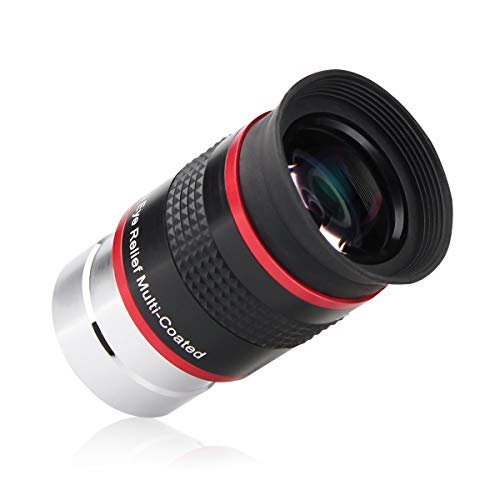
- Broad 68° field of view
- Fully multi-coated 1.25-inch optics
- Fold-down eyeguard for glasses
Best For: Star fields and larger deep-sky objects
Panoramic Two-Inch Views
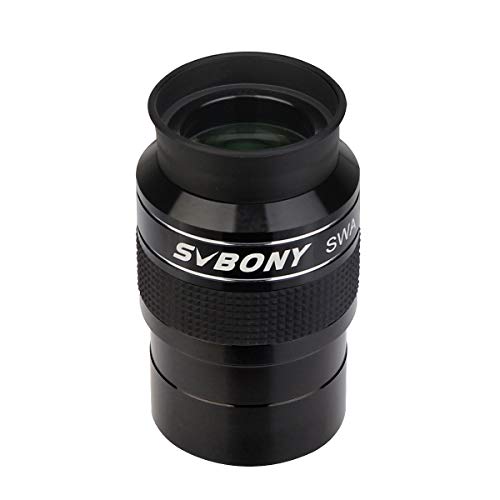
- Wide 70° panoramic field
- 2-inch barrel with filter thread
- Foldable eye cup for glasses
Best For: Star clusters, nebulae, and broad star fields
Versatile Kit
SVBONY 66° Gold Line Eyepiece Set
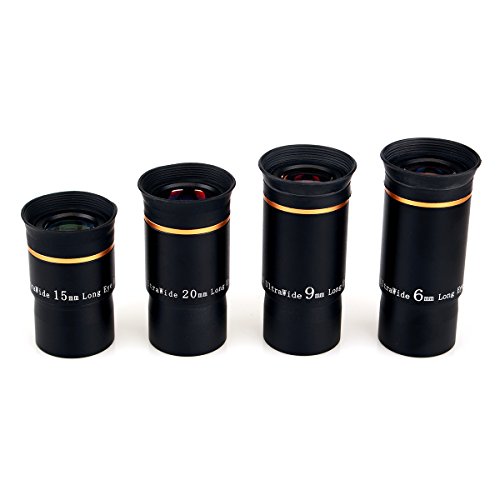
- Four focal lengths from 6mm to 20mm
- 66° field for lunar and deep-sky viewing
- Fully multi-coated, edge-blackened optics
Best For: Flexible 1.25-inch telescope viewing
Balanced Starter Set
SVBONY 62° Wide-Angle Eyepieces

- 4mm, 10mm, and 23mm focal lengths
- 62° field helps locate and frame targets
- Aspherical, fully multi-coated optics
Best For: Beginners needing varied magnification
High-Power Detail
SVBONY 6mm 66° Ultra-Wide Eyepiece
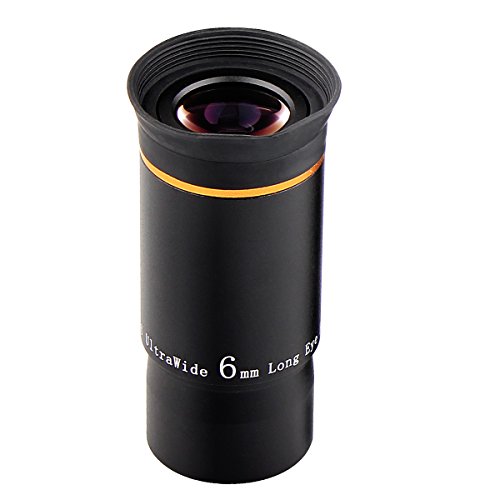
- 6mm focal length for lunar and planetary detail
- 66° field supports easier target framing
- 16mm eye relief with fully multi-coated optics
Best For: Dedicated high-magnification viewing
Balanced Wide-Field Choice

- 68° field of view for broad observations
- Fully multi-coated optics
- Fold-down eye guard for comfort
Best For: General planetary and wide-field viewing
Most Flexible Set
SVBONY 68° Eyepiece Set, 6mm–20mm
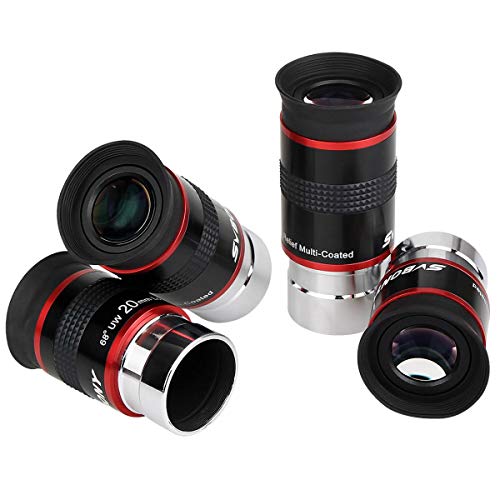
- Four focal lengths in one package
- 68° apparent field of view
- Fully multi-coated optical glass
Best For: Beginners building a versatile eyepiece collection
High-Magnification Pick

- 6mm focal length for planetary detail
- 68° field aids tracking
- 17mm eye relief with folding eyecup
Best For: Lunar and planetary observation
Immersive Deep-Sky Detail – Explore Scientific 14mm 82° Eyepiece
For observers seeking wide angle telescope eyepieces with an immersive view, this 14mm Explore Scientific model combines an 82° apparent field with 15.6mm of eye relief. Its upper-medium power is suited to bringing added detail to many deep-sky targets.
Best For: Globular clusters, planetary nebulae, cometary structure, and initial planetary views.
Pros:
- 82° field of view supports comfortable, immersive observing and averted vision.
- Argon-purged, waterproof housing with EMD multi-layer coatings.
- Works with 1.25-inch focusers, diagonals, and compatible focal extenders.
- Blackened lens edges and internal surfaces help control stray light.
Cons:
- Its 14mm focal length is not a low-power, widest-possible framing option.
- At 9 ounces, it is heavier than some simpler eyepieces.
This is a strong choice when a broad, high-contrast view matters more than minimizing size or weight. Confirm that your setup accepts 1.25-inch accessories before ordering.
Comfortable Low-Power Framing – Celestron X-Cel LX 25mm
The Celestron X-Cel LX 25mm is a practical option among wide angle telescope eyepieces for low-power views. Its 60° field, six-element fully multi-coated optics, and adjustable rubber eyeguard are designed for comfortable general observing.
Best For: Wide low-power views and observers who value a comfortable, secure eyepiece grip.
Pros:
- 60° field of view provides a broader perspective for low-power observing.
- Six-element fully multi-coated lens system.
- Twist-up rubber eyeguard can improve comfort and contrast.
- Threaded 1.25-inch barrel accepts filters.
Cons:
- Its 60° field is narrower than the 68° and 82° alternatives in this roundup.
- The supplied notes do not specify waterproofing or sealed construction.
Choose this model for straightforward low-power viewing with useful ergonomic touches. Its 1.25-inch barrel and filter threading make it a flexible addition to compatible telescope setups.
Accessible Wide-Field Starter – SVBONY 20mm 68° Redline Eyepiece
This SVBONY 20mm Redline is a budget-friendly style of wide angle telescope eyepieces for locating objects and viewing broad star fields. The 68° field and low magnification suit larger deep-sky targets, while the 1.25-inch format fits common telescope accessories.
Best For: Star-field scanning, object locating, nebulae, and star clusters.
Pros:
- 68° field provides a broad view for finding and framing celestial objects.
- Fully multi-coated optics and internally blackened housing support contrast.
- Fold-down rubber eyeguard can accommodate eyeglass wearers.
- Accepts standard 1.25-inch filters through its threaded barrel.
Cons:
- Its 20mm focal length favors low magnification rather than close planetary views.
- Compatibility is limited to telescopes and accessories using a 1.25-inch mount.
For a broad-field eyepiece without moving to a 2-inch system, this model offers useful versatility. Verify your telescope’s mount size and consider its low-magnification role when building an eyepiece set.
Panoramic Two-Inch Views – SVBONY SV154 26mm 70° SWA
The SVBONY SV154 delivers a panoramic 70° view for observers choosing wide angle telescope eyepieces in a 2-inch format. Its 26mm focal length provides moderate magnification for star clusters, nebulae, lunar views, and selected planetary observations.
Best For: Broad star fields, nebulae, star clusters, and moderate-magnification observing with a 2-inch focuser.
Pros:
- 70° field is well suited to locating objects and enjoying expansive views.
- Five-element, three-group design uses high-index glass and fully multi-coated optics.
- Foldable silicone eye cup supports observers with or without glasses.
- Accepts standard 2-inch filters and includes a dust cap.
Cons:
- Requires a compatible 2-inch telescope or accessory setup.
- At approximately 305g, it adds more weight than the listed 1.25-inch options.
- The supplied notes say it is not recommended for reflector telescopes.
This model makes the most sense for users already equipped for 2-inch accessories and seeking a wide, moderate-power view. Check the telescope type, focuser size, and magnification calculations before purchasing.
Versatile Kit – SVBONY 66° Gold Line Eyepiece Set
This four-piece set is a practical starting point for anyone comparing wide angle telescope eyepieces. Its 6mm, 9mm, 15mm, and 20mm focal lengths cover high- and medium-power viewing, while the 66° apparent field is suited to lunar observations, star clusters, nebulae, and other deep-sky targets.
Best For: Observers who want one 1.25-inch kit for both detailed planetary viewing and broader deep-sky sessions.
Pros:
- Four focal lengths provide flexible magnification options.
- 66° field of view helps frame the Moon, clusters, and extended targets.
- Fully multi-coated, edge-blackened optics are designed to improve transmission and reduce stray light.
- Foldable eyecup and good eye relief accommodate glasses wearers.
Cons:
- Only fits telescopes and accessories using a 1.25-inch focuser.
- A four-eyepiece kit may include focal lengths you do not regularly use.
Choose this set if flexibility matters more than buying a single specialized eyepiece. The included focal-length range makes it easier to adjust magnification as targets and viewing conditions change.
Balanced Starter Set – SVBONY 62° Wide-Angle Eyepieces
For shoppers seeking wide angle telescope eyepieces with a broad range of uses, this three-piece set combines 4mm, 10mm, and 23mm focal lengths. The 62° apparent field makes locating objects easier and helps show more of the surroundings around nebulae, clusters, and other extended targets.
Best For: Beginners and casual observers who need a compact set for bright-object details and wider deep-sky scanning.
Pros:
- Three focal lengths cover detailed, medium, and lower-power observations.
- 62° field of view supports object finding and immersive star-field viewing.
- Aspherical, fully multi-coated optics are designed to reduce aberrations and improve brightness.
- Standard 1.25-inch format and filter thread support common telescope accessories.
Cons:
- Compatibility depends on having a 1.25-inch focuser.
- The 4mm eyepiece can produce high magnification that may require suitable telescope aperture and steady conditions.
This set offers a useful spread for users who want one purchase to cover Jupiter, the Moon, star clusters, and nebulae. Check your telescope’s mount size and calculate magnification before ordering.
High-Power Detail – SVBONY 6mm 66° Ultra-Wide Eyepiece
This single 6mm model is a focused option among wide angle telescope eyepieces, pairing high magnification with a 66° field of view. It is designed for close views of lunar surface features, Jupiter’s cloud bands, Saturn’s rings, and larger deep-sky objects when your telescope and conditions support the magnification.
Best For: Planetary and lunar observers who want a dedicated high-power eyepiece with comfortable eye relief.
Pros:
- 6mm focal length supports detailed, high-magnification observations.
- 66° field of view helps with object location and framing.
- 16mm eye relief is more comfortable for glasses wearers.
- Fully multi-coated, edge-blackened optics are designed to improve contrast and reduce reflections.
Cons:
- Provides only one focal length rather than a complete set.
- High magnification may be less useful with smaller telescopes or unsteady viewing conditions.
- Requires a 1.25-inch telescope or compatible accessory.
This is a sensible add-on when you already have lower-power eyepieces and want more detail on bright targets. Its comfortable eye relief and wide apparent field make high-power viewing easier to manage.
Balanced Wide-Field Choice – SVBONY 15mm 68° UWA Eyepiece
For observers seeking wide angle telescope eyepieces for general planetary and deep-sky viewing, this 15mm SVBONY model combines a 68-degree field of view with fully multi-coated optics. Its 1.25-inch format suits telescopes with a standard 1.25-inch mount.
Best For: Observers who want a single, versatile 15mm eyepiece with a broad viewing field and comfortable eye guard.
Pros:
- 68-degree apparent field expands the viewing area.
- Fully multi-coated optics are designed for contrast and resolution.
- Blackened barrel helps reduce internal light scattering.
- Fold-down rubber eye guard can accommodate eyeglass wearers.
Cons:
- Limited to a 1.25-inch telescope mount.
- Manual-focus design requires user adjustment.
This is a practical mid-range focal-length option for building a flexible eyepiece collection. The included protective caps and one-year warranty add useful ownership convenience.
Most Flexible Set – SVBONY 68° Eyepiece Set, 6mm–20mm
This four-piece set gives wide angle telescope eyepiece shoppers four focal lengths—6mm, 9mm, 15mm, and 20mm—in a standard 1.25-inch format. The range supports different magnification needs without purchasing each eyepiece separately.
Best For: Beginners and observers who want a broad focal-length range for varied telescope targets.
Pros:
- Includes four focal lengths from 6mm to 20mm.
- 68-degree apparent field provides broad views.
- Fully multi-coated lenses support light transmission and image contrast.
- Internally blackened housings help limit light scattering.
Cons:
- All eyepieces use a 1.25-inch mount.
- A set may include focal lengths you do not regularly need.
- Manual focusing is required.
Among these options, this set offers the most coverage for the money-conscious observer. Its four focal lengths make it easier to experiment with magnification and identify which views best suit your telescope and observing habits.
High-Magnification Pick – SVBONY 6mm 68° UWA Eyepiece
For detailed lunar and planetary viewing, this 6mm SVBONY is one of the more focused wide angle telescope eyepieces in the lineup. Its 68-degree field helps with target acquisition and tracking, while the 1.25-inch barrel fits compatible telescope accessories.
Best For: Planetary observers who want high magnification for lunar craters and features on Saturn and Jupiter.
Pros:
- 6mm focal length provides high magnification.
- 68-degree field makes moving targets easier to track.
- Fully multi-coated optics and a blackened interior help reduce reflections.
- 17mm eye relief and a folding eyecup support comfortable viewing.
Cons:
- High magnification can be less versatile than longer focal lengths.
- Compatible with 1.25-inch telescope mounts and accessories only.
- Manual-focus operation requires adjustment.
This model is best considered a specialized planetary eyepiece rather than an all-purpose choice. Its long eye relief and durable all-metal construction are useful additions for extended outdoor observing sessions.
How We Picked the Best Wide Angle Telescope Eyepieces
We focused on eyepieces with an apparent field of view of roughly 62 degrees or wider, including individual lenses and multi-piece sets. The selection covers several focal lengths, barrel sizes, and price ranges so beginners, planetary observers, deep-sky viewers, and upgrade-minded telescope owners can compare practical options.
We also considered useful specifications such as focal length, apparent field, included accessories, optical coatings, waterproof construction where stated, and whether an eyepiece is better suited to a 1.25-inch or 2-inch focuser. Because performance depends on the telescope, these specifications should be treated as a starting point rather than a guarantee of identical results in every setup.
Quick Comparison
| What to Compare | Best Use | What to Look For |
|---|---|---|
| Focal length | Choosing magnification | Longer for broad views; shorter for higher power |
| Apparent field of view | Immersive framing and tracking | About 62° to 82° in this selection |
| Barrel size | Matching your focuser | 1.25-inch compatibility or a 2-inch focuser |
| Single eyepiece or set | Building a collection | One tailored focal length or several magnifications |
Key Buying Factors for Wide-Angle Telescope Eyepieces
Focal Length and Magnification
Telescope magnification is calculated by dividing the telescope’s focal length by the eyepiece focal length. A 20mm or 25mm eyepiece generally produces lower power and a wider, brighter view, making it useful for star fields, large nebulae, and finding targets. Eyepieces around 6mm provide much higher magnification for the Moon, planets, and tight double stars, but they require steady atmospheric conditions and precise focusing.
Apparent Field of View
A wider apparent field can make an image feel more expansive and gives objects more time to cross the view as Earth rotates. The difference between approximately 68°, 70°, and 82° can be noticeable, particularly when manually tracking. Wider designs may also be larger, heavier, and more expensive.
Focuser Compatibility and Balance
Confirm your telescope accepts the eyepiece barrel size before buying. Most 1.25-inch models fit common beginner and intermediate telescopes, while 2-inch eyepieces require a compatible focuser and may add substantial weight. Check whether your mount can remain balanced after installing a larger optical accessory.
Eye Relief, Coatings, and Build
Longer eye relief is more comfortable, especially for observers who wear glasses, although product specifications can vary in how eye relief is reported. Fully multi-coated optics can help improve light transmission and contrast. Twist-up eyecups, waterproofing, and rubberized grips are practical extras, but they should not replace checking the core optical specifications.
Who Should Buy Which Wide Angle Telescope Eyepieces?
Beginners building a versatile kit: Choose a multi-eyepiece set if you want several magnifications at once and are comfortable accepting more variation in optical performance and ergonomics.
Deep-sky and wide-field observers: Look for a longer focal length with a 68° to 82° field. These models are well suited to open clusters, broad nebulae, and sweeping Milky Way views, provided the telescope’s focuser supports the barrel size.
Planetary observers: A 6mm or similarly short focal length can deliver higher power, but only when your telescope and local seeing conditions support it. A wider field makes manual tracking easier at these magnifications.
Observers upgrading one eyepiece: Prioritize the focal length you use most and choose the widest field your budget, focuser, and mount can comfortably handle. A well-matched single eyepiece is often more useful than an inexpensive set with redundant magnifications.