The best interactive solar system models turn astronomy into something children can build, rotate, illuminate, and explore. This roundup compares 10 hands-on options for different ages, learning goals, budgets, and display spaces.
Some picks emphasize realistic motion and gears, while others focus on glow effects, projection, talking lessons, or creative construction. Use the guide below to choose the right model for the learner and setting.
Best 10 Interactive Solar System Models Picks for 2026
Best Glow-and-Build Pick
National Geographic Solar System Model

- Builds and paints all eight planets and the Sun
- Movable arms support adjustable display positions
- Glow accents and poster add decor and learning value
Best For: Ages 8+ who enjoy creative, hands-on astronomy projects
Best Mechanical Learning Model
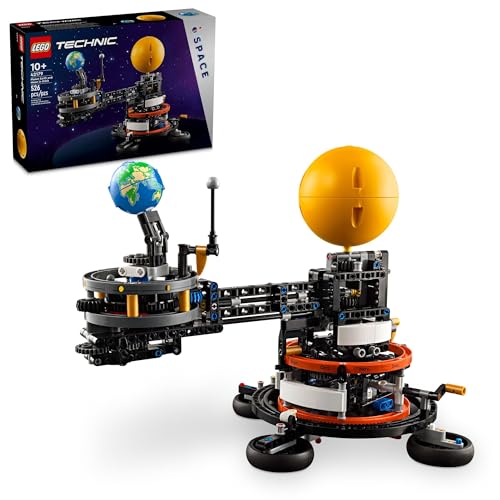
- 526-piece Technic build for ages 10+
- Crank shows Earth and Moon orbiting the Sun
- Includes month and moon-phase details
Best For: Older kids who enjoy construction and mechanical demonstrations
Best Bilingual Projector

- Provides planet facts in English and Spanish
- Projects 24 colorful space images
- Works as a model, projector, and night light
Best For: Young learners ages 3+ who enjoy visual and audio exploration
Best NASA-Image Projector
GeoSafari Orbiting Solar System

- Eight planets move on orbiting arms
- Projects 32 images across four discs
- Includes NASA photos and a space-facts guide
Best For: Ages 5+ seeking physical interaction and projected astronomy content
Best Hands-On Build

- Hand-crank gears move eight planets around the Sun
- Includes STEM instructions and nine planet fact cards
- Pre-colored parts and lifetime replacement support
Best For: Kids ages 8–14 who enjoy building and mechanical STEM play
Best for Room Displays
3D Glow Solar System Ceiling Kit

- Nine planets glow in the dark
- Includes over 200 removable adhesive stars
- No batteries required; includes a solar system guide
Best For: Ages 5+ needing space-themed room decor and nighttime glow
Best Creative Project
64-Piece Foam Solar System Kit

- Includes foam pieces, paints, brushes, and assembly supplies
- Lets children paint and build their own planet display
- Designed for school projects and family activities
Best For: Ages 6–12 doing creative astronomy projects at home or school
Best Mechanical Build
Orbiting Solar System STEM Kit

- Windup motor rotates the planets
- Teaches gear ratios and planetary gears
- Designed for hands-on STEM exploration
Best For: Young builders and science-fair projects
Best Creative Display
3D Solar System Model with Display Box

- Includes a starry display box
- Paint and assemble foam planets
- Supplies support school and craft projects
Best For: Creative astronomy crafts and room décor
Best Glow-In-The-Dark Kit
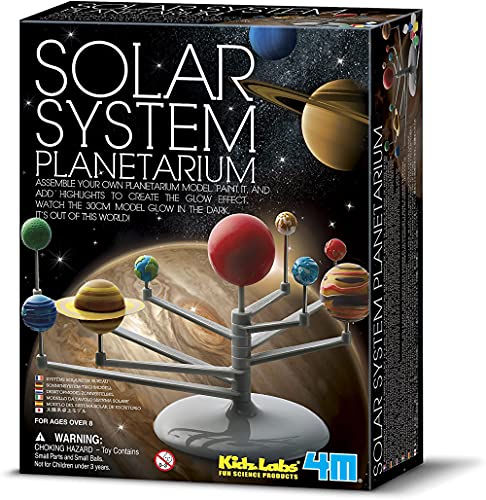
- Includes glow paint and planet stencils
- Adds a fact-filled wall chart
- Comes with astronomy quiz questions
Best For: Ages 8+ learning through painting and play
Best Glow-and-Build Pick – National Geographic Solar System Model
For kids who enjoy hands-on interactive solar system models, this National Geographic kit combines construction, painting, and display. Children build all eight planets and the Sun, then use the movable arms to rearrange the finished model. Glow-in-the-dark accents add a decorative touch for a space-themed room.
Best For: Ages 8 and up who want a creative astronomy STEM project with a glowing display.
Pros:
- Includes planets, Sun, paints, brush, palette, decals, and an educational poster.
- Movable arms allow children to adjust the planet positions.
- Glow-in-the-dark paint makes the completed model suitable for bedroom decor.
- Supports construction, creative, coordination, and problem-solving skills.
Cons:
- It requires building and painting, so it is less suitable for children seeking an immediately ready-to-use model.
- The manufacturer recommends it for ages 8 and up.
This is a strong choice when the learning experience matters as much as the finished display. Its included supplies and adjustable design make it a well-rounded interactive solar system model for creative older children.
Best Mechanical Learning Model – LEGO Earth and Moon in Orbit
This LEGO Technic set is one of the most mechanically engaging interactive solar system models in the lineup. After assembling the 526 pieces, children can turn a crank to watch the Earth and Moon move around the Sun, while printed month and moon-phase details connect the build to seasonal changes.
Best For: Ages 10 and up who like detailed LEGO builds and want to explore orbital movement.
Pros:
- Hand-powered crank creates interactive Earth and Moon orbital movement.
- Printed months and moon phases support lessons about seasons and lunar cycles.
- The 526-piece build offers an extended construction activity.
- The LEGO Builder app provides 3D viewing, progress tracking, and building guidance.
Cons:
- The set focuses on the Earth, Moon, and Sun rather than all eight planets.
- Its 526-piece construction may be more involved than simpler display kits.
Choose this model if you want a build that demonstrates motion rather than simply displaying planets. The crank mechanism and calendar details give it especially strong appeal for children interested in how orbital patterns relate to time and seasons.
Best Bilingual Projector – Talking Solar System Model
This talking solar system model combines orbiting planets with a projector, educational audio, and a night-light function. Children can press planet buttons for astronomy facts in English or Spanish, project 24 space images onto a wall or ceiling, and use the LED dome as a bedtime light.
Best For: Ages 3 and up who benefit from bilingual audio, visual exploration, and bedtime-friendly features.
Pros:
- Offers educational planet facts in both English and Spanish.
- Projects 24 images across three disks, including planets, spaceships, and astronauts.
- Combines an eight-planet model, projector, flashlight, and night light.
- Designed for quick snap-and-lock assembly with kid-safe plastic materials.
Cons:
- Requires three AA batteries, which are not included.
- The projector needs adjustment for a clear image and a suitable wall or ceiling surface.
This is a versatile option for younger children who may engage more with lights, spoken facts, and projected images than with a complex construction kit. Its bilingual setting also makes it a practical choice for English- and Spanish-speaking households.
Best NASA-Image Projector – GeoSafari Orbiting Solar System
The Educational Insights GeoSafari model pairs eight planets on moving orbiting arms with a Sun-shaped projector. Among interactive solar system models, it stands out for its collection of 32 projected images, including NASA photos, constellations, asteroids, and other space content.
Best For: Ages 5 and up who want hands-on planetary movement plus a richer ceiling-projection experience.
Pros:
- Eight planets sit on moving arms for hands-on exploration of orbits.
- Includes 32 images across four projector discs, including NASA media.
- Projects planets, constellations, asteroids, and other outer-space imagery.
- Comes with a guide containing space facts.
Cons:
- Three AA batteries are required and not included.
- It is intended for indoor use and requires a suitable surface for projection.
This model is a good middle ground between a physical orbit display and a space projector. It is especially appealing when children want to move the planets by hand but also explore a broader range of astronomy images beyond the basic solar system.
Best Hands-On Build – Gear-Driven Solar System Kit
For families seeking interactive solar system models, this Smartivity kit combines construction, mechanical movement, and astronomy learning. Children ages 8–14 assemble the model, then turn a hand crank to drive the eight planets around the Sun.
Best For: Kids who enjoy building projects and hands-on STEM activities involving gears, planets, and orbits.
Pros:
- Hand-crank gear system creates interactive planetary movement.
- Includes instructions with STEM explanations and nine planet fact cards.
- Pre-colored planets eliminate the need for painting.
- Includes free lifetime replacement parts and sturdy engineered-wood construction.
Cons:
- Assembly is intended for ages 8–14, so younger children may need more help.
- The model requires building before it can be used.
This is the strongest choice for children who want an interactive model they help create themselves. Its crank-and-gear mechanism adds meaningful play value beyond simple display.
Best for Room Displays – 3D Glow Solar System Ceiling Kit
This ceiling kit takes interactive solar system models in a room-decor direction, with hanging glow-in-the-dark planets and more than 200 adhesive stars. It offers a low-maintenance way for children to explore space while creating a nighttime display.
Best For: Younger children and families looking for glow-in-the-dark STEM decor or a gentle night-light alternative.
Pros:
- Includes nine glow-in-the-dark planets and over 200 adhesive stars.
- Adhesive stars are designed to be removable without damaging walls.
- Comes with a solar system guide and requires no batteries.
- Can function as nighttime room decor and a learning display.
Cons:
- It is primarily a hanging decor kit rather than a crank-driven working model.
- Installation and placement are required before children can use the display.
Choose this set when visual appeal and bedtime ambiance matter more than mechanical interaction. The varied star sizes and included guide make it an accessible introduction to space for children ages 5 and up.
Best Creative Project – 64-Piece Foam Solar System Kit
For a craft-focused take on interactive solar system models, this 64-piece kit lets children paint and assemble a foam planet display. It supplies the basic materials for a school project or family activity while encouraging hands-on exploration of planetary structure.
Best For: Children ages 6–12 working on classroom assignments or creative astronomy activities at home.
Pros:
- Includes foam balls and discs, paints, brushes, palette, bamboo sticks, and instructions.
- Painting and assembly encourage creativity, focus, and hand-eye coordination.
- Suitable for school solar system projects and family activities.
- Instruction materials introduce related solar system details.
Cons:
- Children must paint and assemble the planets, so the project takes preparation time.
- The foam kit is a static craft model rather than a motorized or orbiting display.
This kit is a practical pick when the goal is making and learning rather than operating a finished model. Its included art supplies make it convenient for a guided project, though adult supervision may be useful during assembly and painting.
Best Mechanical Build – Orbiting Solar System STEM Kit
For shoppers seeking interactive solar system models with real movement, this Thames & Kosmos kit uses a windup motor to rotate the planets without batteries. It also introduces gear ratios and planetary gears, making it a hands-on STEM project rather than a static display.
Best For: Kids ages 6–14+ who enjoy mechanical building, science projects, and learning how planetary orbits and gears work.
Pros:
- Windup-powered motion requires no batteries.
- Explores gear ratios and planetary gears.
- Includes planetary facts and a science-fair-friendly build.
- Built-in expansion slot accommodates a possible Planet Nine addition.
Cons:
- Intermediate difficulty may require support for younger builders.
- Small plastic model has limited display scale.
This is a strong choice when movement and mechanical learning matter most. Its compact format and windup operation make it engaging, while the build offers more STEM depth than a purely decorative model.
Best Creative Display – 3D Solar System Model with Display Box
This Pllieay kit combines painting, assembly, and display in one package. Among interactive solar system models, it stands out for its starry display box, foam construction, and included paints and accessories, giving children a creative way to build a mini universe.
Best For: Children over 8, parent-child activities, craft classes, school projects, and room decoration.
Pros:
- Starry sky display box provides a ready-made presentation backdrop.
- Includes foam balls, paints, brushes, palette, labels, and assembly supplies.
- Lightweight foam material is easy to handle.
- Printed planet information connects crafting with astronomy learning.
Cons:
- Painting and assembly are creative activities rather than motorized interaction.
- Foam construction may be less durable than a hard plastic model.
- The finished display requires hanging and assembly work.
Choose this kit if the goal is an attractive, personalized project. Its strongest feature is the combination of art and display, making it especially suitable for classrooms, shared activities, or an outer-space-themed room.
Best Glow-In-The-Dark Kit – 4M Solar System Planetarium
The 4M Solar System Planetarium is a hands-on option for children who like to assemble and paint their own astronomy display. It adds glow paint, a wall chart, and quiz questions, making it one of the more activity-focused interactive solar system models for learning at home.
Best For: Kids ages 8 and up who enjoy painting, astronomy activities, science learning, and glow-in-the-dark displays.
Pros:
- Includes planets, stencils, rods, string, and glow paint.
- Fact-filled wall chart supports astronomy learning.
- Ten sets of Kidz Quiz questions add educational activities.
- No batteries are required.
Cons:
- Pluto is not included.
- Assembly and painting require time and attention.
- Recommended for ages 8 and up, limiting suitability for younger children.
This kit is a good fit when educational extras are as important as the model itself. The glow feature adds visual appeal, while the chart and quizzes extend the project beyond basic assembly.
How We Picked These Interactive Solar System Models
We focused on models that offer more than a static set of painted planets. The selections include working orbital mechanisms, gear-driven construction, projection, glow-in-the-dark features, talking lessons, and project-based assembly. We also considered recommended age, build complexity, educational value, display potential, and whether the activity is better suited to independent play, family use, or classroom instruction.
Because these products serve different purposes, “best” depends on the child’s interests and the type of interaction you want. A windup model may be ideal for demonstrating motion, while a projection or glow kit may work better for visual discovery and bedroom display.
Quick Comparison
| Best For | Look For | Featured Options |
|---|---|---|
| Mechanical learning | Gears, rotating planets, or windup movement | LEGO Technic, Thames & Kosmos, Smartivity |
| Visual exploration | Projection, illumination, or glow effects | Educational Insights, National Geographic, Great Explorations, 4M |
| Creative projects | Painting, assembly, and display accessories | 64 PCS Project Kit, Pllieay, Science Can |
| Older children and STEM builders | Detailed construction and moving mechanisms | LEGO Technic, Thames & Kosmos, Smartivity |
Key Buying Factors for Interactive Solar System Models
Age and Build Complexity
Check the stated age range before buying. Younger children generally benefit from larger parts, simple assembly, and immediate visual effects. Older children may prefer multi-step builds, gears, motors, and models that explain orbital relationships. A model that is too advanced can become frustrating, while one that is too simple may lose its appeal quickly.
Type of Interaction
Decide whether the main goal is building, observing, or learning facts. Gear-driven and motorized models demonstrate movement; talking or projection-based kits add guided information; glow kits provide an engaging visual introduction. Painting and assembly projects are especially useful when the activity itself matters as much as the finished display.
Accuracy and Educational Value
Look for clear explanations of planets, orbit, rotation, scale, and the Sun’s role. Most children’s models are not to scale, so prioritize products that make their limitations understandable rather than treating the display as a precise astronomical instrument.
Space, Durability, and Power
Measure the intended display area and check whether the model needs batteries, winding, or a nearby power source. Consider how securely planets attach, whether small pieces are easy to lose, and whether the finished model can be moved without frequent repairs.
Who Should Buy Which Interactive Solar System Models?
Choose a mechanical STEM kit for children who enjoy engineering, construction, and seeing how gears create motion. A projection or talking model is a strong fit for learners who benefit from guided facts and visual demonstrations. For bedrooms or science-themed displays, prioritize glow-in-the-dark models. If the main assignment is a school project, a kit with paint, multiple components, or a display box may offer the best balance of creativity and presentation.
For shared family activities, select a model with enough assembly depth to be interesting without requiring constant adult intervention. Teachers and homeschoolers should favor durable designs with visible moving parts and explanations that support a lesson. Finally, verify included components, required batteries or tools, and the recommended age before ordering.