The right light meter can make exposure decisions faster, more consistent, and less dependent on guesswork. This roundup compares 10 options for photographers working with natural light, studio flash, video, and challenging mixed lighting.
We include dedicated photographic meters alongside affordable illuminance meters, so you can match features, accuracy, and workflow to the way you actually shoot.
Best 10 Light Meters for Photographers Picks for 2026
Best All-Rounder

- One-tenth-stop ambient and flash accuracy
- Photo, Cine, and HD Cine modes
- Compact 3.52-ounce design
Best For: Still photographers and hybrid shooters
Best for Basic Lux Readings
Extech LT40 White LED Light Meter
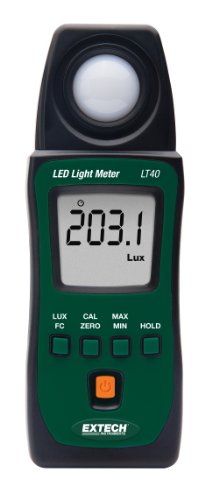
- Measures lux and foot-candle levels
- Backlit 4000-count LCD
- Data hold and auto power-off
Best For: General LED lighting checks
Best Professional Touchscreen Meter
Sekonic LiteMaster Pro L-478D-U
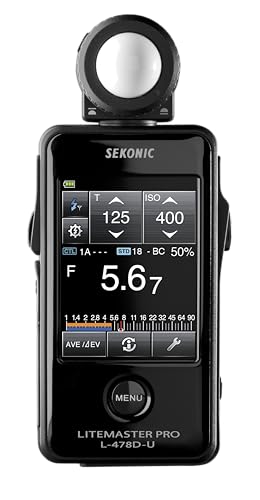
- Touchscreen ambient and flash metering
- Flash-to-ambient ratio analysis
- Cine frame-rate and shutter-angle control
Best For: Professional photo and motion production
Best Ultra-Compact Film Camera Meter

- 26-gram body with 30° metering lens
- USB-C rechargeable battery lasts over 20 hours
- OLED display and multiple metering modes
Best For: Film, Leica, and compact-camera users
Professional Flash Control
Sekonic L-858D-U Speedmaster Light Meter
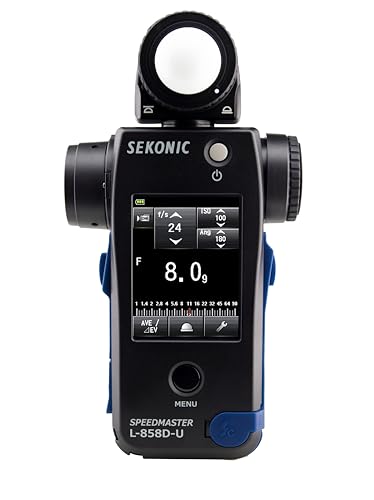
- Incident ambient and flash metering
- 1° spot metering from -5 to 22.9 EV
- Measures flash duration and supports select radio triggers
Best For: Flash and studio photographers needing detailed exposure control
High-Range Illuminance Measurement
Dr.meter Digital Illuminance Light Meter

- 0–200,000 lux measurement range
- Fast readings twice per second
- FC/LUX conversion and peak recording
Best For: General light-intensity checks and plant-lighting measurements
Battery-Free Classic
Sekonic L-398A Studio Deluxe III Analog Light Meter

- Battery-free amorphous photocell operation
- Incident and reflected ambient metering
- Full dial readout with versatile included accessories
Best For: Photographers who prefer analog, battery-free ambient metering
Best Compact Pick

- Reads up to 199,900 Lux and 18,500 FC
- Backlit display with 0.5-second sampling
- Compact design with Max/Min and data hold
Best For: Portable general-purpose lighting checks
Best High-Range Value

- Measures visible brightness up to 200,000 Lux
- Automatic range conversion and Lux/FC switching
- Backlight, data hold, and included AAA batteries
Best For: Broad-range indoor, outdoor, and photography checks
Best Accuracy Detail
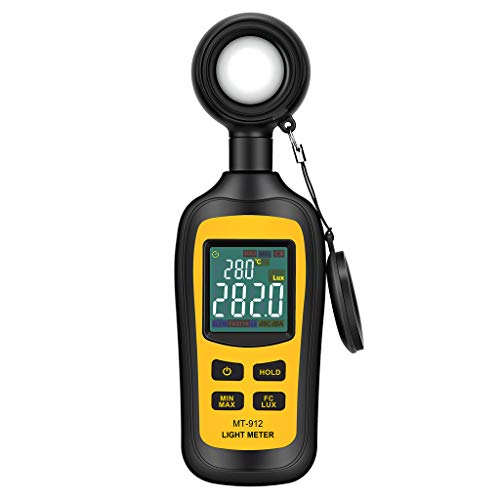
- Measures light and ambient temperature
- Up to 200,000 Lux with stated accuracy ratings
- Color LCD, Min/Max, and data hold
Best For: Photography and set-design lighting checks
Best All-Rounder – Sekonic L-308X-U Flashmate
For photographers comparing light meters for photographers, the Sekonic L-308X-U is a versatile pocket-sized option that handles both ambient and electronic flash readings. Its Photo, Cine, and HD Cine modes make it suitable for still photography, DSLR or mirrorless video, and cinema-style exposure work.
Best For: Still photographers and hybrid shooters who want accurate incident and reflected exposure readings in a compact meter.
Pros:
- Provides exposure accuracy down to one-tenth of a stop.
- Supports ambient, corded flash, and cordless flash measurement.
- Offers broad shutter-speed and flash f-stop ranges, plus dedicated cine modes.
- Compact 4.3-by-2.5-by-0.9-inch design weighs only 3.52 ounces.
Cons:
- Requires two AAA batteries.
- Its advanced cine features may be unnecessary for photographers who only need basic exposure readings.
The L-308X-U is a strong middle-ground choice: more capable than a basic ambient meter without the larger touchscreen interface of Sekonic’s professional L-478D-U.
Best for Basic Lux Readings – Extech LT40 White LED Light Meter
The Extech LT40 is a straightforward white LED light meter for photographers who need lux or foot-candle measurements rather than camera-specific exposure controls. Its backlit display, data hold, and automatic power-off function keep the design practical for quick lighting checks.
Best For: Photographers evaluating LED lighting levels in studios, workspaces, or other controlled environments.
Pros:
- Measures light in lux and foot-candle units.
- Uses a 4000-count backlit LCD for easier readouts.
- Includes data hold and automatic power-off features.
- Compact 5.3-by-1.9-by-0.2-inch form factor weighs 4.9 ounces.
Cons:
- The supplied notes do not list incident, reflected, or flash exposure modes.
- It is less specialized for camera exposure than the Sekonic meters in this roundup.
- Requires two AAA batteries.
The LT40 makes sense when your priority is general illuminance measurement. Photographers seeking direct aperture, shutter-speed, or flash guidance should look to a dedicated photographic meter instead.
Best Professional Touchscreen Meter – Sekonic LiteMaster Pro L-478D-U
For demanding searches for light meters for photographers, the Sekonic LiteMaster Pro L-478D-U combines touchscreen control with incident ambient and flash metering. It also adds cine controls, flash analysis, and illuminance and luminance measurement for photographers, filmmakers, and hybrid production teams.
Best For: Professional photographers and motion creators who need detailed flash analysis, touchscreen control, and cine exposure settings.
Pros:
- Measures incident ambient and flash light through a touchscreen interface.
- Analyzes flash-to-ambient ratios for lighting balance.
- Supports cine frame-rate and shutter-angle control.
- Offers illuminance and luminance modes, with optional 5° reflected spot capability.
Cons:
- The supplied notes specify that the reflected spot capability is optional.
- At 8 ounces, it is heavier than the compact L-308X-U.
- Requires two AAA batteries.
The L-478D-U is the feature-rich choice in this group. Its touchscreen and expanded measurement modes are especially useful when lighting decisions extend beyond ordinary still-camera exposure.
Best Ultra-Compact Film Camera Meter – LightMate Lite 2R
The LightMate Lite 2R is a tiny ambient meter designed with film cameras and compact setups in mind. Its 30-degree field of view, rechargeable USB-C battery, OLED screen, adjustable cold-shoe position, and selectable metering modes make it a practical accessory for photographers who value portability.
Best For: Film, Leica, and other compact-camera users who want a lightweight ambient meter with rechargeable power.
Pros:
- Weighs just 26 grams and uses a 0.96-inch OLED display.
- Provides aperture-priority, shutter-priority, single-trigger, automatic-trigger, and average metering modes.
- Offers more than 20 hours of battery life and USB-C charging.
- Includes exposure compensation, ND filter compensation, depth-of-field calculation, and screen-flip display.
Cons:
- It is an ambient meter with a 30-degree metering lens, not a listed flash meter.
- The small OLED screen may be less convenient for users who prefer larger displays.
- Some setup features, including depth-of-field calculation, require configuring the camera lens details.
The Lite 2R stands out for minimal size and rechargeable convenience. It is a particularly appealing fit for film photographers who want to keep their camera setup light and uncluttered.
Professional Flash Control – Sekonic L-858D-U Speedmaster Light Meter
For photographers who need detailed exposure control, the Sekonic L-858D-U is one of the most capable light meters for photographers. It combines incident ambient and flash metering with 1° spot metering, a broad measurement range, and optional radio-trigger compatibility.
Best For: Studio, flash, and on-location photographers who want precise metering and flash-duration information.
Pros:
- Supports incident metering for both ambient light and flash.
- 1° spot metering with a measurement range of -5 to 22.9 EV at ISO 100.
- Offers accurate flash-duration measurement.
- Radio triggers are available for Phottix, Elinchrom, and PocketWizard systems.
Cons:
- Its advanced feature set may be more than casual photographers need.
- Radio-trigger functionality depends on compatible systems and accessories.
The L-858D-U is a strong choice when flash measurement and narrow-angle spot readings matter. It is best suited to photographers who will use its advanced controls rather than those seeking a basic ambient-light meter.
High-Range Illuminance Measurement – Dr.meter Digital Illuminance Light Meter
The Dr.meter Digital Illuminance Light Meter is a practical option among light meters for photographers who also need straightforward intensity readings. Its 0–200,000 lux range, fast response, and selectable FC/LUX display make it useful for checking indoor, outdoor, and plant-lighting conditions.
Best For: Photographers, hobbyists, and general users measuring light intensity in homes, offices, outdoor spaces, or growing environments.
Pros:
- Measures illuminance across a 0–200,000 lux range.
- Provides readings twice per second for fast response.
- Switches between FC and LUX measurement units.
- Peak data recording can capture brief, high-intensity light pulses.
Cons:
- It is an illuminance meter rather than a dedicated photographic exposure meter.
- Requires one included 9V battery.
- Its peak function is designed for intensity pulses and may not replace specialized flash metering.
Choose this Dr.meter model when your priority is broad lux measurement and simple digital operation. For camera exposure calculations or advanced flash work, a dedicated photographic meter may be a better fit.
Battery-Free Classic – Sekonic L-398A Studio Deluxe III Analog Light Meter
The Sekonic L-398A Studio Deluxe III offers a hands-on alternative to digital light meters for photographers. Its battery-free amorphous photocell, incident and reflected ambient metering, and full dial readout provide a direct way to evaluate exposure in studio or field settings.
Best For: Photographers and cinematographers who prefer analog controls, battery-free operation, and visible aperture/shutter combinations.
Pros:
- Battery-free operation uses an amorphous photocell powered by ambient light.
- Supports incident and reflected ambient metering with interchangeable accessories.
- Full dial readout shows aperture and shutter-speed combinations.
- Includes a swivel head, lumisphere, lumidisc, lumigrid, high slide, strap, and soft case.
Cons:
- Analog operation may take more hands-on adjustment than a digital meter.
- It is intended for ambient metering rather than dedicated flash-duration measurement.
- Readings depend on sufficient ambient light to power the photocell.
The L-398A is appealing for photographers who value a tactile workflow and do not want to manage batteries. Its included accessories broaden its ambient-light versatility, while the dial makes exposure combinations easy to interpret at a glance.
Best Compact Pick – UNI-T UT383 Light Meter
For photographers seeking practical light meters for photographers, the UNI-T UT383 is a compact option with Lux and foot-candle readings. It covers a broad 0–199,900 Lux range, uses a backlit four-digit LCD, and provides quick 0.5-second sampling for checking studio, household, or outdoor lighting.
Best For: Photographers who want a small, straightforward meter for general light-intensity checks.
Pros:
- Measures up to 199,900 Lux or 18,500 FC.
- Offers Max/Min, data hold, overload indication, and auto shutdown.
- Compact 5-ounce design with a backlit display.
- Includes access to UNI-T customer support.
Cons:
- Its stated accuracy is ±(4% + 8), so it is designed for practical measurement rather than precision laboratory work.
- Requires consulting the included manual to use its various functions effectively.
The UT383 balances portability and useful measurement features, making it a sensible choice when you need quick illumination readings without a bulky instrument.
Best High-Range Value – S8608 Digital Lux Meter
The S8608 is a useful choice among light meters for photographers who need a high measurement ceiling. Its automatic-ranging design measures visible brightness up to 200,000 Lux, switches between Lux and FC, and includes a large display for indoor, outdoor, plant, and photography-related checks.
Best For: Users who need broad-range brightness measurements and simple automatic operation.
Pros:
- Measures illuminance up to 200,000 Lux or 18,500 FC.
- Automatically converts measurement ranges.
- Includes Max/Min, data hold, backlight, and auto power-off functions.
- Three AAA batteries are included.
Cons:
- The supplied notes do not specify an accuracy rating.
- Its broad application range may offer fewer photography-specific features than a dedicated exposure meter.
With its high range and automatic conversion, the S8608 is a practical general-purpose meter for comparing brightness across varied shooting and working environments.
Best Accuracy Detail – Handheld 200,000-Lux Meter
Photographers comparing light meters for photographers may appreciate this handheld model’s stated accuracy specifications and wide 0–200,000 Lux range. It also measures ambient temperature, displays readings on a four-digit color LCD, and stores minimum, maximum, or held values during setup and lighting checks.
Best For: Set designers, photographers, and home or office users who value documented accuracy and temperature readings.
Pros:
- Measures luminosity from 0 to 200,000 Lux.
- Provides stated accuracy of ±3% rdg ±8 digits below 10,000 Lux and ±4% rdg ±10 digits above it.
- Measures ambient temperature alongside light level.
- Includes a color LCD, data hold, Min/Max readings, and a two-year warranty.
Cons:
- It does not list a foot-candle measurement range in the supplied details.
- At 6.7 ounces, it is somewhat heavier than the UNI-T model.
This meter stands out for its explicit accuracy ratings and added temperature measurement, making it a versatile tool for lighting setups and general environmental checks.
How We Picked the Best Light Meters for Photographers
We focused on meters with practical value for still photography, studio work, filmmaking, and general light measurement. Key considerations included incident and reflected metering, flash compatibility, measurement range, display readability, portability, controls, battery or power requirements, and the type of exposure information provided.
The selection includes advanced Sekonic models for professional exposure and flash workflows, compact meters for location shooting, a battery-free analog option, and lower-cost lux meters for evaluating ambient brightness. Because a general illuminance meter is not always a substitute for a photographic exposure meter, we distinguish between those use cases when comparing features.
Quick Comparison
- Best all-around compact photographic meter: Sekonic L-308X-U Flashmate
- Best advanced touchscreen option: Sekonic LiteMaster Pro L-478D-U
- Best for high-speed flash workflows: Sekonic L-858D-U Speedmaster
- Best analog, battery-free choice: Sekonic L-398A Studio Deluxe III
- Best ultra-compact meter: LightMate Lite 2R
- Best for general lux measurement: Extech LT40 or UNI-T UT383
- Best budget high-range illuminance meters: Dr.meter and the listed 200,000-lux digital models
Key Buying Factors for Light Meters for Photographers
Incident Versus Reflected Metering
Incident meters measure light falling on the subject and can produce more consistent results when backgrounds are unusually bright or dark. Reflected meters evaluate light bouncing from the scene and are useful for spot-style readings or subjects you cannot physically approach. A meter offering both modes is generally more versatile.
Flash and Cine Features
For studio photographers, check whether the meter can measure flash separately from ambient light and report the flash-to-ambient balance. Videographers should look for frame-rate, shutter-angle, and cine-specific modes. These features add value only if they match your workflow, so casual still photographers may prefer a simpler model.
Range, Accuracy, and Display
Confirm that the measurement range suits your lighting conditions, from dim interiors to bright daylight. A clear backlit or OLED display helps on location, while touchscreens can speed up advanced adjustments. Lux-only meters are useful for brightness checks but may not directly provide camera settings such as aperture and shutter speed.
Portability and Power
Small meters are easier to keep in a camera bag and are often sufficient for travel or location portraits. Consider battery life, replacement battery availability, and whether you prefer a traditional battery-free design. A rugged body and simple controls can matter more than extra modes in demanding field work.
Who Should Buy Which Light Meters for Photographers?
Portrait and event photographers should start with a compact incident meter such as the L-308X-U. Studio photographers who regularly balance flash and ambient light will benefit from the L-478D-U or L-858D-U. Film and hybrid creators should prioritize cine modes, frame-rate support, and shutter-angle controls.
Students and photographers who prefer analog tools may appreciate the battery-free L-398A. Travel photographers should favor the LightMate Lite 2R or another compact photographic meter. For home, office, plant, LED, or general lighting checks, an Extech, UNI-T, Dr.meter, or other high-range lux meter can be a practical lower-cost choice—but verify that its readout meets your exposure-planning needs.