Light meters with data logging make it easier to document illumination over time instead of relying on isolated spot checks. They are useful for facility inspections, workplace compliance, photography, LED evaluation, and plant-lighting measurements.
This roundup compares 10 options across measurement range, sensor design, logging features, connectivity, calibration, and specialized PAR or DLI support so you can choose the right meter for your workflow.
Best 10 Light Meters with Data Logging Picks for 2026
Best Calibrated Pick
Digi-Sense Data Logging Light Meter

- NIST traceable calibration
- Up to 87,000 logged readings via PC
- Up to 400,000 lux
Best For: Professional measurement and documentation
Best Fast-Reading Option
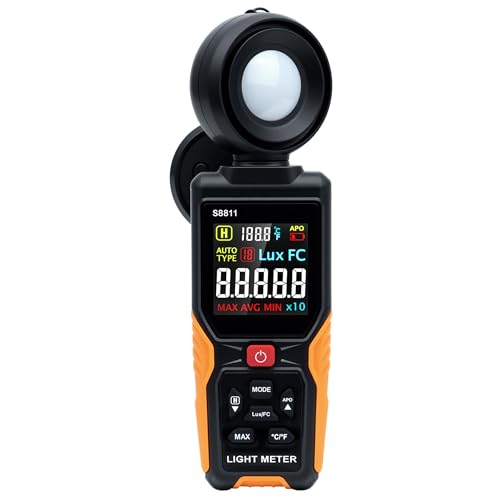
- 8 samples per second
- 0–200,000 lux range
- LED correction and rotatable sensor
Best For: LEDs, plants, photography, and fast-changing light
Best Value Calibration Match
Digi-Sense 20250-00 Light Meter
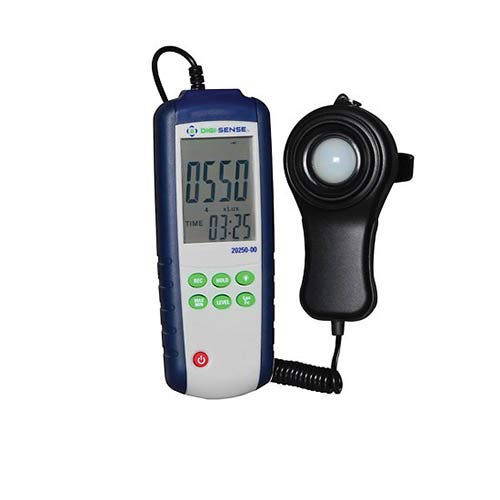
- NIST traceable calibration
- 87,000-reading capacity
- 0.01 Fc/Lux resolution
Best For: High-capacity calibrated measurements
Best Compact General-Use Pick
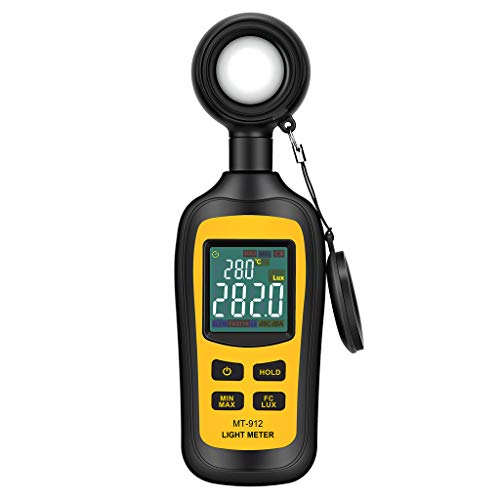
- Up to 200,000 lux
- Color LCD with hold and Min/Max
- Two-year warranty
Best For: Home, office, factory, and set-design checks
Best for Long-Term Plant Tracking

- Measures PPFD and DLI across the 400–700nm range
- Records up to five years and exports CSV data
- IP65 waterproof with soil rod and 1/4-inch mount
Best For: Growers tracking plant light over time
Best for Portable Illuminance Checks
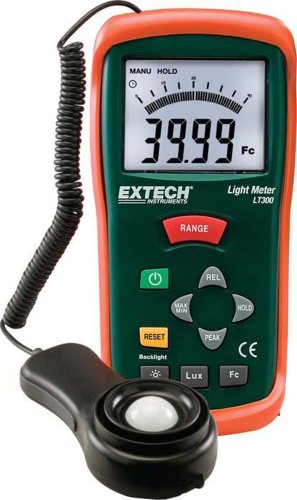
- Measures up to 40,000 lux
- Offers Min/Max, data hold, and zero adjustment
- Backlit display and remote sensor suit field inspections
Best For: Portable workplace and facility lighting checks
Best for High-Range Light Logging
400,000-Lux Data-Logging Meter

- Measures up to 400,000 lux and 40,000 foot-candles
- Records up to 33 readings with Max/Min modes
- Rotatable sensor and included carrying case support field use
Best For: High-intensity lux checks with basic onboard logging
Best Grow-Light PAR Meter
High-Precision PPFD Data Logger

- Measures PPFD across 400–700nm
- Stores up to 100 readings
- Includes two cable lengths
Best For: Greenhouses and LED grow-light setups
Best General-Purpose Lux Meter

- Measures up to 200,000 lux
- Shows lux and foot-candle units
- Includes MAX, MIN, and average readings
Best For: Home, office, classroom, and facility lighting checks
Best Bluetooth Light Meter

- Syncs readings to a mobile app
- Exports measurement records
- Measures 0.1–200,000 lux
Best For: Users needing portable readings and exportable illuminance data
Best Calibrated Pick – Digi-Sense Data Logging Light Meter
For professional light meters with data logging, the Digi-Sense Data Logging Light Meter combines NIST traceable calibration with a broad measurement range. It records up to 87,000 manual or automatic readings when connected to a PC, making it suited to extended measurement work and documentation.
Best For: Professionals who need calibrated readings and extensive PC-connected data logging.
Pros:
- NIST traceable calibration.
- Stores up to 87,000 manual or automatic readings when connected to a PC.
- Measures up to 40,000 foot-candles and 400,000 lux.
- Provides 0.01 resolution.
Cons:
- PC connection is required for the stated 87,000-reading data logging capacity.
- The supplied notes do not specify display features or battery details.
This is the strongest choice in the group when calibration documentation and high-capacity logging matter more than extra convenience features.
Best Fast-Reading Option – Mcbazel Digital Light Meter
The Mcbazel stands out among light meters with data logging for rapid sampling and flexible field use. Its 8-times-per-second sampling, 0–200,000-lux range, rotatable sensor, and LED correction settings make it useful for changing light conditions, plants, photography, and inspections.
Best For: Grow lights, LED environments, photography, and measurements where fast response is useful.
Pros:
- Samples up to 8 times per second for quick readings.
- Measures from 0 to 200,000 lux or 20,000 foot-candles.
- Offers LED light-source correction coefficients.
- Includes a 270° rotatable sensor, color display, and temperature sensor.
Cons:
- Three AAA batteries are required and not included.
- The sensor rotates to the right side only.
- The supplied features emphasize hold and Min/Max/Avg functions rather than a stated stored-reading capacity.
Choose this model for responsive spot checks and modern LED applications; look elsewhere if extensive saved readings are your primary requirement.
Best Value Calibration Match – Digi-Sense 20250-00 Light Meter
The Digi-Sense 20250-00 is a focused option for buyers seeking light meters with data logging and NIST traceable calibration. It covers up to 40,000 foot-candles or 400,000 lux and provides 87,000 readings with 0.01 foot-candle/lux resolution.
Best For: Users who want a high-capacity, NIST-calibrated meter with fine resolution.
Pros:
- NIST traceable calibration.
- Supports up to 87,000 readings.
- Measures up to 40,000 foot-candles and 400,000 lux.
- Offers 0.01 foot-candle/lux resolution.
Cons:
- The supplied notes do not detail its display, controls, or battery requirements.
- The notes do not specify whether the full logging capacity requires a PC connection.
Its specifications closely match the other Digi-Sense listing, so it is a sensible pick when those calibration and logging figures are the deciding factors.
Best Compact General-Use Pick – Digital Illuminance Meter
This compact digital illuminance meter is a practical choice for basic light checks, with readings up to 200,000 lux and a four-digit color LCD. While it does not list a large stored-reading capacity, its hold, minimum/maximum, and auto-off functions make everyday measurements straightforward.
Best For: Home, office, factory, and set-design light checks where simple handheld operation is enough.
Pros:
- Measures luminosity from 0 to 200,000 lux.
- Includes minimum/maximum readings and data hold.
- Uses a four-digit color LCD.
- Comes with a stated two-year warranty.
Cons:
- The supplied notes do not specify stored data logging or PC connectivity.
- Requires three AAA batteries.
- Accuracy varies above and below 10,000 lux.
This is better suited to convenient spot measurements than to buyers specifically needing extensive logged datasets, but its compact design and basic controls keep it approachable.
Best for Long-Term Plant Tracking – PAR/DLI Data-Logging Meter
If you need light meters with data logging for plant care, this 2-in-1 PAR and DLI meter is designed to track both current PPFD and accumulated daily light. It records up to five years of data and can export readings to a computer as a CSV file.
Best For: Gardeners and growers monitoring plant light levels indoors or outdoors over extended periods.
Pros:
- Measures PPFD from 0–5,000 µmol/m²/sec across the 400–700nm PAR range.
- Records up to five years of DLI data and exports it in CSV format.
- IP65 waterproof design, 1/4-inch screw mount, and included soil rod support outdoor use.
- Displays the date, real-time clock, 30 days of DLI data, and photoperiod information.
Cons:
- Its plant-focused PAR and DLI readings are less suited to general workplace illuminance checks.
- The display turns off after three minutes without operation, although measurement and recording continue.
Choose this model when historical plant-light data matters more than conventional lux or foot-candle measurements. Its long recording capacity and PC export make it especially useful for comparing growing conditions over time.
Best for Portable Illuminance Checks – Extech LT300 Light Meter
The Extech LT300 is a compact choice among light meters with data logging features, offering lux and foot-candle measurements up to 40,000 lux. Its remote sensor, backlit display, and Min/Max functions make it practical for quick inspections in varied lighting environments.
Best For: Workplace, studio, laboratory, facility, and general lighting inspections that need portable readings.
Pros:
- Measures up to 40,000 lux with a cosine and color-corrected sensor.
- Includes Min/Max, data hold, and zero-adjustment functions for comparing readings.
- Large backlit LCD and one-handed operation improve usability in dim areas.
- Lightweight 7-ounce design includes a protective sensor cover and battery.
Cons:
- The supplied notes describe measurement and comparison functions but do not specify long-term memory or computer data export.
- It is intended for lux and foot-candle measurements rather than plant-specific PPFD or DLI tracking.
This is a sensible option for portable, conventional light-level checks where a remote sensor and peak or relative readings are useful. If you specifically need multi-year records or CSV export, verify that the available functions meet your logging requirements.
Best for High-Range Light Logging – 400,000-Lux Data-Logging Meter
For buyers comparing light meters with data logging across a broad intensity range, the AIOMEST AI-881D measures from 0.01 to 400,000 lux and records up to 33 readings. Its rotatable sensor and backlit display help with measurements in gardens, greenhouses, offices, and other lighting settings.
Best For: Users who need high-range lux or foot-candle measurements with limited onboard record storage.
Pros:
- Measures 0.01–400,000 lux, equivalent to 0.01–40,000 foot-candles.
- Stores up to 33 data records and includes Max/Min measurement modes.
- Provides 2–3 samples per second, 0.01-lux resolution, and a backlit 3999-count display.
- 270-degree rotatable sensor, temperature display, auto shutoff, case, screwdriver, and 365-day warranty are included.
Cons:
- Onboard data storage is limited to 33 sets, so it is not intended for extensive historical logging.
- Its readings are calibrated to a standard 2856K incandescent lamp, which may limit direct comparisons with some light sources.
The AI-881D stands out when measurement range and simple record storage are priorities. It is more versatile than a low-range meter for bright environments, but buyers wanting extended data archives should look for a model with greater memory or export capability.
Best Grow-Light PAR Meter – High-Precision PPFD Data Logger
For growers comparing light meters with data logging, this PAR meter focuses on PPFD readings across the 400–700nm range. It measures up to 4000µmol/m²/sec and stores up to 100 readings, making it practical for checking and reviewing grow-light measurements.
Best For: Greenhouses, indoor gardens, and LED grow-light setups where PPFD data matters.
Pros:
- Measures PPFD from 400–700nm, up to 4000µmol/m²/sec.
- Records up to 100 measurement groups for later review.
- Includes 4.9-foot coiled and 12-foot straight cables.
- Offers calibration, a large LCD, and a 1/4-inch tripod mount.
Cons:
- Designed for PAR/PPFD measurements rather than general lux readings.
- Requires two AAA batteries, though they are included.
Choose this model if you need a portable grow-light meter with onboard record storage and flexible sensor placement. Its wavelength range and PPFD focus make it more specialized than a general illuminance meter.
Best General-Purpose Lux Meter – Wide-Range Illuminance Logger
This ennoLogic model is a practical choice among light meters with data logging for measuring illuminance in homes, offices, classrooms, warehouses, and labs. Its 0–200,000 lux range, lux/foot-candle display, and detachable sensor support routine lighting checks across varied environments.
Best For: Home, workplace, educational, and facility lighting assessments where lux or foot-candle readings are needed.
Pros:
- Measures from 0 to 200,000 lux and displays foot-candle readings.
- Provides maximum, minimum, and average readings plus a hold function.
- Includes a backlit 1.5-inch LCD and tripod mount.
- Comes with a carrying case, four AA batteries, and an analog output cable.
Cons:
- It is not intended for determining photographic exposure.
- Windows compatibility is listed; Mac OS is not supported.
- At 1 pound, it is less lightweight than some handheld alternatives.
Its broad measurement range and MAX/MIN/average functions suit objective lighting comparisons. Consider it for general illuminance work, but not as a photography exposure meter or a PAR meter.
Best Bluetooth Light Meter – App-Connected Data Logger
If you want light meters with data logging and convenient record transfer, this Bluetooth illuminance meter syncs readings to a mobile app for export and later analysis. It covers 0.1–200,000 lux, supports lux and foot-candle units, and uses a backlit display for on-device checks.
Best For: Users who want to export illuminance records for plant, garden, workplace, or general lighting analysis.
Pros:
- Bluetooth connection supports real-time app synchronization and data export.
- Offers a 0.1–200,000 lux measurement range.
- Lists ±4% accuracy, 120-degree sensing, and two samples per second.
- Includes data hold, MAX/MIN recording, and lux/foot-candle switching.
Cons:
- Bluetooth data features depend on using the compatible mobile app.
- It measures illuminance rather than plant-focused PPFD.
This is the strongest fit for buyers who want digital records that can be exported instead of reviewed only on the meter. Its wide range and app connectivity add flexibility, while its illuminance measurement keeps it distinct from a dedicated PAR meter.
How We Picked the Best Light Meters with Data Logging
We evaluated these meters by focusing on the features that affect real-world measurement and recordkeeping. Key considerations included lux and foot-candle range, sensor placement, display readability, sampling speed, memory capacity, export options, calibration documentation, and battery practicality. We also separated general illuminance meters from PAR and DLI instruments, which measure plant-relevant light in the 400–700nm range rather than ordinary visible-light brightness alone.
For professional use, traceable calibration and dependable data transfer received extra weight. For home, photography, and occasional inspection work, ease of use, display design, and overall flexibility mattered more.
Quick Comparison
| Best For | Look For | Most Important Feature |
|---|---|---|
| Facilities and compliance | Lux/foot-candle measurement | Reliable logging and calibration |
| Remote or difficult measurements | Detachable or rotating sensor | Flexible sensor positioning |
| Photography and studio work | Fast sampling and broad range | Consistent repeat readings |
| Indoor growing | PAR or DLI measurement | PPFD, DLI, and export tools |
| Long-term monitoring | Bluetooth or onboard memory | Convenient data retrieval |
Key Buying Factors for Light Meters with Data Logging
Measurement Type and Range
Check whether you need lux, foot-candles, PPFD, DLI, or more than one measurement type. A meter rated to 200,000 lux can handle bright indoor and outdoor scenes, while a 400,000-lux model offers more headroom for intense light. Plant growers should choose a PAR or DLI meter rather than assuming a standard lux meter accurately represents usable light for plants.
Logging, Memory, and Export
Look for adjustable sampling intervals, timestamped records, sufficient internal memory, and a clear method for transferring data. Bluetooth models can simplify phone-based monitoring, while onboard storage is useful when working without a nearby mobile device. Confirm whether export is available in a practical format such as CSV.
Sensor and Display Design
A remote, detachable, or rotatable sensor helps you measure in awkward locations without blocking the light. A large color display may improve readability, but app-based meters can be better for extended monitoring. Also check cable length, response time, auto-ranging behavior, and whether the sensor can be positioned independently from the main unit.
Calibration and Durability
Traceable calibration is valuable for audits, workplace documentation, and repeatable professional measurements. For casual use, basic accuracy may be sufficient, but verify the stated tolerance and calibration interval. A protective case, robust buttons, and replaceable batteries can matter when the instrument travels between rooms or job sites.
Who Should Buy Which Light Meters with Data Logging?
Choose a NIST-traceable model for facilities teams, inspectors, laboratories, and anyone who must support readings with formal documentation. A broad-range handheld meter is a practical choice for general room checks, photography, offices, and maintenance work. Select a rotating-head or remote-sensor design when fixtures, shelves, ceilings, or machinery make sensor placement difficult.
For grow tents, greenhouses, and LED horticultural testing, choose a PAR meter that records PPFD or calculates DLI. If you need reports or ongoing trends, prioritize Bluetooth or generous internal memory over display features alone. Finally, occasional users should favor simple controls and clear readings, while professionals should prioritize calibration, exportability, and repeatable logging workflows.